

Faster Rail Travel Coming to Małopolska Region
Translated from Polish, summarized and contextualized by DistantNews.
At a glance
News
Named sources
Context piece
- Polish railway infrastructure company PLK has increased its tender plan for the year to 11.5 billion PLN, with additional funds from the EU's defense program.
- Significant investments are underway in southern Poland, including a nearly 500 million PLN modernization of the Sucha Beskidzka-Żywiec line to shorten travel times.
- The major Podłęże-Piekiełko project is progressing, aiming to create new rail connections between Krakow and southern regions, featuring tunnels and viaducts.
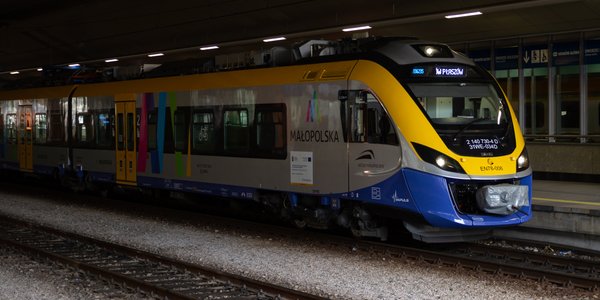
Railway travel in Poland's Małopolska region is set for a significant upgrade, with substantial investments boosting speed and capacity. Polskie Linie Kolejowe (PLK), the infrastructure manager, has raised its tender plan for the year from 9.5 billion PLN to 11.5 billion PLN. These expanded investments are partly funded by the EU's SAFE program, allocated for defense purposes, and overall capital expenditures are projected to reach 20 billion PLN annually.
The southern part of Poland is a focal point for these developments. A key project nearing completion is the modernization of the railway line between Sucha Beskidzka and Żywiec. This nearly half-billion PLN investment will cut travel time by 30 minutes on this segment. It is part of the larger Skawina-Żywiec route, with the Skawina to Sucha section already refurbished. Once finished, this will allow PKP Intercity long-distance trains, like the Halny, to resume service through Żywiec, bypassing the current alternative route. The fastest trains on the Żywiec-Kraków Główny route are expected to complete the journey in 100 minutes, supported by funding from the National Reconstruction Plan.
Line 97 is being transformed with upgraded tracks, drainage systems, and level crossings. Modernized platforms now feature tactile paving and warning strips, along with new shelters, seating, and information boards. A new road overpass in Lachowice will improve traffic flow and safety. The new Żywiec Amfiteatr stop, highlighted by Deputy Minister of Infrastructure Przemysław Koperski, demonstrates the project's value. "Modern infrastructure is being created, which residents of the Żywiec region have waited for for decades," Koperski stated. "Residents of the Sucha and Żywiec districts will gain more convenient access to work and school, including to Krakow. New opportunities and more attractive travel options will also emerge for tourists traveling from the capital of Małopolska to the Żywiec Beskids, and from the Silesian Voivodeship to the Tatras."
Modern infrastructure is being created, which residents of the Żywiec region have waited for for decades. Residents of the Sucha and Żywiec districts will gain more convenient access to work and school, including to Krakow. New opportunities and more attractive travel options will also emerge for tourists traveling from the capital of Małopolska to the Żywiec Beskids, and from the Silesian Voivodeship to the Tatras.
Meanwhile, the ambitious Podłęże-Piekiełko project, one of Poland's largest current railway undertakings, is entering a new phase. The Gdów-Szczyrzyc section, now out for tender by PLK, represents the final stage of this 17 billion PLN endeavor. This project will establish a new rail link connecting Krakow with the Podhale and Sądecczyzna regions. The route involves significant engineering challenges, including tunnels and viaducts, as trains will travel both underground and elevated. Two tunnels totaling nearly 2.4 kilometers and numerous viaducts, bridges, and overpasses will be constructed. The highest point will be 27 meters above ground, with the longest overpass spanning over 850 meters. Construction is slated to last 38 months. Marcin Mochocki, a board member at PLK, described it as "the final, and at the same time one of the most demanding engineering-wise, sections of our largest current investment. Numerous tunnels, viaducts, and bridges will be a challenge for contractors."
The Podłęże-Piekiełko project also includes modernizing and electrifying 75 km of the Chabówka-Nowy Sącz line and building 58 km of new track connecting Podłęże with Tymbark and Mszana Dolna. This will significantly improve connectivity between Krakow, Podhale, and Sądecczyzna. Travel times are expected to be drastically reduced, with the fastest trains on the Kraków-Nowy Sącz route taking about 60 minutes, and the journey from Krakow to Zakopane approximately 90 minutes.
This is the final, and at the same time one of the most demanding engineering-wise, sections of our largest current investment. Numerous tunnels, viaducts, and bridges will be a challenge for contractors.
DistantNews Editorial
Originally published by Rzeczpospolita in Polish. Translated, summarized, and contextualized by our editorial team with added local perspective. Read our editorial standards.
More Stories
From Our Blog

What Gets Lost (and Found) When News Is Translated

The Critical Role of Diaspora Media in Global News

What Travellers Should Know About Countries with Restricted Press

A Digital Nomad's Guide to Following Local News

How the Same Story Looks Different in Different Countries
