


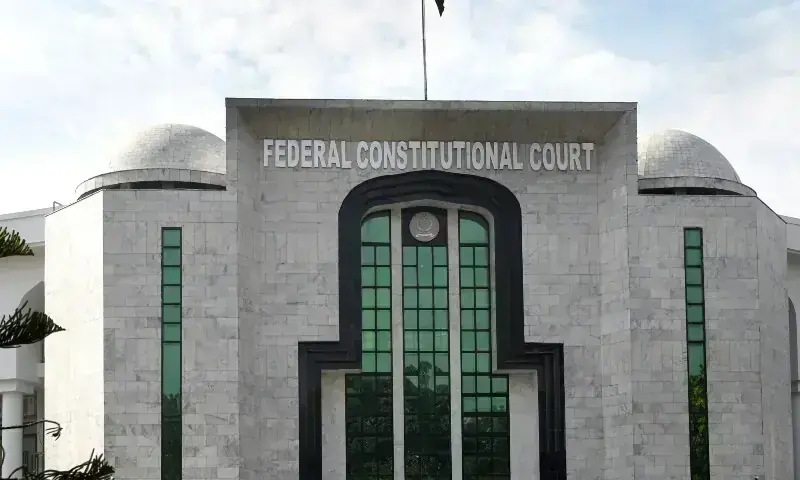
Federal Constitutional Court Won’t Hear Cases Today; Staff to Work From Home
Translated from English, summarized and contextualized by DistantNews.
TLDR
- Pakistan's Federal Constitutional Court (FCC) canceled all judicial work for Tuesday due to security arrangements for arriving foreign delegations and public movement restrictions.
- The restrictions are linked to anticipated US-Iran peace talks in Islamabad this week.
- While the FCC staff will work from home, branch registries will remain open, and the Supreme Court continued hearings with some remote participation.
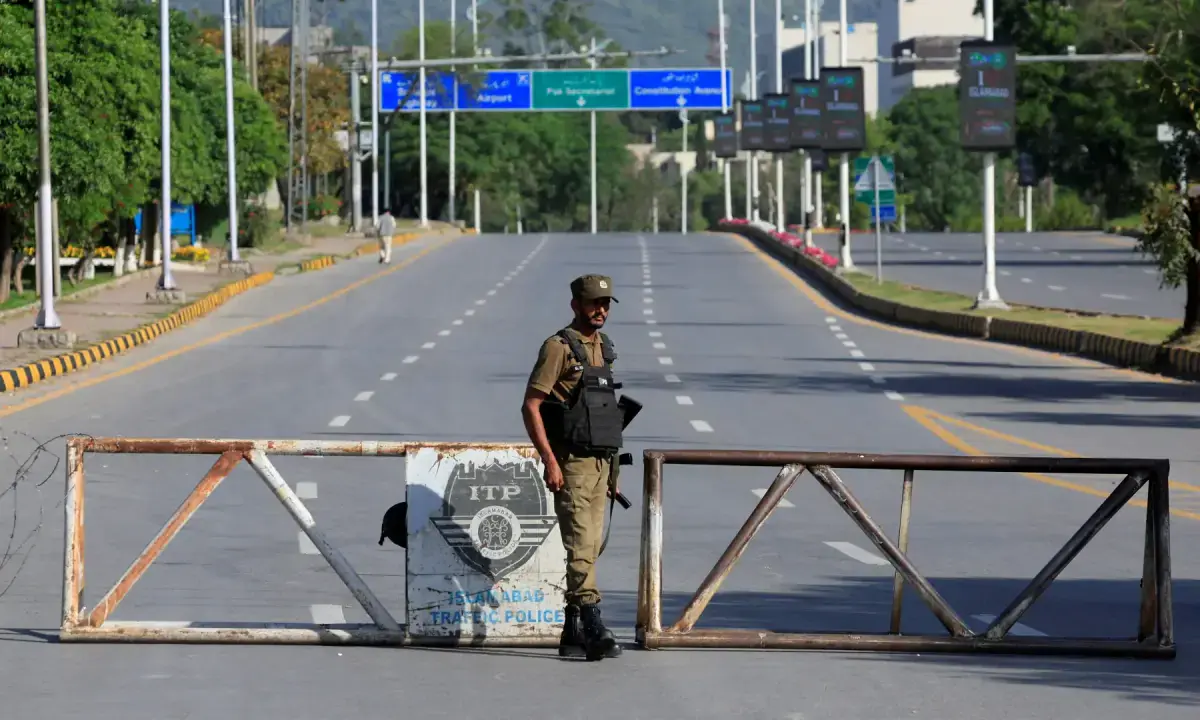
In a significant development impacting Pakistan's judicial system, the Federal Constitutional Court (FCC) has announced the cancellation of all judicial proceedings for Tuesday. This decision stems from extraordinary security measures being implemented in Islamabad ahead of the arrival of foreign delegations and anticipated US-Iran peace talks. The court's move underscores the delicate security situation and the government's commitment to ensuring the safety of visiting dignitaries.
The staff as well as the lawyers had the access to reach the FCC from the Margalla Road on Monday, but in case the foreign dignitaries start arriving in the capital city and the counsel or the litigants face any difficulty to attend to court proceedings because of the restrictions on their movement, the court administration may decide to reschedule the cases by cancelling the cause list.
The restrictions on public movement, a direct consequence of the heightened security, have prompted the FCC to suspend its operations for the day. While the court's staff and officers are instructed to work from home, the notification issued by the FCC Registrar Hafeezullah Khan ensures that the four branch registries will continue to operate for judicial and administrative work. This measure aims to minimize disruption to the legal process as much as possible under the prevailing circumstances.
Meanwhile, the Supreme Court of Pakistan has demonstrated remarkable resilience and adaptability. Proceedings were held at the principal seat in Islamabad on Monday, with litigants and their counsel granted access after presenting their notices. Significantly, one member of the bench participated remotely via a secure video link from the Lahore Registry. This technological integration, a testament to the court's investment in advanced systems, allowed for the disposal of approximately 20 out of 28 cases on Monday, showcasing institutional resilience amidst emergent situations.
However, all officers and staff shall work from home and shall not leave the station.
The FCC's decision, while necessary for security, highlights the challenges faced by judicial bodies when hosting high-profile international events. The situation also brings into focus the ongoing efforts by Pakistan to position itself as a mediator in international conflicts, as evidenced by the expected US-Iran peace talks. The nation's ability to manage such sensitive diplomatic and security arrangements will be crucial in maintaining its role on the global stage.
In a remarkable demonstration of institutional resilience and technological advancement, the Supreme Court successfully conducted court proceedings on Monday from the principal seat in Islamabad, while Justice Ayesha Malik joined the bench from the Lahore Registry through a secure video link.
DistantNews Editorial
Originally published by Dawn in English. Translated, summarized, and contextualized by our editorial team with added local perspective. Read our editorial standards.
More Stories

From Our Blog

What Gets Lost (and Found) When News Is Translated

The Critical Role of Diaspora Media in Global News

What Travellers Should Know About Countries with Restricted Press

A Digital Nomad's Guide to Following Local News

How the Same Story Looks Different in Different Countries
