


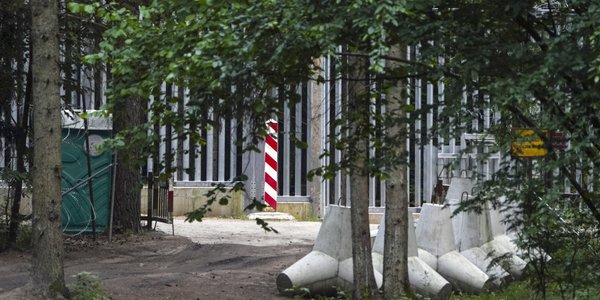
Fences: A Polish Obsession?
Translated from Polish, summarized and contextualized by DistantNews.
TLDR
- The article discusses the pervasive use of fences and boundaries in Polish society, drawing parallels to a famous Polish comedy.
- It questions why fences are so prevalent in Poland, even in situations where they seem unnecessary or absurd, such as around shops or beaches.
- The author suggests that the physical border fence with Belarus taps into a deep-seated national psyche, symbolizing sovereignty and a need to define boundaries.
The enduring image of Poland, often associated with resilience and a strong sense of national identity, is perhaps unexpectedly, also one of fences. This observation, prompted by a conversation with Czech friends who found the ubiquity of barriers in Poland perplexing, forms the core of this reflection. The article delves into the cultural phenomenon of 'grodzenie się' – the act of fencing oneself off – and its deep roots, even referencing the iconic Polish comedy 'Sami swoi' where a fence is central to the plot.
While the post-war resettlement to the 'Recovered Territories' and the chaotic 1990s might offer some historical context for establishing boundaries, the continued proliferation of fences today seems less rational. Crime rates have fallen, and economic prosperity has increased, making the need for such physical demarcations questionable. Yet, from private homes to public spaces like beaches, where 'parawany' (windbreaks) create mini-enclosures, the instinct to mark and defend one's territory persists.
Kargul, podejdź no do płota. Podejdź, jak i ja podchodzę.
The article points to the absurdity of a German supermarket chain erecting a hedge separating it from a neighboring shopping gallery. This creates an unnecessary obstacle for customers who might wish to patronize both establishments, hindering potential synergy and highlighting a misplaced emphasis on separation over integration. This seemingly minor detail reflects a broader societal tendency towards division.
Ultimately, the author posits that the construction of a physical fence on the border with Belarus, while officially a measure against illegal immigration, resonates with a deeper psychological need within the Polish psyche. It becomes a potent symbol of sovereignty and national identity, a tangible manifestation of the age-old Polish inclination to define and defend its borders. The fence, therefore, transcends its practical function to become a cultural emblem, as ingrained in the national consciousness as the White Eagle on Poland's coat of arms.
Why do you put up fences everywhere? We don't have that. Even on the beach by the sea, you fence yourselves off with windbreaks.
DistantNews Editorial
Originally published by Rzeczpospolita in Polish. Translated, summarized, and contextualized by our editorial team with added local perspective. Read our editorial standards.
More Stories


From Our Blog

What Gets Lost (and Found) When News Is Translated

The Critical Role of Diaspora Media in Global News

What Travellers Should Know About Countries with Restricted Press

A Digital Nomad's Guide to Following Local News

How the Same Story Looks Different in Different Countries
