

First Baobab-K mine-laying vehicles delivered to Polish division defending against Russia
Translated from Polish, summarized and contextualized by DistantNews.
At a glance
News
Sources not specified
New plan
- Poland's 16th Mechanized Division has received its first Baobab-K wheeled mine-laying vehicles.
- The Baobab-K, produced by Huta Stalowa Wola, is the first modern remote mine-laying system for Polish frontline units since the outdated Kroton.
- Poland has ordered a total of 35 Baobab-K vehicles, with deliveries of a tracked version, Baobab-G, expected from 2029.
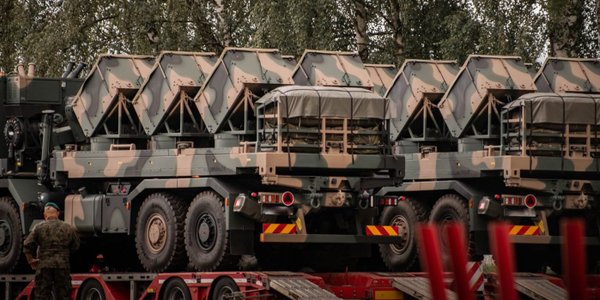
The first Baobab-K wheeled mine-laying vehicles have arrived at the 16th Territorial Defense Brigade in Orzysz, strengthening the 16th Pomeranian Mechanized Division tasked with defending Poland against potential Russian aggression. The delivery was announced by Deputy Prime Minister and Minister of National Defense Władysław Kosiniak-Kamysz via the X platform.
While the exact number of delivered vehicles was not specified, accompanying photos indicate at least two units. This marks a significant moment for Polish engineering troops, as the Baobab represents the first modern remote mine-laying system to enter service with frontline units since the deployment of the now-obsolete Kroton systems.
Poland has placed orders for a total of 35 Baobab-K vehicles through two contracts with Huta Stalowa Wola (HSW). The initial order for 24 vehicles was signed in June 2023, and an additional 11 were added through the SAFE program's first funding stage. This funding also covered the mines used by the vehicles. The consortium responsible for the contract is led by HSW and includes Bydgoskie Zakłady Elektromechaniczne BELMA, Jelcz, and the Military Institute of Armament Technology. Subcontractors include companies from the WB Group and PCO S.A.
The Baobab-K, designated "K" for wheeled, is built on an eight-wheeled Jelcz P882.53 8x8 chassis. Operated by a crew of two in an armored cabin, it features six rotating launchers capable of deploying 600 MN-123 anti-tank mines with EFP warheads designed to penetrate 60 mm of armor. The minefield's width can be adjusted from 30 to 180 meters on either side of the vehicle, and a full load can lay mines up to 1,800 meters long. Mines can also be laid behind the vehicle, enabling the mining of areas inaccessible to the vehicle itself, such as the far bank of a river or marshy approaches.
In addition to the wheeled version, Poland has also contracted for the tracked Baobab-G, based on the Krab self-propelled howitzer chassis. Deliveries for this version are expected to begin in 2029, aiming to replace the few remaining Kroton mine-laying transporters based on MT-LB chassis. Poland is actively developing a comprehensive, multi-layered mine-laying system.
DistantNews Editorial
Originally published by Rzeczpospolita in Polish. Translated, summarized, and contextualized by our editorial team with added local perspective. Read our editorial standards.
More Stories

From Our Blog

What Gets Lost (and Found) When News Is Translated

The Critical Role of Diaspora Media in Global News

What Travellers Should Know About Countries with Restricted Press

A Digital Nomad's Guide to Following Local News

How the Same Story Looks Different in Different Countries
