

First Korea-Central Asia Summit Marks New Phase in Seoul’s Eurasian Strategy
Translated from English and summarized by DistantNews. Read the original for the full story.
At a glance
Interview
Named sources
New plan
- South Korea will host the leaders of Kazakhstan, Kyrgyzstan, Tajikistan, Turkmenistan and Uzbekistan in Seoul on September 16-17 for the first Korea-Central Asia summit.
- The meeting will elevate a diplomatic framework launched at deputy-minister level in 2007 and address critical minerals, energy infrastructure, supply chains, artificial intelligence and cultural ties.
- Ambassador Jung Ki-Hong said Kazakhstan’s resources and South Korea’s processing technology, industrial capacity and demand create opportunities for deeper cooperation.
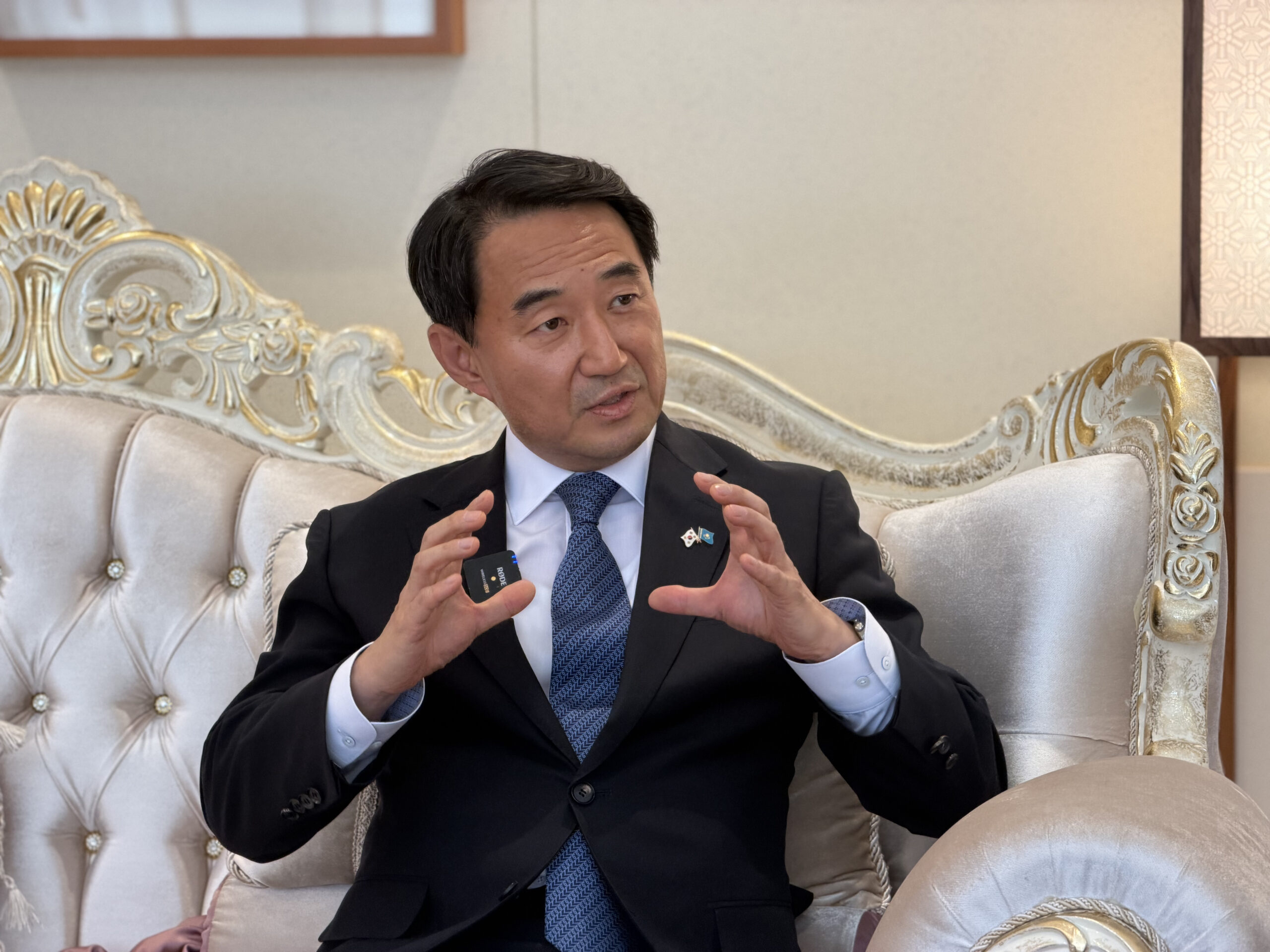
South Korea is preparing to bring its nearly two-decade relationship with Central Asia to the presidential level, with the region’s five leaders scheduled to meet in Seoul on September 16-17.
Ambassador Jung Ki-Hong described the creation of the leaders’ forum as more important than any single agreement expected from the inaugural summit. The mechanism began at deputy-minister level in 2007. Its elevation is intended to give Seoul’s engagement with Kazakhstan, Kyrgyzstan, Tajikistan, Turkmenistan and Uzbekistan a more permanent political structure.
I think the formation of this multilateral forum at the presidential level itself is the most important outcome.
The agenda is expected to include critical-mineral supply chains, energy infrastructure, supply-chain resilience, artificial intelligence, digital transformation, and cultural and people-to-people ties. Jung said the summit would not be a one-time event.
This is not going to be just a one-time event.
Kazakhstan is South Korea’s largest trading partner and investment destination in Central Asia, although Jung said substantial potential remains unused. Bilateral trade reached $3.17 billion in 2025, while trade in the first six months of the following year reached $1.3 billion. Kazakhstan’s exports to South Korea rose 17.2 percent to $510 million, and South Korean gross investment in Kazakhstan has exceeded $10 billion over two decades.
Jung highlighted critical minerals, AI, power generation and cleaner energy as promising areas. He said semiconductors, batteries, renewable-energy systems and AI infrastructure depend on critical minerals, making Kazakhstan’s deposits, concentrates and mine tailings relevant to South Korean industry. South Korea can contribute processing technology, industrial capacity and end-user demand, while cooperation has already begun through meetings between Kazakh and South Korean institutions at Satbayev University on August 5.
They say the 20th century is about oil and gas, but the 21st century is about critical minerals.
About this summary
Originally published by The Astana Times in English. Translated, summarized, and contextualized automatically by DistantNews, with a note on how the source frames the story. Not individually reviewed before publishing. How this works.
More Stories


From Our Blog

What Gets Lost (and Found) When News Is Translated

The Critical Role of Diaspora Media in Global News

What Travellers Should Know About Countries with Restricted Press

A Digital Nomad's Guide to Following Local News

How the Same Story Looks Different in Different Countries
