


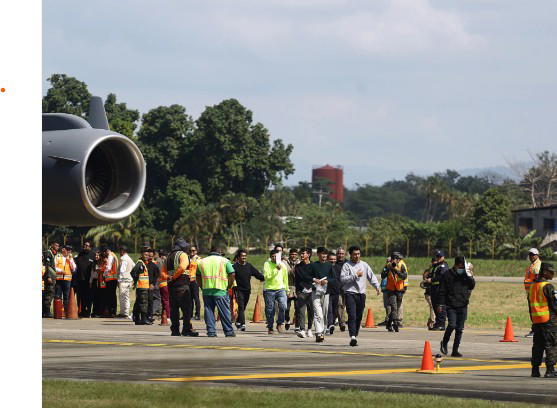
First US deportees arrive in Liberia under new agreement
Translated from English, summarized and contextualized by DistantNews.
At a glance
News
From a news agency
New plan
- Liberia has agreed to accept up to 1,200 foreign nationals deported from the United States.
- The first group of 20 deportees arrived on Thursday, according to AFP journalists.
- The Liberian government stated it received no compensation for agreeing to the program, and deportees are free to leave or seek asylum.
Liberia has become the latest African nation to agree to accept deportees under the U.S. immigration crackdown, with the first group of 20 foreign nationals arriving on Thursday. The plane carrying the individuals landed at the country's international airport near the capital, Monrovia, shortly before 1:00 p.m. local time. Staff from the Liberian Commission on Repatriation, Resettlement and Reintegration were present to assist the arrivals, though reporters were kept at a distance and could not speak with them.
This arrival follows Liberia's announcement on Tuesday that it would accept up to 1,200 deportees from the U.S. within a year. The government clarified that these individuals are "free to depart the country when they so desire" or may apply for asylum. Crucially, the Liberian government asserted that it "has not demanded or received any compensation or promise of rewards in exchange for its consent to participate in the programme."
The deportations are part of an expanded policy under U.S. President Donald Trump's administration, which targets individuals with legal protections who might fear persecution in their home countries. U.S. law prohibits sending such individuals directly home if they face persecution, a constraint Washington is seeking to navigate through agreements with third countries.
Liberia's decision places it alongside other African nations that have agreed to take in migrants facing deportation from the U.S. The specifics of the agreement and the backgrounds of the initial 20 arrivals remain unclear, as direct communication with the deportees was not permitted.
DistantNews Editorial
Originally published by Vanguard in English. Translated, summarized, and contextualized by our editorial team with added local perspective. Read our editorial standards.
More Stories


From Our Blog

How the Same Story Looks Different in Different Countries

What Gets Lost (and Found) When News Is Translated

The Critical Role of Diaspora Media in Global News

What Travellers Should Know About Countries with Restricted Press

A Digital Nomad's Guide to Following Local News
