


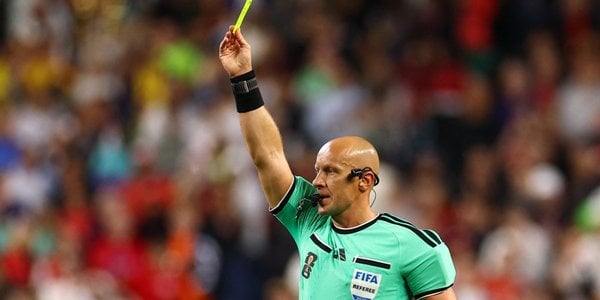
Five biggest refereeing controversies of the 2026 World Cup
Translated from Polish, summarized and contextualized by DistantNews.
At a glance
Analysis
Sources not specified
Context piece
- The article discusses controversial refereeing decisions during the 2026 World Cup, despite the use of VAR and chip-equipped balls.
- It highlights specific incidents, including a disallowed goal for Iran, a potential foul by Leo Messi not penalized, and a controversial goal awarded to England.
- The author suggests that while technology may correct some errors, it hasn't eliminated controversy or ensured referees maintain control over matches.
Despite the introduction of VAR and balls equipped with chips, the 2026 World Cup has been marred by significant refereeing controversies. The article argues that while technology may correct some decisions, it has not quelled the debates or ensured referees maintain control over the matches.
The piece details five major controversial moments. In the Argentina vs. Algeria match, Leo Messi received no card for a studs-first tackle on Aïssa Mandi, despite the score being 1-0. FIFA defended the Polish referee Szymon Marciniak's decision.
Norway's match against England saw two contentious calls. England's equalizer came after the ball reportedly hit a spidercam cable, altering its trajectory. FIFA stated there was no evidence of malfunction, but video showed the ball dropping unexpectedly. Additionally, Norway had a second goal disallowed after VAR review, with referee Clement Turpin ruling Erling Haaland had pushed Elliot Anderson, a decision that overturned the initial on-field call.
Another significant controversy involved Iran's potential match-winning goal against Egypt in the 93rd minute. Referee Szymon Marciniak disallowed Shoja Khalilzadeh's goal for a marginal offside, a decision that led to Iran's elimination from the tournament. The article notes the offside was almost imperceptible to the human eye.
The author concludes that even with advanced technology, human error and subjective interpretations continue to fuel debate and dissatisfaction among players and fans, leaving a lingering sense of unease about the referees' command of the game.
DistantNews Editorial
Originally published by Rzeczpospolita in Polish. Translated, summarized, and contextualized by our editorial team with added local perspective. Read our editorial standards.
More Stories


From Our Blog

What Gets Lost (and Found) When News Is Translated

The Critical Role of Diaspora Media in Global News

What Travellers Should Know About Countries with Restricted Press

A Digital Nomad's Guide to Following Local News

How the Same Story Looks Different in Different Countries
