

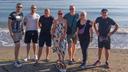

Five climbers die in catastrophic Mount Elbrus ascent due to sudden storm
Translated from Croatian, summarized and contextualized by DistantNews.
At a glance
News
Sources not specified
Outcome reported
- Five members of a seven-person Bosnian mountaineering expedition died during an ascent of Mount Elbrus in Russia.
- The expedition reached approximately 5,100 meters before extreme weather conditions, including winds of 70-100 km/h, caused the tragedy.
- Two survivors were rescued and are receiving medical attention; the deceased were experienced alpinists.
Five members of a seven-person mountaineering expedition from Bosnia and Herzegovina have died during a perilous ascent of Mount Elbrus, Russia's highest peak. The expedition, which had reached an altitude of approximately 5,100 meters, was caught in a sudden and severe deterioration of weather conditions near the summit.
This is not an accident, this is not a tragedy, five young human lives have gone. Something like this is not remembered even in the closest or wider circles in the Balkans.
Dino Ahmetović of the GSS Zenica (Mountain Rescue Service) described the event as more than an accident or tragedy, stating, "five young human lives have been lost." He noted that such an event is unprecedented in the recent history of mountaineering in the Balkans. The climbers were attempting to conquer Elbrus, a 5,642-meter peak in the Caucasus Mountains, which is part of the Seven Summits challenge.
Conditions rapidly changed, with winds reaching between 70 and 100 km/h, creating an extremely dangerous situation. One member of the expedition managed to reach the rescue team at the base, but the rapid weather shift proved insurmountable for the others. While the ascent of Elbrus is not considered technically the most demanding, it is notorious for claiming numerous lives annually due to unpredictable weather, high altitude, exhaustion, and misjudgments.
Then one member of the expedition headed towards the rescue team located at the base, he managed to reach them. Unfortunately, the weather changed extremely quickly. Winds were blowing from 70 to 100 km/h, which is a change within about 20, 25 minutes.
Mountaineer and travel writer Damir Šantek, who previously summited Elbrus six years ago, described the mountain as "deadly." He warned of sudden, severe storms with lightning, hail, and powerful winds that can reduce visibility to mere meters, making it easy to get lost. The typical 10-12 hour ascent, combined with prolonged exposure to cold, wind, and low oxygen, significantly increases risk. Although the route lacks complex technical sections, continuous movement is essential to maintain body temperature and react to weather changes.
At such altitudes, weather conditions are often very unfavorable, unpleasant, and changes come significantly. So, you might have nice, sunny weather now, and in two hours, you have a severe storm with lightning, thunder, storms, where strong wind blows, carrying ice and snow in your face, you can't see two meters in front of you, and it's easy to get lost in such places.
Despite the challenges, the GSS Zenica emphasized that the deceased were not inexperienced climbers but trained alpinists with extensive experience and numerous successful ascents. The exact circumstances, including whether the group had a guide, are still being investigated, but the focus remains on the devastating impact of the extreme weather on a highly capable team.
Whether that team had a guide with them or they went on their own, technically it is not demanding. There are no climbs or special challenges there, it is a continuous, more or less, ascent, but it is long and takes time. You can't stop, if you stop, it gets very cold and it's time to turn back.
DistantNews Editorial
Originally published by Večernji List in Croatian. Translated, summarized, and contextualized by our editorial team with added local perspective. Read our editorial standards.
More Stories

From Our Blog

What Gets Lost (and Found) When News Is Translated

The Critical Role of Diaspora Media in Global News

What Travellers Should Know About Countries with Restricted Press

A Digital Nomad's Guide to Following Local News

How the Same Story Looks Different in Different Countries
