



Five Dead in Turkish Wedding Party Road Crash
Summarized and contextualized by DistantNews.
At a glance
News
From a news agency
Context piece
- Japanese Prime Minister Sanae Takaichi avoided visiting the controversial Yasukuni Shrine on the anniversary of WWII surrender.
- She focused on Japan's contributions to global peace and prosperity without mentioning wartime atrocities or apologizing.
- Several other politicians, including the Defense Minister, visited the shrine, which commemorates war criminals and draws criticism from China and South Korea.
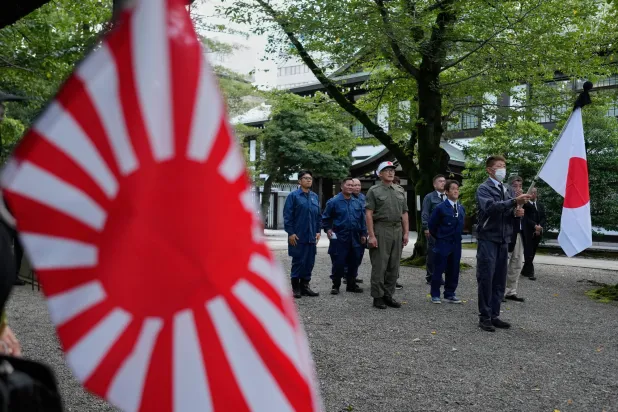
Japanese Prime Minister Sanae Takaichi opted to stay away from the Yasukuni Shrine on the 81st anniversary of Japan's World War II surrender. Her decision appears aimed at prioritizing diplomatic relations with China and South Korea, though she did not explicitly address Japan's wartime past or express remorse in her Saturday address.
Japan, since the end of the war, has consistently contributed to global peace and prosperity. We will never let the tragedy of the war be repeated.
Instead, Takaichi commemorated victims of devastation in Hiroshima, Nagasaki, and Okinawa, as well as those lost in overseas battlefronts. She thanked them for their sacrifice, calling it the "foundation of Japan's peace and prosperity today." While stating, "Japan, since the end of the war, has consistently contributed to global peace and prosperity. We will never let the tragedy of the war be repeated," she omitted any mention of Japanese atrocities in Asia or apologies for them.
Visits to the Yasukuni Shrine, which honors convicted war criminals among its 2.5 million war dead, are a recurring source of tension with China and South Korea, who view such visits as a sign of insufficient remorse for Japan's wartime actions. Defense Minister Shinjiro Koizumi, a Cabinet minister, and three executives from Takaichi's Liberal Democratic Party did visit the shrine on Saturday. Koizumi's presence is particularly noted as he is a defense minister tasked with increasing Japan's military capabilities, a move seen as more contentious given the shrine's history.
It is natural for anyone in any country to pay respect for those who sacrificed their lives for their nation.
Koizumi, son of former Prime Minister Junichiro Koizumi, who caused outrage by visiting Yasukuni as a serving leader in 2006, did not comment on his visit Saturday. The three party executives offered prayers and made offerings on Takaichi's behalf, a rare joint visit seen as an effort to appease right-wing supporters and compensate for her absence. Party secretary-general Shunichi Suzuki stated he prayed with the prime minister's thoughts for the war dead and presented her cash offerings as party leader.
the spirits of the war dead
DistantNews Editorial
Originally published by Asharq Al-Awsat. Summarized and contextualized by our editorial team with added local perspective. Read our editorial standards.
More Stories


From Our Blog

What Gets Lost (and Found) When News Is Translated

The Critical Role of Diaspora Media in Global News

What Travellers Should Know About Countries with Restricted Press

A Digital Nomad's Guide to Following Local News

How the Same Story Looks Different in Different Countries
