

Five golden rules for perfectly crisp jalapeño pickles
Translated from Turkish and summarized by DistantNews. Read the original for the full story.
At a glance
In-depth
Sources not specified
Context piece
- The recipe recommends choosing firm, dark-green, smooth jalapeños and slicing them into evenly sized rings to preserve their crunch.
- A hot brine made with vinegar, non-iodized rock salt and a small amount of sugar balances flavor while avoiding softened peppers.
- Brief heating, sterilized jars, garlic and coriander or peppercorns, and airtight sealing are presented as keys to preserving the pickles.
The biggest risk when making jalapeño pickles at home is losing the peppers’ signature crunch. A few simple choices, from selecting the peppers to sealing the jar, determine whether they remain crisp or turn soft.
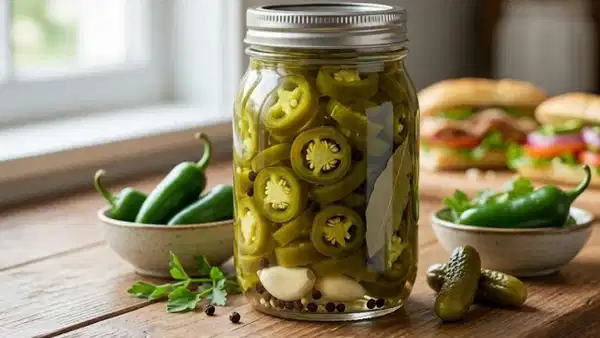
The peppers should be firm, dark green and smooth. Slices should be neither paper-thin nor overly thick. Rings about half a centimeter wide allow the brine to penetrate without making the peppers mushy. Removing some seeds can reduce the heat.
The recipe favors a hot brine over a traditional cold preparation. Water and grape or apple vinegar are combined with non-iodized rock salt, since iodized table salt can soften the peppers. A teaspoon of sugar helps temper the vinegar’s sharpness and bring out the jalapeño’s fruity heat.
The peppers should not boil for long. Once the slices enter the boiling brine, the heat should be turned off immediately, leaving them in the hot liquid for 10 to 15 minutes. The jars and lids must first be sterilized by boiling. Garlic and coriander seeds, or whole black peppercorns, add extra flavor.
Finally, the hot brine should cover the peppers completely, leaving no air gap. The jar is sealed with a new lid and turned upside down to create a hot vacuum. The recipe says this allows the pickles to retain their freshness for months until opened.
About this summary
Originally published by Cumhuriyet in Turkish. Translated, summarized, and contextualized automatically by DistantNews, with a note on how the source frames the story. Not individually reviewed before publishing. How this works.
More Stories


From Our Blog

What Gets Lost (and Found) When News Is Translated

The Critical Role of Diaspora Media in Global News

What Travellers Should Know About Countries with Restricted Press

A Digital Nomad's Guide to Following Local News

How the Same Story Looks Different in Different Countries
