


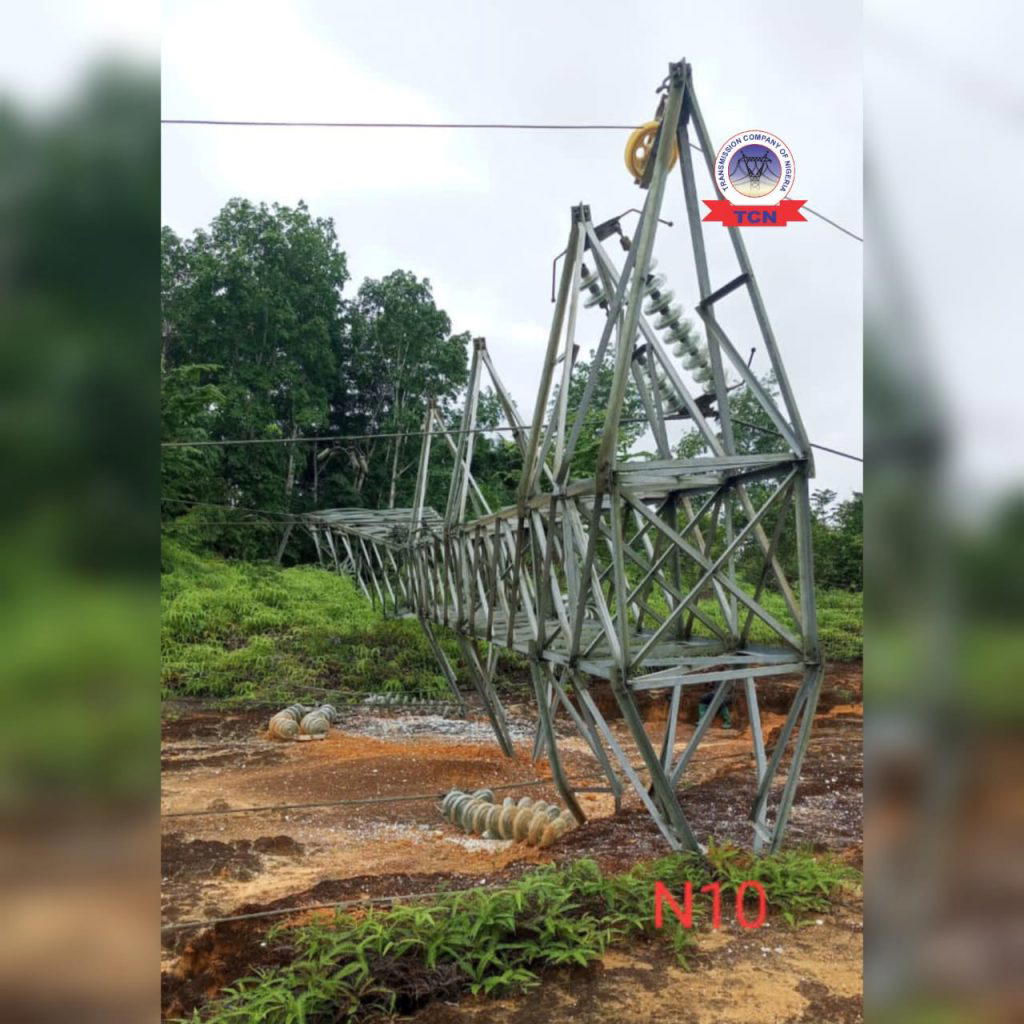
Five towers collapse as vandals attack 132kV transmission line
Summarized and contextualized by DistantNews.
At a glance
News
Official statement
Under investigation
- Vandals attacked a 132kV transmission line in Nigeria, causing five towers to collapse along the Ikot Abasi-Eket route.
- The Transmission Company of Nigeria (TCN) discovered the extensive damage during a routine patrol on August 9, 2026.
- TCN is reconfiguring the network to maintain power supply, mobilizing for repairs, and has notified security agencies to investigate the sabotage.
Vandalism has led to the collapse of five transmission towers along the Ikot Abasi-Eket 132kV Double Circuit Transmission Line in Nigeria, the Transmission Company of Nigeria (TCN) reported. The extensive damage was discovered during a routine joint patrol conducted by TCN linesmen on August 9, 2026.
According to a statement released by TCN in Abuja, a preliminary assessment revealed that critical structural bracing members had been removed from Towers N9, N10, N11, N12, N13, and N15. This deliberate act of sabotage resulted in the collapse of five towers. A further inspection indicated that structural members were also removed and stolen from seven other towers situated along the transmission corridor.
The compromised towers now pose a significant risk of further collapse, raising serious concerns about the reliability of electricity supply in the affected region. To mitigate the immediate impact on power distribution, TCN has reconfigured the network to prioritize electricity supply from Ibom Power.
The transmission company is currently mobilizing resources for an urgent intervention to reconstruct the damaged sections and restore the integrity of the transmission infrastructure. Security agencies have been alerted and are expected to support investigations into the vandalism and help prevent future attacks. TCN condemned the incident as an act of sabotage and urged communities along transmission corridors to assist in protecting critical electricity infrastructure.
DistantNews Editorial
Originally published by Vanguard. Summarized and contextualized by our editorial team with added local perspective. Read our editorial standards.
More Stories


From Our Blog

How the Same Story Looks Different in Different Countries

What Gets Lost (and Found) When News Is Translated

The Critical Role of Diaspora Media in Global News

What Travellers Should Know About Countries with Restricted Press

A Digital Nomad's Guide to Following Local News
