


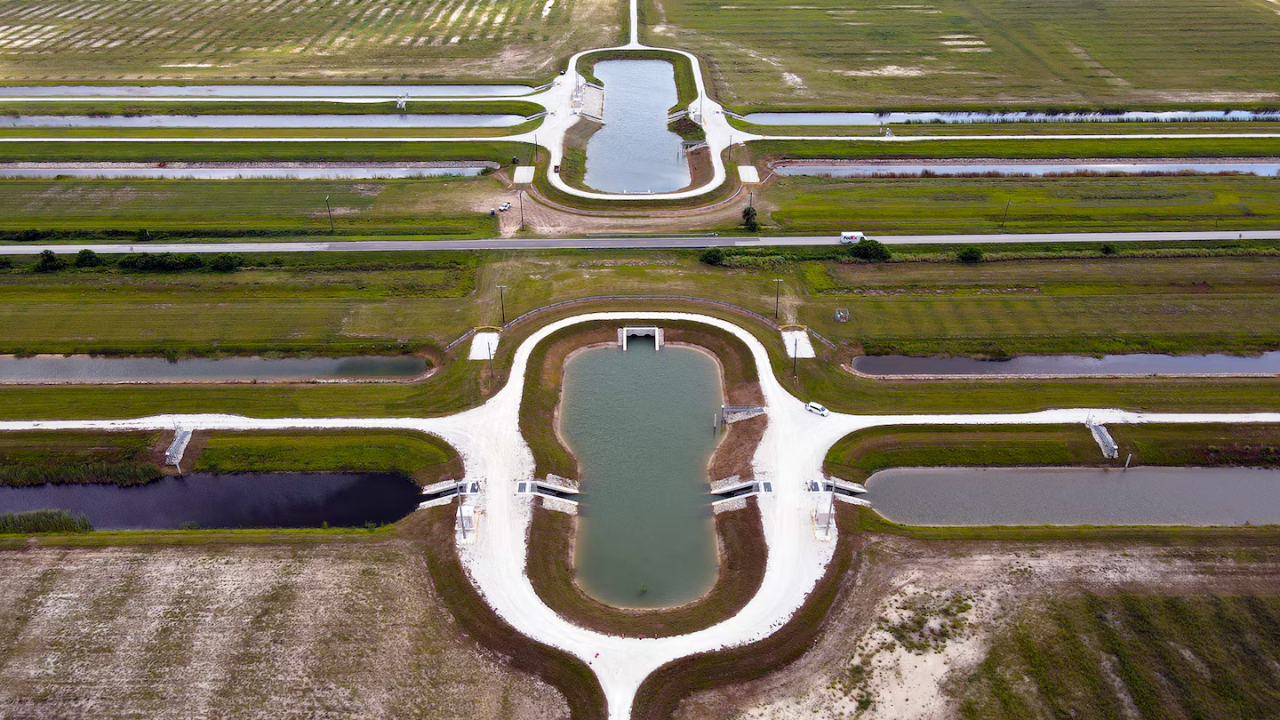
Florida completed a 2,560-acre stormwater treatment landscape with 4,750 acre-feet of storage
Summarized and contextualized by DistantNews.
At a glance
News
Official statement
New plan
- A significant environmental restoration project in South Florida has reached a milestone with the completion of a 2,560-acre stormwater treatment area.
- The new facility is designed to capture and clean runoff before it enters the Indian River Lagoon and St. Lucie Estuary, protecting vital ecosystems.
- This project is a key component of the Comprehensive Everglades Restoration Plan, aiming to improve water quality and support biodiversity in the region.
A major environmental restoration project in South Florida has achieved a significant milestone with the completion of the C-23/C-24 Stormwater Treatment Area (STA). This expansive 2,560-acre facility is designed to capture and treat runoff from agricultural and urban sources before it pollutes the Indian River Lagoon and St. Lucie Estuary.
The new STA, a critical part of the multi-billion-dollar Comprehensive Everglades Restoration Plan (CERP), can store up to 4,750 acre-feet of water. Its primary function is to act as a natural filter, utilizing wetland plants to remove excess nutrients like phosphorus and nitrogen. These nutrients, when entering coastal waters, can lead to harmful algae blooms, reduced water clarity, and detrimental changes in salinity levels essential for marine life.
Col. Brandon Bowman, commander of the USACE Jacksonville District, emphasized the ecological and economic importance of the Indian River Lagoon and St. Lucie Estuary, describing them as the "heart of South Florida’s natural heritage." These waterways support thousands of plant and animal species and are crucial for the region's economy, recreation, and communities.
With the major earthwork completed, the C-23/C-24 STA is now entering its operational phase, which includes a crucial vegetation "grow-in" period. The project, jointly managed by the U.S. Army Corps of Engineers and the South Florida Water Management District, also involves extensive water infrastructure, including levees and internal culverts, to manage water flow and maintain stable salinity levels vital for seagrass beds and fish nursery areas.
The Indian River Lagoon and the St. Lucie Estuary are more than just a simple body of water, they are the heart of South Florida’s natural heritage.
DistantNews Editorial
Originally published by Times of India. Summarized and contextualized by our editorial team with added local perspective. Read our editorial standards.
More Stories

From Our Blog

What Press Freedom Means for the News You Read

What Gets Lost (and Found) When News Is Translated

The Critical Role of Diaspora Media in Global News

What Travellers Should Know About Countries with Restricted Press

A Digital Nomad's Guide to Following Local News
