



Former Deputy Attorney General implicated in money laundering probe dating back to 2018
Translated from Indonesian and summarized by DistantNews. Read the original for the full story.
At a glance
News
Sources not specified
Under investigation
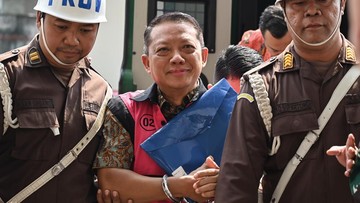
- A preliminary hearing revealed that former Deputy Attorney General for Special Crimes, Febrie Adriansyah, is allegedly involved in money laundering activities.
- The alleged money laundering activities reportedly occurred over an eight-year period, starting in 2018.
- The court is examining the application of criminal law across different time periods, considering the new national criminal code and previous laws.
A preliminary hearing has brought to light allegations of money laundering against Febrie Adriansyah, the former Deputy Attorney General for Special Crimes. The court heard that Adriansyah is suspected of engaging in money laundering activities over the past eight years, with the alleged criminal acts dating back to 2018.
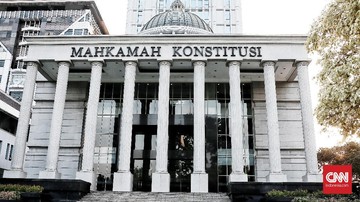
During the hearing at the South Jakarta District Court, Presiding Judge Richard Edwin Basoeki addressed the complexities of applying criminal law when offenses span different legislative periods. Adriansyah's legal team had argued against the application of certain articles in the Criminal Code, citing changes in legislation. The judge explained the principle of 'lex favoreo' or 'lex mitior,' which dictates that if a new law is enacted after a crime is committed, the new law applies unless the old law is more favorable to the offender.
The judge further elaborated that the application of inter-temporal criminal law requires a careful comparison between old and new provisions, not automatic or partial application. The prosecution's suspect designation letter for Adriansyah indicated that the alleged money laundering activities occurred between 2018 and 2026. This timeframe means the investigation spans periods both before and after the enactment of Indonesia's new National Criminal Code.
Consequently, determining the applicable criminal code and penalties requires a detailed analysis. The court must first identify which specific acts occurred before January 2, 2026, and which occurred after. It then needs to compare the elements and penalties under the old and new laws to ascertain which set is more favorable to the defendant. The judge emphasized that the designation of a suspect does not equate to a conviction; the investigators have not yet finalized which legal norms will form the basis for a guilty verdict.
About this summary
Originally published by CNN Indonesia in Indonesian. Translated, summarized, and contextualized automatically by DistantNews, with a note on how the source frames the story. Not individually reviewed before publishing. How this works.
More Stories

From Our Blog

What Gets Lost (and Found) When News Is Translated

The Critical Role of Diaspora Media in Global News

What Travellers Should Know About Countries with Restricted Press

A Digital Nomad's Guide to Following Local News

How the Same Story Looks Different in Different Countries
