


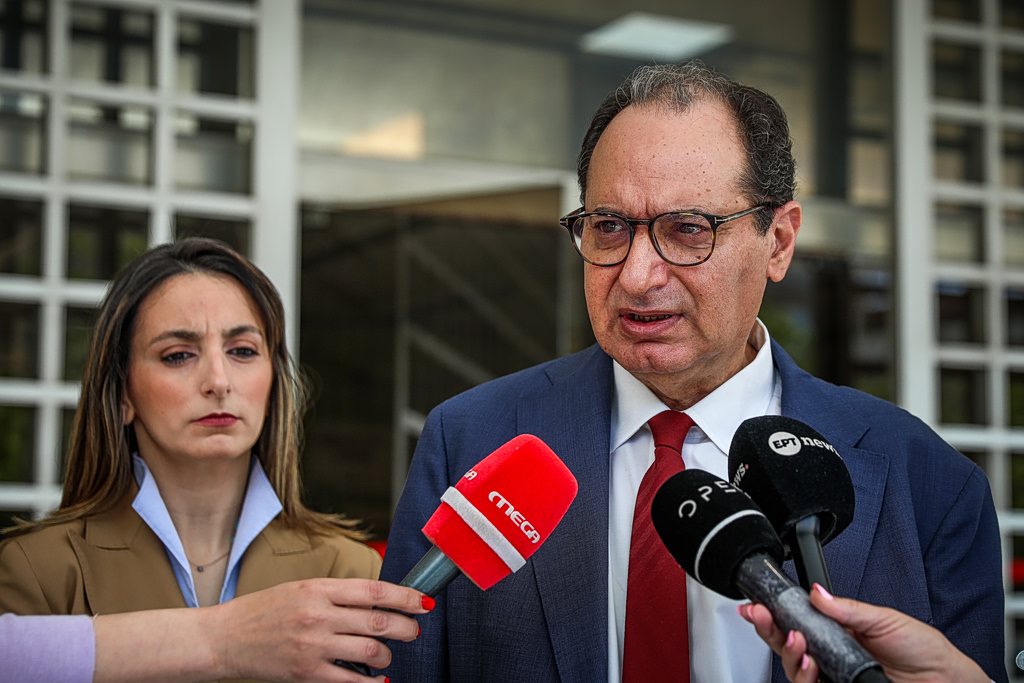
Former Greek Minister Christos Spirtzis Takes Wiretapping Case to European Court
Translated from Greek and summarized by DistantNews. Read the original for the full story.
At a glance
News
Named sources
In the courts
- Former Greek minister Christos Spirtzis has filed a complaint with the European Court of Human Rights concerning the wiretapping scandal.
- Spirtzis alleges that the Greek judiciary's handling of the case, including the archiving of investigations, is unacceptable and politically influenced.
- He claims violations of his rights to privacy, freedom of expression, and a fair trial, asserting that the case has international implications for democratic institutions.
Former Greek minister Christos Spirtzis has escalated his fight against alleged government surveillance by filing a complaint with the European Court of Human Rights (ECHR) in Strasbourg. This move follows a similar legal challenge initiated by journalist Thanasis Koukakis, who also claims to be a victim of illegal wiretapping.
I have filed a complaint with the European Court of Human Rights.
Spirtzis, a prominent figure from the SYRIZA party, publicly announced his ECHR appeal, launching a strong critique against what he describes as the Greek judiciary's mishandling of the wiretapping affair. He specifically targeted the actions of the former prosecutor of the Supreme Court, Konstantinos Tzavellas, and the subsequent decision by the Judicial Council of the Supreme Court to dismiss his request for Tzavellas's recusal due to alleged bias.
In his appeal, Spirtzis cites alleged violations of Articles 8 (right to respect for private and family life), 10 (freedom of expression), and 6 (right to a fair trial) of the European Convention on Human Rights. He argues that these rights have been compromised by the lack of an effective and thorough criminal investigation into the wiretapping allegations, which he links to the Greek intelligence service (EYP).
It should not be tolerated that a Prosecutor who is personally involved in the Greek Watergate, like the former Deputy Prosecutor of EYP, takes on the case and archives it.
Spirtzis contends that the perceived institutional decay and the undermining of justice by the current government are not only damaging his personal rights but also internationally tarnishing Greece's reputation. He asserts that the stakes are far higher than just his individual case, encompassing the protection of democratic institutions, the constitution, and democracy itself.
It should not be tolerated that the Judicial Council of the Supreme Court refrains from issuing a decision on the merits of the request we submitted for the recusal of the said prosecutor due to bias.
He vowed to continue his institutional initiatives beyond Greece's borders, stating that after what he calls the "scandalous cover-up" by the leadership of the Supreme Court regarding espionage charges and EYP's involvement in the wiretapping scandal, the case will now be a matter for European justice.
Institutional decline, the collapse of justice, and institutional degradation must not be tolerated.
About this summary
Originally published by Ta Nea in Greek. Translated, summarized, and contextualized automatically by DistantNews, with a note on how the source frames the story. Not individually reviewed before publishing. How this works.
More Stories


From Our Blog

What Gets Lost (and Found) When News Is Translated

The Critical Role of Diaspora Media in Global News

What Travellers Should Know About Countries with Restricted Press

A Digital Nomad's Guide to Following Local News

How the Same Story Looks Different in Different Countries
