

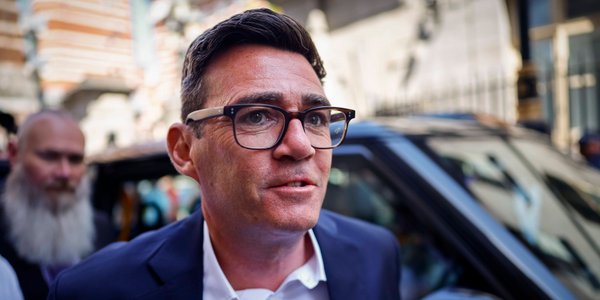
Former Manchester Mayor Andy Burnham Nears Downing Street Leadership
Translated from Polish, summarized and contextualized by DistantNews.
At a glance
News
Sources not specified
New plan
- Former Manchester Mayor Andy Burnham is on the verge of becoming the leader of the Labour Party and potentially the next British Prime Minister.
- Burnham has secured the required number of nominations from Labour MPs, with only one more signature needed to prevent other candidates from entering the race.
- The nomination process closes on July 16, and if Burnham remains the sole candidate, he would be confirmed as leader on July 17.
Andy Burnham, the former mayor of Manchester, is poised to become the leader of the Labour Party, potentially positioning him as the next British Prime Minister. The party announced that Burnham has officially gathered the required number of nominations from its parliamentary members. He is just one signature away from securing his position unopposed, effectively closing the door for any other contenders.
The official nomination process began on Thursday morning. According to Labour Party rules, any candidate must secure nominations from 20% of the parliamentary party, which translates to 81 Members of Parliament. Burnham surpassed this threshold on the first day, collecting 322 signatures. This overwhelming support means that if just one more MP backs him, he will be the only candidate in the running.
Andy Burnham has collected the required number of signatures. He is just one signature away from securing his position unopposed, effectively closing the door for any other contenders.
The Labour parliamentary club consists of 403 members. Prominent figures who have reportedly endorsed Burnham include Shadow Chancellor Rachel Reeves, former party leader Ed Miliband, House of Commons Defence Committee Chair Tanmanjeet Singh Dhesi, and MP Rosena Allin-Khan. The nomination period is set to conclude on July 16. Should Burnham face no opposition, he is scheduled to be formally approved as leader at a special conference on July 17. Following an audience with King Charles III on July 20, he would then become the new leader of the Labour Party.
Potential leaders must also gain support from at least three affiliated organizations, such as trade unions. However, most commentators view this condition as a formality for Burnham, especially since the "Unite" union has already declared its support. Prime Minister Keir Starmer resigned on June 22, citing poor poll numbers, disappointing results in local elections, and growing internal dissatisfaction within the party. Three days prior, Burnham had secured a seat in the House of Commons in a by-election in Makerfield, fulfilling the Labour Party's requirement that a leadership candidate must be a sitting MP. Burnham had previously sought to lead the party in 2010 and 2015, but lost to Ed Miliband and Jeremy Corbyn, respectively.
Prime Minister Keir Starmer resigned from his post. This is the result of, among other things, poor polls, local election results in England, and elections to the parliaments in Scotland and Wales, as well as growing dissatisfaction within the party.
DistantNews Editorial
Originally published by Rzeczpospolita in Polish. Translated, summarized, and contextualized by our editorial team with added local perspective. Read our editorial standards.
More Stories

From Our Blog

What Gets Lost (and Found) When News Is Translated

The Critical Role of Diaspora Media in Global News

What Travellers Should Know About Countries with Restricted Press

A Digital Nomad's Guide to Following Local News

How the Same Story Looks Different in Different Countries
