

From 'Anti-Meme Law' to 'smelling of the trunk': Nay Salvatori's controversies, Morena reviews her membership
Translated from Spanish, summarized and contextualized by DistantNews.
At a glance
News
Sources not specified
Context piece
- Nayeli Salvatori, a Morena deputy in Puebla, faces internal party review for calling older adults "smelling of the trunk."
- This remark, made on a podcast, sparked widespread criticism and led to an investigation by Morena's National Commission of Honesty and Justice regarding her party membership.
- Salvatori apologized, claiming her words were taken out of context and defending her right to free expression, but her political career has been marked by provocative statements and viral content since 2018.
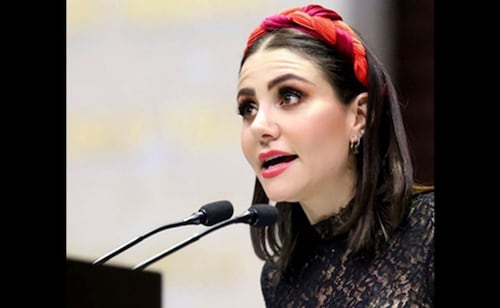
Nayeli Salvatori, a deputy from the ruling Morena party in Puebla, finds herself at the center of a public debate and an internal party investigation following controversial remarks about older adults. Describing them as people who "smell of the trunk," Salvatori's comments, made on a podcast, ignited a wave of criticism and prompted Morena's National Commission of Honesty and Justice to initiate proceedings that could lead to the revocation of her party membership.
In her public apology, Salvatori asserted that her statements were misrepresented and taken out of context. She also defended her right to freedom of expression. However, this incident is not an isolated one in her political career, which began in 2018. The former radio host and comedy influencer has built a public profile characterized by provocative declarations, viral videos, and legislative proposals that frequently stir controversy.
Salvatori's political journey has been punctuated by several notable incidents. During her campaign for federal deputy, past social media posts containing vulgar language resurfaced, contrasting sharply with her political aspirations. As a legislator, she once responded to criticism about her salary by stating, "I don't live off your taxes, I live off my husband's," fueling debate about the relationship between elected officials and the public. In 2020, she proposed an initiative to penalize the alteration of images and videos for defamatory purposes, which critics dubbed the "Anti-Meme Law," raising concerns about potential impacts on freedom of expression and political satire.
Further controversies include her stance during the COVID-19 pandemic, where she argued that public hospital staff should have priority over private healthcare workers in vaccination strategies, leading to heated online discussions. More recently, in October 2023, she generated backlash by posting videos from within the Chamber of Deputies where she used demeaning descriptions for female legislators and workers, employing terms like "M&M's" and "pastorela devil."
DistantNews Editorial
Originally published by El Universal in Spanish. Translated, summarized, and contextualized by our editorial team with added local perspective. Read our editorial standards.
More Stories

From Our Blog

What Press Freedom Means for the News You Read

What Gets Lost (and Found) When News Is Translated

The Critical Role of Diaspora Media in Global News

What Travellers Should Know About Countries with Restricted Press

A Digital Nomad's Guide to Following Local News
