

From Bronze Age to the Silk Road: Tracing Kazakhstan’s Ancient Past
Summarized and contextualized by DistantNews.
At a glance
In-depth
Named sources
Context piece
- Archaeologists in Kazakhstan are advancing research and preservation projects at significant Bronze Age and Golden Horde sites.
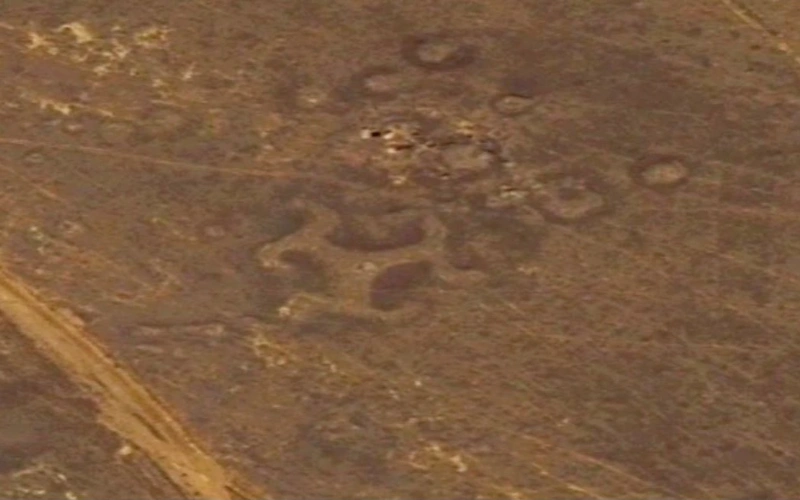
- A rare Bronze Age complex at the Alekseyevka site in Rudny includes a burial ground, sacrificial mound, and settlement.
- Discoveries at Alekseyevka include a unique burial of a potentially tall woman, offering clues about Bronze Age society.
Kazakhstan is actively pursuing research and preservation initiatives at key archaeological sites, spanning from the Bronze Age to the Golden Horde era. These projects aim to deepen the understanding of the nation's rich archaeological heritage and ensure its long-term conservation. Efforts are underway at sites including Bronze Age settlements in Rudny and monuments from the Golden Horde period, as well as a trade hub on the Caspian Sea.
In the Kostanai Region, the Alekseyevka site in Rudny stands out for its unusual combination of three Bronze Age monuments: a burial ground, a sacrificial mound, and an ancient settlement. This complex belongs to the Andronovo archaeological horizon, a widespread group of Bronze Age cultures across the Eurasian steppe. While Andronovo sites are found throughout northern Kazakhstan, the southern Urals, and Siberia, the integrated nature of the Alekseyevka complex is considered exceptionally rare.
No comparable complex has been found elsewhere in Russia or Kazakhstan. At other sites, researchers identified only a burial ground, a settlement or a sacrificial mound. Here, all three were found together
The Alekseyevka site first gained scientific attention in 1921 when a geology student noticed ancient vessel fragments and tools being washed out by the Tobol River. Systematic excavations began in 1931 under Soviet archaeologist Olga Krivtsova-Grakova. These excavations uncovered 21 burials, the sacrificial mound, and remnants of dwellings. A particularly remarkable discovery was a woman buried in the center of the cemetery, distinguished by her potentially towering height, approaching two meters, compared to the average height of 1.3 to 1.4 meters observed at the site. Her burial also differed, with her body placed on its right side and surrounded by eight vessels, suggesting a person of high standing in Bronze Age society.
The woman was also buried differently from the others. Her body was placed on its right side rather than the left, and eight vessels were arranged beside her – four near her head and four near her feet. According to Kurguzkin, people of high standing were commonly buried in the central part of a cemetery, and the woman’s unusual stature suggested she held a
DistantNews Editorial
Originally published by The Astana Times. Summarized and contextualized by our editorial team with added local perspective. Read our editorial standards.
More Stories

From Our Blog

What Gets Lost (and Found) When News Is Translated

The Critical Role of Diaspora Media in Global News

What Travellers Should Know About Countries with Restricted Press

A Digital Nomad's Guide to Following Local News

How the Same Story Looks Different in Different Countries
