


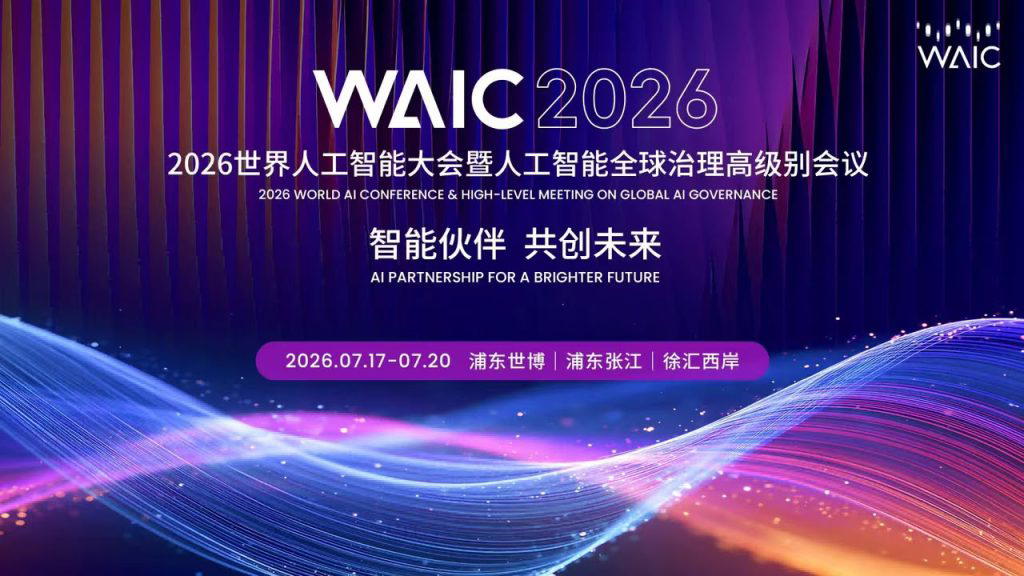
From 'Smart Partner' to 'Global Solution': WAIC 2026 Shows Another Path Of AI Development
Translated from English, summarized and contextualized by DistantNews.
At a glance
In-depth
Sources not specified
Context piece
- The 2026 World Artificial Intelligence Conference in Shanghai showcased China's distinct AI development path, focusing on system integration and large-scale deployment over single-chip performance.
- Chinese companies like Huawei and Zhongke Shuguang displayed advanced AI supercomputing clusters, signaling a shift from "chip competition" to "system integration."
- China's AI governance approach emphasizes risk awareness and controllability, contrasting with the US focus on technological leadership and the EU's risk-based regulatory system.
The 2026 World Artificial Intelligence Conference in Shanghai highlighted a divergence in artificial intelligence development strategies between China and Western counterparts. This year's event, featuring over 1,100 enterprises and 3,000 exhibits, underscored China's focus on system integration and large-scale deployment in AI, moving beyond the "sprint" of individual chip performance.
the global computing power competition is shifting from the “100-meter sprint” of single chip performance to the “marathon” of system integration and large-scale deployment.
Exhibits like Huawei's Atlas 950 super node and Zhongke Shuguang's "Shuguang 8000" AI super cluster demonstrated China's prowess in building interconnected, large-scale computing power. This approach emphasizes tangible, "real machine" deployments that visitors can experience, contrasting with the more roadmap-driven presentations often seen from American companies. The conference signaled a shift towards a "marathon" of system integration and practical application.
In AI governance, China presented a distinct framework emphasizing "risk awareness to ensure safety and controllability," as articulated by President Xi Jinping. This is juxtaposed against the United States' focus on maintaining global technological leadership and its "loosening" approach to balance security and innovation, and the European Union's "Artificial Intelligence Act" which employs a risk-based regulatory system. China also released national standards for "Artificial Intelligence Agent Interconnection," aiming for systematic, full-lifecycle governance.
strengthening risk awareness to ensure safety and controllability
The conference's theme, "From 'Smart Partner' to 'Global Solution,'" suggests China's ambition to offer comprehensive AI solutions on a global scale, charting a path that complements rather than directly competes with Silicon Valley's model. This emphasis on project landing and system-level solutions presents a different vision for AI's future.
we should jointly oppose the generalization of the concept of national security in the field of artificial intelligence
DistantNews Editorial
Originally published by Vanguard in English. Translated, summarized, and contextualized by our editorial team with added local perspective. Read our editorial standards.
More Stories



From Our Blog

How the Same Story Looks Different in Different Countries

What Gets Lost (and Found) When News Is Translated

The Critical Role of Diaspora Media in Global News

What Travellers Should Know About Countries with Restricted Press

A Digital Nomad's Guide to Following Local News
