


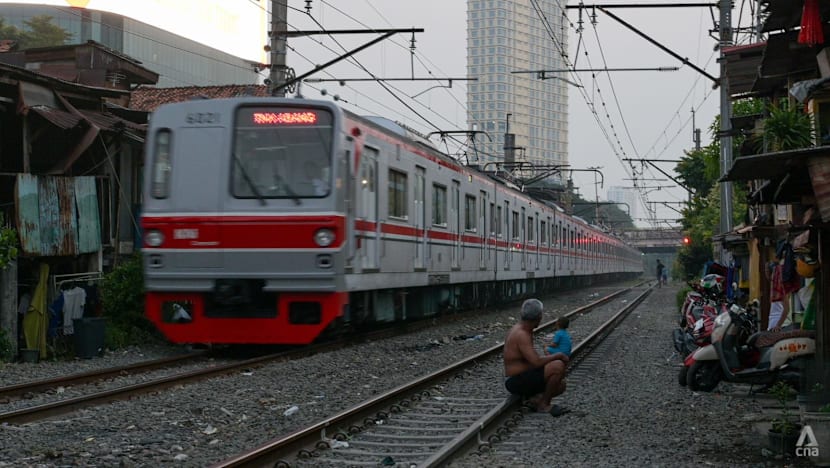
From trackside shacks to new homes, Jakarta families weigh what comes next
Summarized and contextualized by DistantNews.
At a glance
News
Named sources
Ongoing story
- Families in Jakarta, Indonesia, have long lived in makeshift homes next to active railway tracks, accustomed to the noise and danger.
- President Prabowo Subianto visited these settlements and pledged to provide proper housing, prompting the state railway company to inventory similar areas.
- Some residents have already moved to new government-built settlements, and the railside areas are being cleared.
For years, families in Jakarta's Tanah Abang district have lived in informal settlements beside active railway tracks, their lives dictated by the constant rumble of passing trains. These homes, often built less than five meters from the lines, mean conversations are frequently interrupted, and children playing nearby must constantly be aware of approaching trains. Despite the inherent dangers, residents like Tuti Lestari, who has lived by the tracks her entire life, have grown accustomed to the environment.
There are … accidents. If someone doesn't know the routes and just walks (across the tracks)
Accidents, however, are a reality. Lestari noted that about one person dies each year while attempting to cross the tracks, often those unfamiliar with the area or train schedules. This precarious existence gained national attention when President Prabowo Subianto visited railside settlements in Pasar Senen, Central Jakarta, in March. During his visit, he listened to residents' concerns and promised swift action to provide them with decent housing.
Following the President's visit, an official from the state-owned Indonesian Railway Company (KAI) announced that Prabowo had instructed the company to identify all residential areas situated along railway tracks across the country. This inventory, starting in Pasar Senen, will serve as a basis for targeted development projects aimed at relocating residents. While an official figure is unavailable, the government estimates thousands of Indonesians live in such conditions across Java, Sumatra, and Sulawesi.
This afternoon, I walked around the residential area along the railway tracks in the Senen area, Central Jakarta. It's located about 3km from downtown Jakarta. Having heard the aspirations of the local community, God willing, we will quickly build decent housing for the people in that area.
Progress has already been made in Pasar Senen, where dozens of households began moving to a new government-built settlement by the end of June. The areas they vacated have since been cleared. This initiative marks a significant step towards addressing the long-standing issue of informal settlements along vital transportation routes, offering a path toward safer and more stable housing for affected families.
Starting in the Pasar Senen area and expanding to all KAI-managed lines with similar conditions as a basis for targeted development
DistantNews Editorial
Originally published by CNA. Summarized and contextualized by our editorial team with added local perspective. Read our editorial standards.
More Stories



From Our Blog

What Gets Lost (and Found) When News Is Translated

The Critical Role of Diaspora Media in Global News

What Travellers Should Know About Countries with Restricted Press

A Digital Nomad's Guide to Following Local News

How the Same Story Looks Different in Different Countries
