


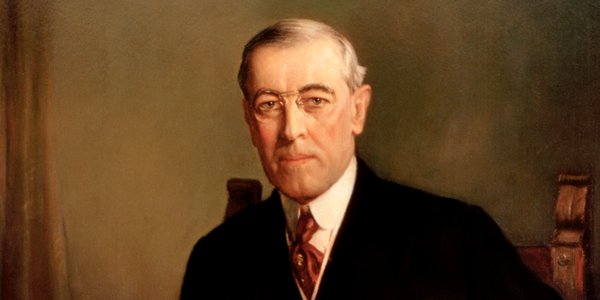
From Wilson to Kennedy: The Declaration's American Legacy in the 20th Century
Translated from Polish, summarized and contextualized by DistantNews.
At a glance
Analysis
Sources not specified
Context piece
- The principles of the Declaration of Independence became integral to how U.S. presidents justified America's global role in the 20th century.
- President John F. Kennedy invoked this legacy in his 1961 inaugural address, emphasizing the enduring struggle for freedom worldwide.
- The article discusses how American presidents used the Declaration's ideals to frame U.S. foreign policy throughout the 20th century.
Throughout the 20th century, the ideals and principles enshrined in the Declaration of Independence evolved into a key component of American presidents' rhetoric, serving to justify the nation's expanding global presence.
On January 20, 1961, John F. Kennedy, upon taking the presidential oath amidst a world defined by the Cold War, nuclear threats, and the Cuban Revolution, referenced this historical lineage. In his inaugural address, Kennedy described Americans as "heirs of the first revolution." He underscored that the foundational beliefs fought for by the nation's founders "are still the subject of debate around the world." Kennedy pledged that the United States would "bear any burden" and "meet any hardship" to ensure "the survival and the success of freedom."
This framing, rooted in the Declaration of Independence, provided a consistent ideological basis for American foreign policy across different administrations. Presidents utilized these core tenets to articulate the nation's role and responsibilities on the international stage, linking American actions to the universal pursuit of liberty and self-determination. The article explores how this historical and philosophical inheritance shaped America's engagement with the world during a tumultuous century.
DistantNews Editorial
Originally published by Rzeczpospolita in Polish. Translated, summarized, and contextualized by our editorial team with added local perspective. Read our editorial standards.
More Stories

From Our Blog

What Gets Lost (and Found) When News Is Translated

The Critical Role of Diaspora Media in Global News

What Travellers Should Know About Countries with Restricted Press

A Digital Nomad's Guide to Following Local News

How the Same Story Looks Different in Different Countries
