


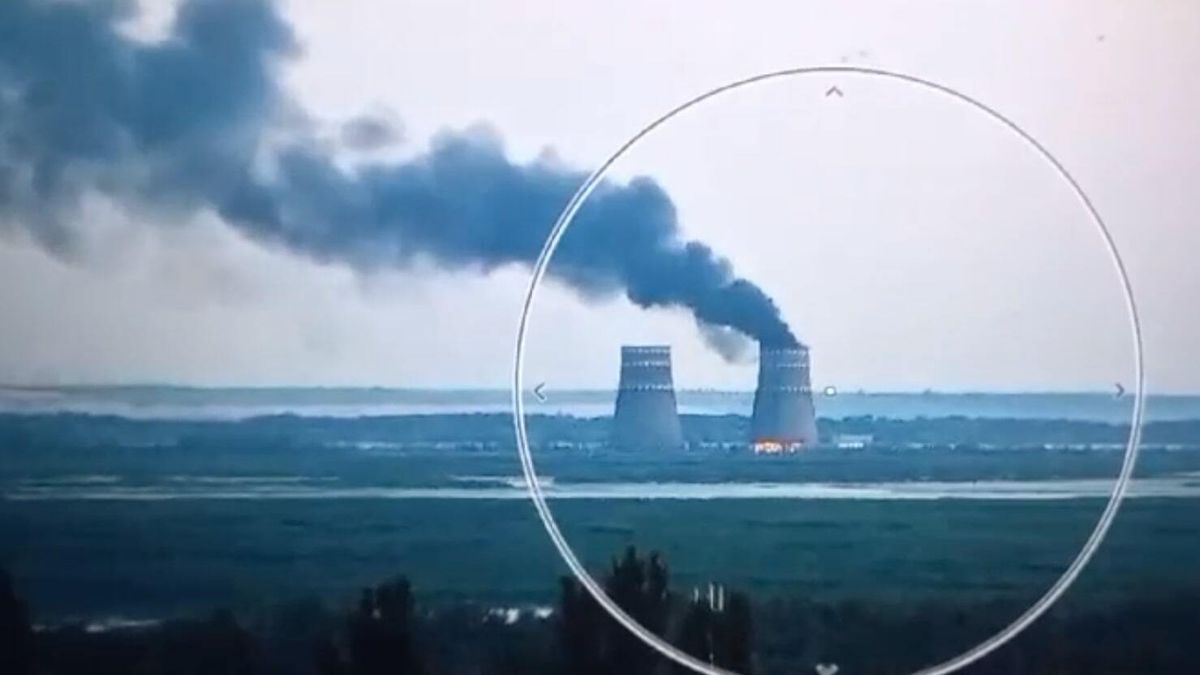
Frontline Zaporizhzhia Nuclear Plant Faces Mounting Risks Amid Conflict
Translated from Hungarian, summarized and contextualized by DistantNews.
At a glance
News
Named sources
Ongoing story
- The Zaporizhzhia Nuclear Power Plant, located in Russian-occupied territory, faces significant risks due to its frontline position and ongoing drone attacks.
- The plant's operational staff is largely Ukrainian, many of whom have been pressured to accept Russian citizenship, creating a complex legal and demographic situation.
- Maintaining the plant, even in cold shutdown, incurs substantial costs and requires significant fuel for backup generators, posing logistical challenges for Rosatom.
The Zaporizhzhia Nuclear Power Plant, situated perilously close to the front lines in Russian-occupied territory, faces a "tragic fate" as it becomes a target amid the conflict. The plant's unique demographic and legal status exacerbates the risks associated with its frontline location and ongoing drone attacks.
The victims of drone attacks? The example of Energodar, located in the immediate vicinity of the front line, well reflects the specific legal and demographic situation of the territories occupied by Russia.
Energodar, the city housing the plant, reflects the complex situation in Russian-controlled areas. While internationally recognized as Ukrainian territory, the plant's pre-war workforce was predominantly Ukrainian. Reports suggest that Rosatom and local Russian administrations have increasingly tied contract renewals and access to social and healthcare benefits to the adoption of Russian citizenship and passports. This has resulted in many plant workers holding dual status, legally registered as Russian citizens while ethnically identifying as Ukrainian.
Both Ukrainian military intelligence (GUR) and Energoatom deny targeting civilian areas, attributing incidents in the region to Russian "false flag" provocations or collateral damage from Russian military logistics and electronic warfare systems deployed in residential zones. Meanwhile, international observers from the IAEA continue their work under stressful conditions.
Both the Ukrainian military intelligence (GUR) and Energoatom, in parallel, reject the attack on civilian targets, and regularly treat incidents in the region as Russian false flag provocations or as collateral damage against Russian military logistics and electronic warfare systems deployed in residential areas.
Despite not generating electricity, the plant requires continuous operation for cooling its fuel elements and maintaining safety systems, consuming a significant amount of external power daily. Damage to substations and power lines necessitates the use of emergency diesel generators, which consume hundreds of liters of diesel per hour. Supplying fuel for these generators during a network outage is a difficult and costly endeavor for Rosatom, especially given the plant's frontline location. The overall maintenance of the facility, even in a cold shutdown state, could cost tens of millions of dollars monthly, presenting a substantial financial and logistical burden.
All six blocks of the power plant are in cold shutdown, meaning they do not generate electricity for the grid, but the continuous cooling of fuel elements and the maintenance of safety systems generate a significant demand for external power, consuming roughly 1200–2400 MWh of electricity per day.
DistantNews Editorial
Originally published by Magyar Nemzet in Hungarian. Translated, summarized, and contextualized by our editorial team with added local perspective. Read our editorial standards.
More Stories


From Our Blog

Countries Without a Free Press: What You Need to Know

What Press Freedom Means for the News You Read

What Gets Lost (and Found) When News Is Translated

The Critical Role of Diaspora Media in Global News

What Travellers Should Know About Countries with Restricted Press
