


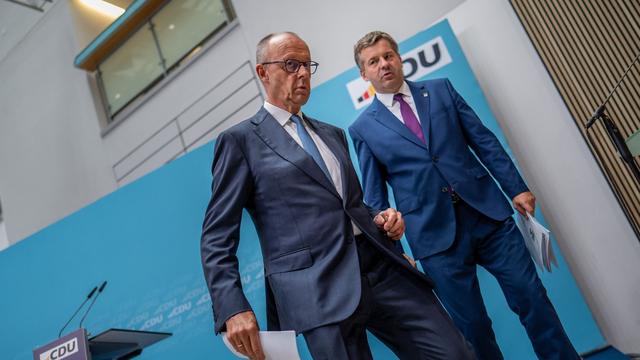

Fuest: AfD, Left and BSW support puts eastern Germany at an economic disadvantage
Translated from German and summarized by DistantNews. Read the original for the full story.
At a glance
Newswire
Named sources
Context piece
- Ifo President Clemens Fuest says strong support for the AfD, Left and BSW creates an economic disadvantage for eastern German states.
- He warns that companies may reduce investment in regions where radical parties could form governments and create poor conditions for business.
- Fuest also criticizes Germany’s fiscal equalization system for shifting much of the cost of poor state-level policy to the wider federal community.
Clemens Fuest, president of Germany’s Ifo economic institute, says the strength of populist parties could become a direct economic liability for eastern Germany. He told Capital that the AfD, the Left and the Sahra Wagenknecht Alliance, or BSW, currently hold majorities in eastern German states.
“Governments against them are no longer possible. That is a location disadvantage,” Fuest said. He argued that companies would invest less in regions where parties likely to create poor conditions for business could enter government.
Governments against them are no longer possible. That is a location disadvantage.
Fuest linked the risk not only to areas where the Alternative for Germany records strong election results, but to every region with high support for radical parties. In his view, uncertainty over future economic policy can affect investment before any government takes office.
In a democracy, voters also have the right to choose economic decline.
The economist also criticized the consequences of Germany’s state fiscal equalization system. If a state gets itself into economic difficulty, he said, a substantial share of the costs is passed on to the federal community. He described that as a long-standing problem, pointing to the heavily indebted western states of Bremen and Saarland as examples.
At the same time, Fuest acknowledged the democratic choice involved. “In a democracy, voters also have the right to choose economic decline,” he said.
If the risk is high that parties may come to power in a region that create poor conditions for business activity, investments will fall.
About this summary
Originally published by Die Zeit in German. Translated, summarized, and contextualized automatically by DistantNews, with a note on how the source frames the story. Not individually reviewed before publishing. How this works.
More Stories
From Our Blog

News in Translation: What Gets Lost, and How We Keep the Framing

The Same Story, Different Countries: How Coverage Changes at the Border

Diaspora Media: How Communities Follow News From Home

Traveling Where the Press Is Not Free: How to Read the News There

The Digital Nomad's Guide to Local News
