

Fulung the sun bear: A life shaped by human affection
Translated from Malay, summarized and contextualized by DistantNews.
At a glance
In-depth
Named sources
Context piece
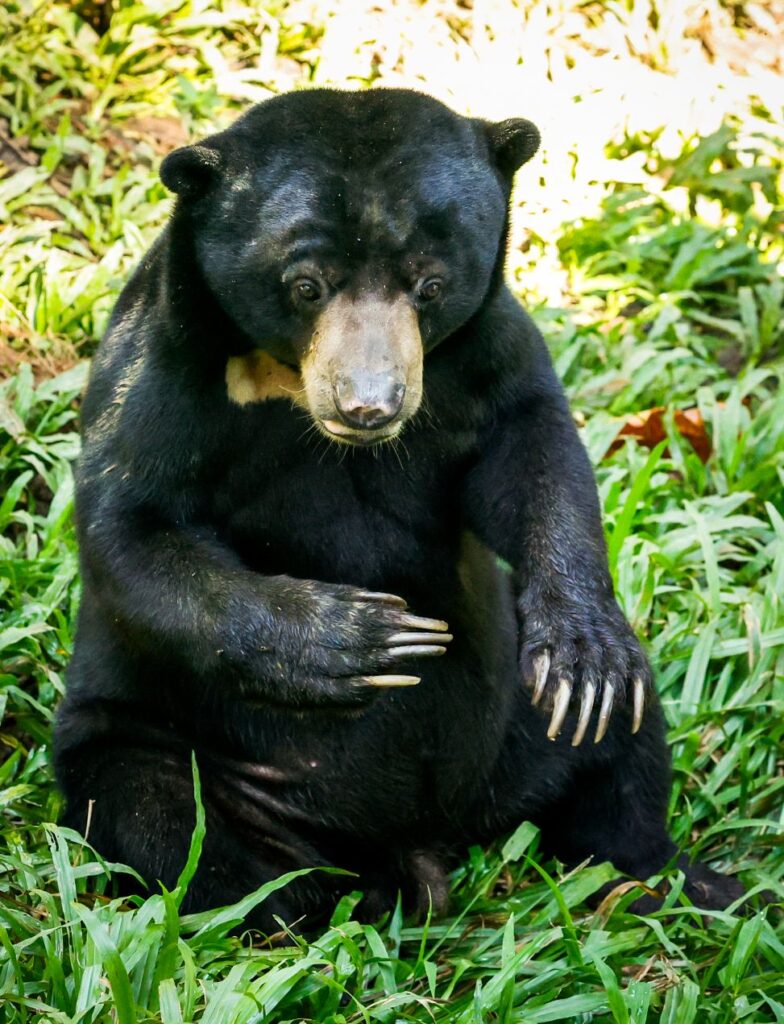
- Fulung, a sun bear rescued as a cub, has become a popular attraction at the Borneo Sun Bear Conservation Centre (BSBCC) due to his unusually human-like behavior.
- Having been kept as a pet, Fulung displays a high dependence on humans, often seeking attention and exhibiting behaviors like waving and sitting like a person, which have diminished his natural wild instincts.
- Conservationists face significant challenges in rehabilitating and releasing such bears, as they may struggle to find food, defend themselves, or avoid human settlements, sometimes requiring lifelong care at the center.
Fulung, a sun bear with a name meaning 'forest' in the Lundayeh language, arrived at the Borneo Sun Bear Conservation Centre (BSBCC) on August 15, 2011. While he is now a beloved resident, known for his affectionate and attention-seeking nature that charms tourists, his past as a pet has left a significant mark. Found by a hunter named Nooh in a remote forest in Sabah, Fulung was surrendered to the BSBCC at nine months old to ensure he received proper care.
His prolonged interaction with humans has led to a peculiar dependence, causing him to exhibit behaviors rarely seen in wild sun bears. Fulung often sits in a human-like posture and has been observed waving at passersby, demonstrating a strong emotional bond with people. This upbringing has unfortunately eroded some of his natural instincts, making him less equipped for life in the wild.
Mohd. Haniff Mohd. Busrah, an environmental education officer at BSBCC, explains the difficulty in reintroducing bears like Fulung back into their natural habitat. "When these bears become accustomed to humans, the effort to make them wild again is very challenging. Sometimes we have to accept that they cannot be released and need to be cared for entirely at the center," he stated. Such bears may struggle to forage for food independently or defend themselves against threats, risking a return to human settlements for sustenance and attention.
The BSBCC currently houses 43 sun bears, with two undergoing a gradual release process. For bears with the potential to return to the wild, a "soft release" method is employed, allowing them to gradually adapt to living independently over three to four years. Post-release, GPS collars are fitted to monitor their movements. The center's work is crucial as the sun bear population has declined by approximately 30 percent in the last 30 years, highlighting the ongoing threats to the species.
When these bears become accustomed to humans, the effort to make them wild again is very challenging. Sometimes we have to accept that they cannot be released and need to be cared for entirely at the center.
DistantNews Editorial
Originally published by Utusan Malaysia in Malay. Translated, summarized, and contextualized by our editorial team with added local perspective. Read our editorial standards.
More Stories
From Our Blog

What Gets Lost (and Found) When News Is Translated

The Critical Role of Diaspora Media in Global News

What Travellers Should Know About Countries with Restricted Press

A Digital Nomad's Guide to Following Local News

How the Same Story Looks Different in Different Countries
