

Gaza: Cancer's Deadly Silence After the Bomb's Roar
Translated from French and summarized by DistantNews. Read the original for the full story.
At a glance
News
Named sources
Context piece
- Thousands of cancer patients in Gaza face a slow death due to a lack of treatment, medical supplies, and evacuation visas.
- The ongoing blockade and international community's slow response have crippled Gaza's healthcare system, leaving specialized services virtually non-functional.
- Patients like Najat al-Loh are receiving only rudimentary palliative care as the disease spreads beyond curable stages, highlighting a systemic health crisis exacerbated by conflict.
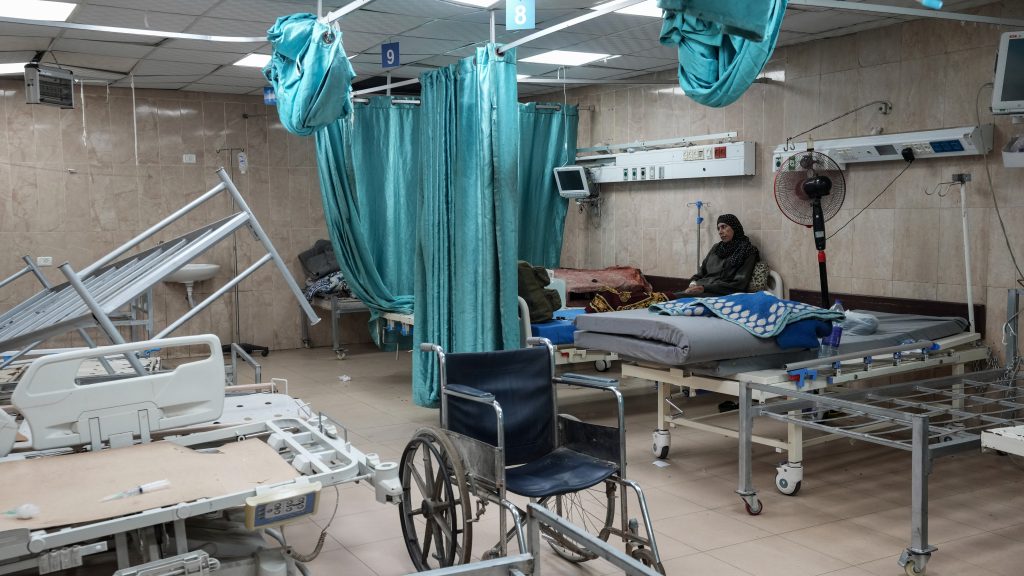
Nine months after the official end of the war, a silent tragedy unfolds in Gaza's cancer wards. Thousands of patients are condemned to a slow death, deprived of essential treatments, medical equipment, and evacuation visas. This grim reality is a direct consequence of a persistent blockade and the international community's sluggish response.
Najat al-Loh, a 48-year-old woman, learned of her 7-centimeter tumor just moments before hearing of her son's death from an Israeli bombing. Nine months later, she has five new tumors, some as large as tennis balls. Her 13-year-old son, Khaleel, struggles to decipher her chaotic pile of medical documents, a testament to the dire lack of accessible care. Despite a peace plan that promised aid, Najat has only received basic palliative care, allowing her cancer to spread beyond the point of cure.
Al-Loh is one of approximately 13,000 cancer patients trapped in Gaza, where specialized healthcare services have all but disappeared. Leaving the enclave for treatment is nearly impossible. Israel's blockade, tightened since 2023, and the bureaucratic delays of third countries share responsibility for this impasse. The World Health Organization has repeatedly warned of this systemic collapse, noting that oncology services are effectively non-operational.
The situation is poised to worsen, with reports that Israel may further restrict humanitarian aid due to Hamas's refusal to disarm. Meanwhile, the United States' focus remains on Iran. Testimonies from patients, clinicians, and international health experts paint a uniformly bleak picture. Obtaining cancer medication and diagnostic equipment has become a futile treasure hunt, and chemotherapy, when available, is often diluted or unsuitable. Stocks sometimes run out mid-treatment.
While I was standing there, talking to the doctor, I received the news. I collapsed entirely, not just emotionally, but physically. My daughter started screaming.
About this summary
Originally published by El Watan in French. Translated, summarized, and contextualized automatically by DistantNews, with a note on how the source frames the story. Not individually reviewed before publishing. How this works.
More Stories

From Our Blog

What Gets Lost (and Found) When News Is Translated

The Critical Role of Diaspora Media in Global News

What Travellers Should Know About Countries with Restricted Press

A Digital Nomad's Guide to Following Local News

How the Same Story Looks Different in Different Countries
