

General Tadeusz Rozwadowski, the forgotten hero, to be honored with monument and posthumous award
Translated from Polish, summarized and contextualized by DistantNews.
At a glance
In-depth
Sources not specified
Context piece
- A monument is planned for General Tadeusz Jordan-Rozwadowski, the first chief of the Polish General Staff, in front of the Polish Army's General Staff building.
- The Minister of National Defense has called for President Andrzej Duda to posthumously award Rozwadowski the Order of the White Eagle.
- The article recounts Rozwadowski's distinguished military career, family traditions, and contributions to Polish military development.
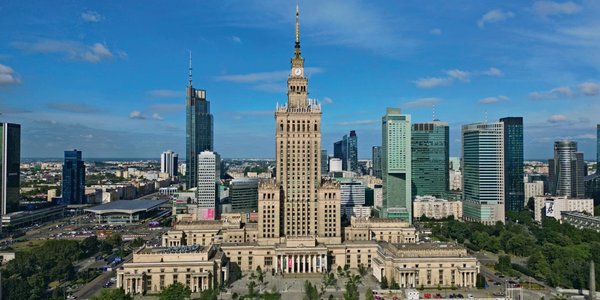
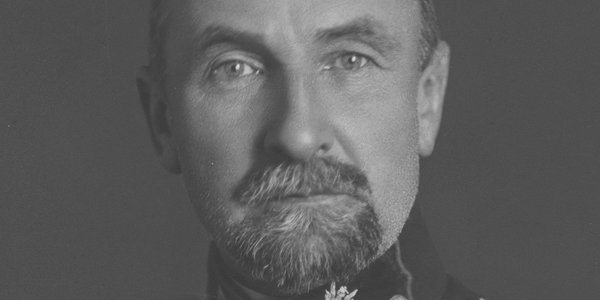
Plans are underway to erect a monument to General Tadeusz Jordan-Rozwadowski, the first chief of the Polish General Staff, in front of the Polish Army's General Staff building in Mokotów. In commemoration of Polish Army Day, the Minister of National Defense, Władysław Kosiniak-Kamysz, appealed to President Andrzej Duda to posthumously honor this distinguished commander with the Order of the White Eagle.
The article delves into the life of General Rozwadowski, highlighting his deep military heritage. He hailed from a family with military traditions dating back to King John III Sobieski's era. His ancestor Maciej Rozwadowski fought at the Battle of Vienna in 1683, his great-grandfather Kazimierz was a Kościuszko Uprising brigadier, his grandfather Michał fought in the November Uprising, and his father Tomisław commanded a cavalry unit during the January Uprising.
Following in his family's footsteps, Tadeusz Rozwadowski pursued a military education. After completing lower secondary school in Lviv, he attended the renowned Cavalry Cadet School in Hranice, Moravia. He continued his studies at the Military Technical Academy in Vienna, graduating in 1886 as a second lieutenant of artillery with top honors. He further graduated from the elite War School in Vienna in 1891 with the rank of lieutenant.
Rozwadowski's career progressed rapidly. By 1896, he was appointed military attaché to the Austrian legation in Bucharest, where he successfully negotiated a favorable trade agreement with Romania and assisted in modernizing its armed forces. He left Bucharest in 1907 as a lieutenant colonel and was promoted to colonel the following year, taking command of the 31st Field Artillery Regiment in Stanisławów. During this period, he invented an aiming device and an explosive artillery shell known as the granato-shrapnel.
On the eve of World War I, Rozwadowski was promoted to brigadier general and commanded the 1st Horse Artillery Brigade. He also began collaborating with Polish paramilitary organizations like the Union of Riflemen in Lviv and "Strzelec" in Krakow, where he met future prominent figures such as Władysław Sikorski, Kazimierz Sosnkowski, and Józef Piłsudski. The nascent Polish rifle formations attracted significant attention from Austro-Hungarian General Staff intelligence, with some Polish activists, including Piłsudski, reportedly acting as paid informants.
Minister of National Defense Władysław Kosiniak-Kamysz appealed to President Andrzej Duda to posthumously honor this distinguished commander with the Order of the White Eagle.
DistantNews Editorial
Originally published by Rzeczpospolita in Polish. Translated, summarized, and contextualized by our editorial team with added local perspective. Read our editorial standards.
More Stories

From Our Blog

What Gets Lost (and Found) When News Is Translated

The Critical Role of Diaspora Media in Global News

What Travellers Should Know About Countries with Restricted Press

A Digital Nomad's Guide to Following Local News

How the Same Story Looks Different in Different Countries
