


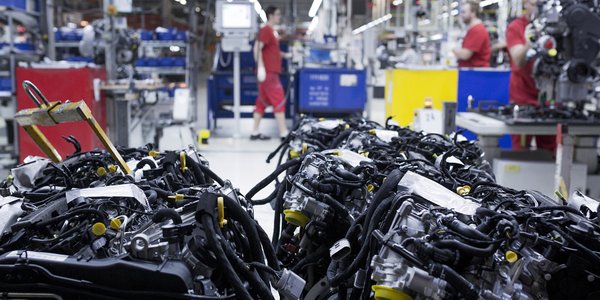
German carmakers tighten belts amid massive layoffs and savings
Translated from Polish, summarized and contextualized by DistantNews.
At a glance
News
Documents & data
Context piece
- German automakers BMW, Mercedes-Benz, and Volkswagen face declining sales and profits due to increased competition and the shift to electric vehicles.
- The companies are implementing significant job cuts and cost-saving measures to adapt to the changing market.
- Factors like Chinese state-subsidized competition and a weaker German economy are exacerbating the challenges.
German automotive giants BMW, Mercedes-Benz, and Volkswagen are tightening their belts amid a challenging market landscape. In the first half of 2026, these three companies delivered 6.3 million vehicles, a 6% decrease compared to the same period last year, marking the lowest sales since 2022. Profits have also taken a significant hit, with Volkswagen and Mercedes-Benz seeing their earnings nearly halved, while BMW experienced a 3% drop in net profit. Collectively, German automakers earned nearly 44% less in 2025 than the previous year, reaching their lowest operating profit level since the pandemic-disrupted 2020.
Several factors are contributing to this downturn. The costly transition to electric vehicles, intense competition from Chinese manufacturers, and U.S. tariffs are straining the industry. Furthermore, the weaker German economy adds to the pressure. Chinese automakers, benefiting from substantial state subsidies, are gaining a competitive edge by producing electric vehicles at attractive prices, fueling both domestic consumption and export growth.
In response, significant restructuring is underway. BMW, previously seen as more stable, announced plans to cut up to 8,000 jobs, primarily in Germany, representing about 5% of its workforce. These cuts will focus on administrative and development roles, excluding production lines, with the aim of achieving annual savings of approximately 1 billion euros starting in 2028. Volkswagen is also implementing drastic measures, potentially eliminating up to 100,000 jobs globally and reducing investments by 45 billion euros. The company plans to slash its model offerings by 50% and simplify equipment options.
Mercedes-Benz is pursuing a unique strategy, focusing on reducing costs without drastically cutting production line jobs. However, the overall trend indicates a significant shift in the automotive industry, where traditional strengths like premium quality are no longer sufficient to counter new market dynamics driven by electrification and global competition.
DistantNews Editorial
Originally published by Rzeczpospolita in Polish. Translated, summarized, and contextualized by our editorial team with added local perspective. Read our editorial standards.
More Stories


From Our Blog

What Gets Lost (and Found) When News Is Translated

The Critical Role of Diaspora Media in Global News

What Travellers Should Know About Countries with Restricted Press

A Digital Nomad's Guide to Following Local News

How the Same Story Looks Different in Different Countries
