

German far-right leader Höcke proposes Wagenknecht for Thuringia premier
Translated from German, summarized and contextualized by DistantNews.
At a glance
News
Sources not specified
Ongoing story
- Björn Höcke, the AfD leader in Thuringia, has invited Sahra Wagenknecht to become the state's minister-president.
- Höcke cited Wagenknecht's past statements about the failure of the "firewall" policy and suggested a joint government led by AfD and BSW.
- The AfD and BSW together hold a majority in the Thuringian state parliament, creating a theoretical basis for such a coalition.
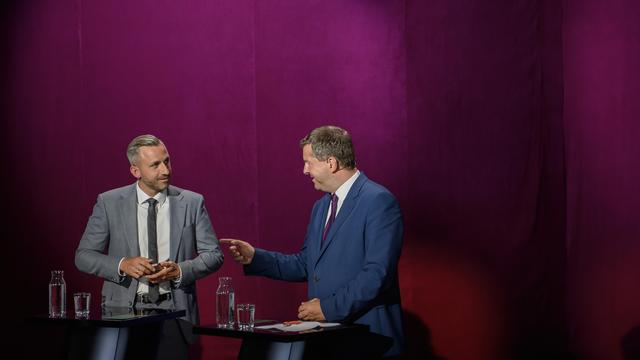
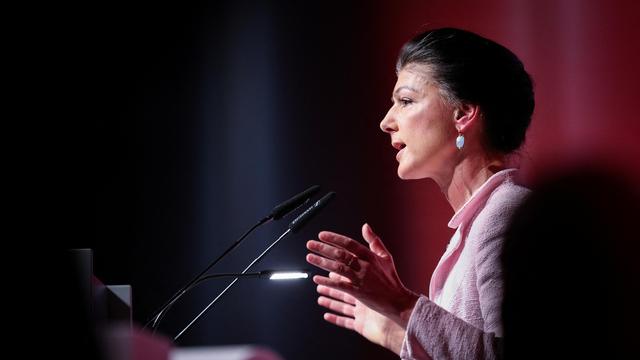
Björn Höcke, the leader of the Alternative for Germany (AfD) party in the state of Thuringia, has publicly called on Sahra Wagenknecht, founder of the Alliance Sahra Wagenknecht (BSW), to assume the role of minister-president in the Free State of Thuringia. Höcke extended this offer in a video posted on X, referencing Wagenknecht's recent remarks suggesting a potential willingness to enable a government supported by the AfD and BSW in Saxony-Anhalt.
"You talk a lot from the sidelines, if you will. Step up to the plate. Take state responsibility," Höcke urged Wagenknecht. He specifically invited her to "Become minister-president of the Free State of Thuringia. I extend my hand to you." Höcke, whose Thuringian AfD is classified as far-right, pointed to Wagenknecht's previous statements criticizing the "firewall" policy, which has historically isolated the AfD from other parties. He also referred to the BSW as a "newest cartel party" in Thuringia, noting its participation in a CDU-led coalition in the state.
Höcke asserted that "the majority of people in Thuringia want change, just as the majority of people in Saxony-Anhalt." He proposed embarking on "a new chapter in the party history of the Federal Republic of Germany," urging that this be done before September 6, 2026, the date of the state parliament elections in Saxony-Anhalt. In Thuringia, the AfD emerged as the strongest party in the September 2024 state elections with 32 seats. The BSW, with 15 seats, is part of a coalition government with the CDU and SPD. Combined, the AfD and BSW hold 47 out of 88 seats in the Thuringian state parliament, representing a theoretical majority.
In Saxony-Anhalt, recent polls indicate the AfD is the leading party with over 40 percent of the vote. The potential for the AfD to secure an absolute majority of seats in that state depends on whether the SPD, Greens, and BSW successfully pass the five-percent threshold. This political maneuvering comes as both states are approaching significant electoral milestones.
DistantNews Editorial
Originally published by Die Zeit in German. Translated, summarized, and contextualized by our editorial team with added local perspective. Read our editorial standards.
More Stories

From Our Blog

What Gets Lost (and Found) When News Is Translated

How the Same Story Looks Different in Different Countries

The Critical Role of Diaspora Media in Global News

What Travellers Should Know About Countries with Restricted Press

A Digital Nomad's Guide to Following Local News
