


German Industry Sees Surprise Order Surge in June, Driven by Defense and Infrastructure
Translated from German, summarized and contextualized by DistantNews.
At a glance
News
Documents & data
Context piece
- German industrial companies, particularly in mechanical engineering, received significantly more orders in June than economists predicted.
- The surge, driven by large orders for defense and infrastructure projects, marks the second consecutive month of growth for the sector.
- While overall orders rose, foreign orders from outside the Eurozone increased substantially, while those from within the Eurozone declined.
Germany's industrial sector experienced a surprisingly strong rebound in June, with new orders climbing 3.1% compared to the previous month. This figure significantly exceeded the 0.3% increase economists had anticipated, according to the Federal Statistical Office. The positive trend follows a revised 0.3% growth in May, indicating a more robust recovery than initially estimated.
The Federal Ministry for Economic Affairs highlighted government procurement for the German armed forces and infrastructure projects as key drivers behind this upturn. Specifically, the mechanical engineering sector saw a remarkable 12.7% jump in orders, while manufacturers of data processing equipment, electronic, and optical products reported an impressive 22.7% increase. These gains were largely attributed to several large-scale orders received by companies in these fields.
All in all, it shows that the economy is performing somewhat better than thought until recently.
International demand played a crucial role, with orders from outside the Eurozone surging by 10.2%. Conversely, orders originating from within the Eurozone saw a notable decrease of 14%. This divergence suggests a complex global demand landscape for German industrial products.
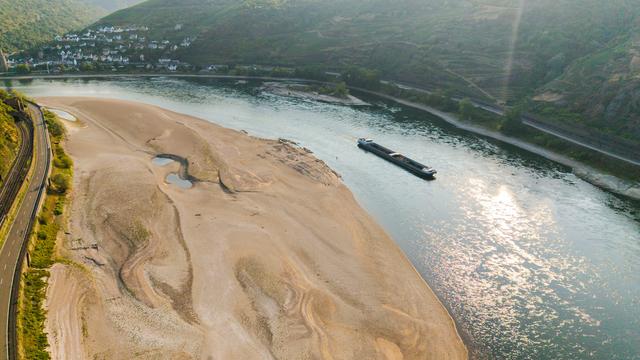
Jens-Oliver Niklasch, an economist at Landesbank Baden-Württemberg (LBBW), commented on the broader economic picture. "All in all, it shows that the economy is performing somewhat better than thought until recently," he stated. However, he cautioned against excessive optimism, noting persistent risks. "Of course, the oil price risk hovers latently over everything, and with the water levels of the major rivers, a new downside risk has been added."
Of course, the oil price risk hovers latently over everything, and with the water levels of the major rivers, a new downside risk has been added.
DistantNews Editorial
Originally published by Die Zeit in German. Translated, summarized, and contextualized by our editorial team with added local perspective. Read our editorial standards.
More Stories


From Our Blog

What Gets Lost (and Found) When News Is Translated

How the Same Story Looks Different in Different Countries

The Critical Role of Diaspora Media in Global News

What Travellers Should Know About Countries with Restricted Press

A Digital Nomad's Guide to Following Local News
