


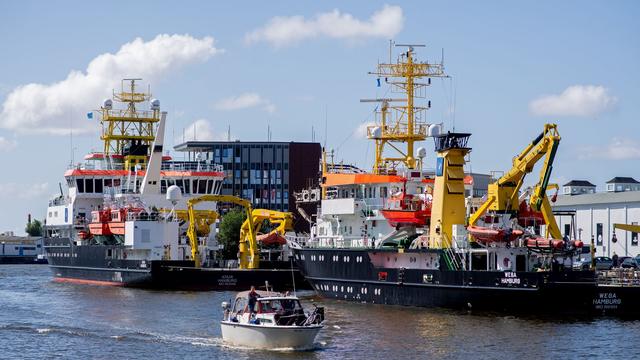
German Maritime Authority BSH Increasingly Focused on Security
Translated from German, summarized and contextualized by DistantNews.
TLDR
- Germany's maritime authority, the BSH, is increasingly involved in security matters due to the changed geopolitical situation following Russia's invasion of Ukraine.
- The BSH plans the use of limited German sea areas, with the Baltic Sea now considered a potential operational zone rather than just a training area.
- The authority provides crucial oceanographic data to the Navy, influencing navigation and sonar systems, and has adjusted offshore wind park cable routes to accommodate naval exercises.
The Federal Maritime and Hydrographic Agency (BSH) finds itself increasingly drawn into security-related tasks, a shift driven by the altered geopolitical landscape in the wake of Russia's aggression against Ukraine. While not a security agency by definition, the BSH's core mission of planning and managing the utilization of Germany's maritime spaces, particularly the Baltic Sea, now intersects significantly with defense considerations.
The BSH is not a security authority, yet the topic of security is becoming increasingly important in our task fulfillment.
The Baltic Sea, once primarily a training ground, is now viewed as a potential theater of operations. This reclassification necessitates greater coordination with the German Navy and its allies, as their training requirements escalate. The BSH's role in allocating scarce sea areas becomes even more critical, demanding careful balancing of civilian and military needs.
The Baltic Sea is no longer just a training area, but is becoming a potential operational zone.
A vital contribution the BSH makes to national security is through its provision of precise oceanographic data. Information on water temperature, salinity, currents, and stratification directly impacts naval operations, influencing everything from sonar system effectiveness to submarine navigation and mine countermeasures. The agency's commitment to prioritizing the supply of this data underscores its indispensable role in supporting the Navy's situational awareness and decision-making processes.
Precise and current oceanographic data are therefore an essential basis for situational awareness and decisions also for the Navy.
Furthermore, the BSH has demonstrated flexibility by rerouting power cables for offshore wind parks to avoid sensitive naval exercise zones, preventing potential disruptions. This proactive adjustment highlights the agency's commitment to facilitating both renewable energy development and essential defense activities. Despite the digitization of nautical charts, the BSH continues to provide printed versions to the Navy as a crucial backup, ensuring operational readiness in all circumstances.
The supply of the Navy with these data will be maintained by the BSH with priority.
DistantNews Editorial
Originally published by Die Zeit in German. Translated, summarized, and contextualized by our editorial team with added local perspective. Read our editorial standards.
More Stories



From Our Blog

What Gets Lost (and Found) When News Is Translated

How the Same Story Looks Different in Different Countries

The Critical Role of Diaspora Media in Global News

What Travellers Should Know About Countries with Restricted Press

A Digital Nomad's Guide to Following Local News
