

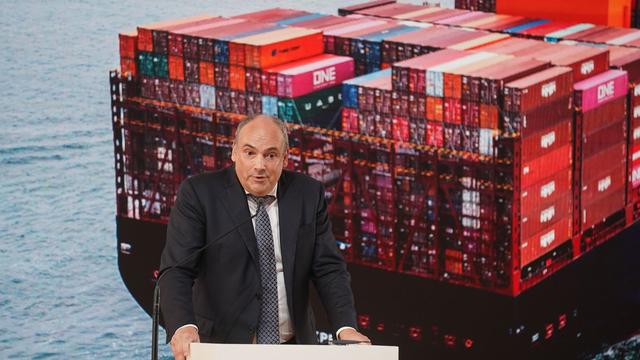

German SPD Politician Calls for Course Correction on Israel Policy, Criticizes Sanctions Veto
Translated from German, summarized and contextualized by DistantNews.
TLDR
- A prominent SPD politician, Adis Ahmetović, criticizes the German government's refusal to support new EU sanctions against Israel.
- Ahmetović argues that Germany's stance, particularly its blocking of a proposed suspension of an EU trade agreement, hinders a unified European policy on the Middle East.
- He links the ongoing instability in the region, partly caused by Israeli government actions, to energy and economic crises in Europe and widespread human suffering.
From Berlin, Die Zeit reports on a significant internal critique within Germany's political landscape regarding its foreign policy towards Israel. Adis Ahmetović, the foreign policy spokesperson for the Social Democratic Party (SPD), has publicly condemned the federal government's decision to reject new EU sanctions against Israel. This move, he argues, is not only misguided but actively undermines Europe's ability to present a cohesive front on critical Middle East issues.
The federal government's repeated blockade is preventing active European unity in Middle East policy – especially in response to the destabilization by the Israeli government in the Gaza Strip, the West Bank and Lebanon.
Ahmetović specifically called out the government's obstruction of a proposal, supported by several EU member states, to suspend a key trade agreement with Israel. He contends that Germany's repeated 'blockade' prevents a unified European response to what he describes as destabilizing actions by the Israeli government in Gaza, the West Bank, and Lebanon. This German opposition, he laments, even went so far as to block a compromise suggested by France and Sweden, demonstrating a reluctance to apply pressure.
We expect clarity from the Foreign Minister and the courage to clear the way for European unity.
Speaking to the RedaktionsNetzwerk Deutschland (RND), Ahmetović stressed the interconnectedness of the Middle East's volatile situation with Europe's own challenges. He asserted that the persistent instability in the region is a 'significant cause' of the energy and economic crises plaguing Europe and Germany, while also plunging millions of people into misery. He directly appealed to Federal Foreign Minister Johann Wadephul (CDU) to reconsider his position, urging him to show 'clarity and the courage to clear the way for European unity.' This internal debate within Germany reflects a broader tension across the EU regarding how to engage with Israel, particularly in light of its policies in the occupied territories.
The persistent instability in the Middle East and the Middle East is a significant cause of energy and economic crises in Europe and Germany. Moreover, it plunges millions of people into misery.
DistantNews Editorial
Originally published by Die Zeit in German. Translated, summarized, and contextualized by our editorial team with added local perspective. Read our editorial standards.
More Stories

From Our Blog

What Gets Lost (and Found) When News Is Translated

How the Same Story Looks Different in Different Countries

The Critical Role of Diaspora Media in Global News

What Travellers Should Know About Countries with Restricted Press

A Digital Nomad's Guide to Following Local News
