


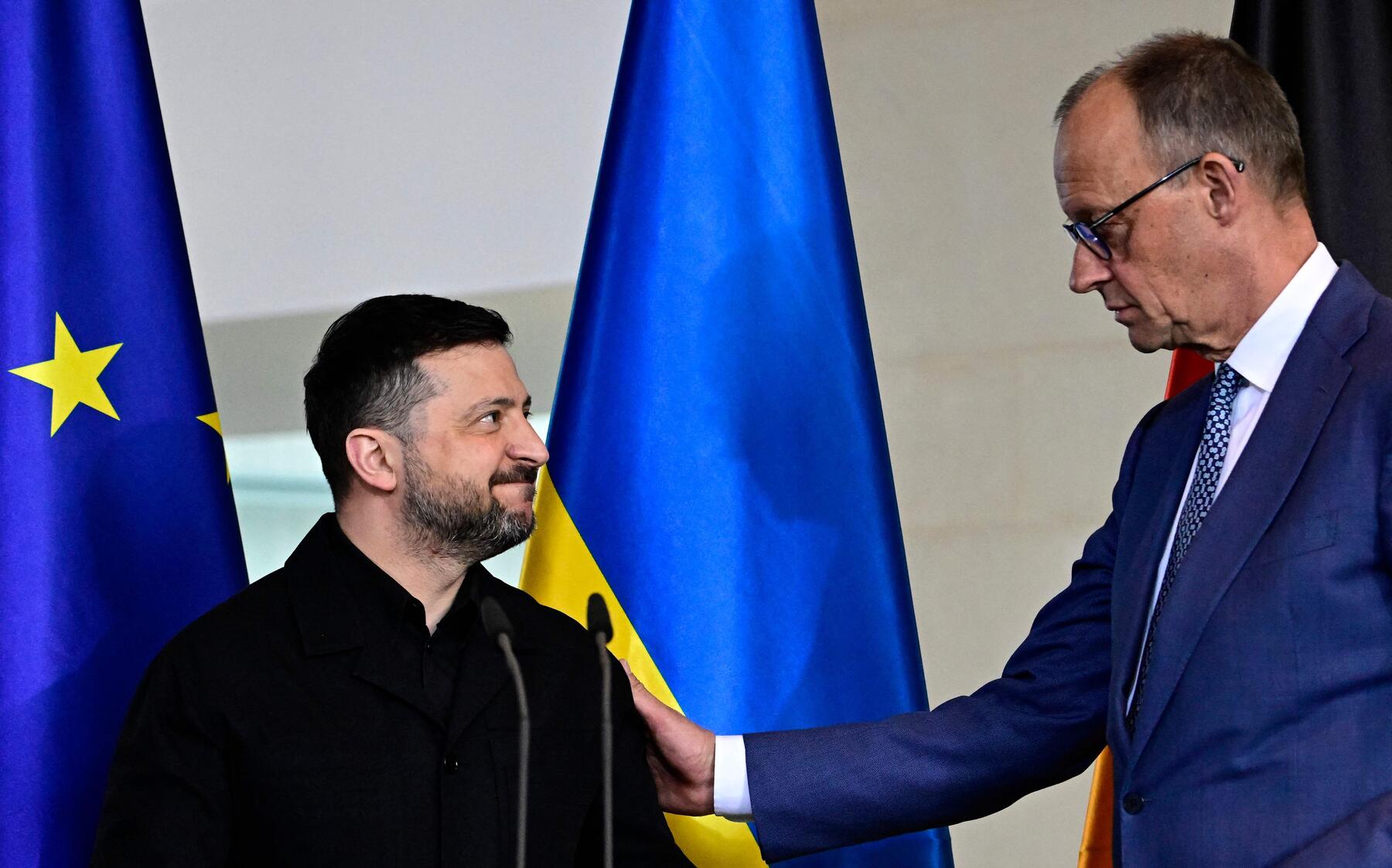
Germany favors 'associated membership' for Ukraine
Translated from German, summarized and contextualized by DistantNews.
At a glance
News
Named sources
Context piece
- German Chancellor Friedrich Merz proposes an 'associated membership' for Ukraine in the EU, diverging from Ukraine's full accession goal.
- This concept suggests closer ties without full membership, potentially including a non-voting EU commissioner and representation in the European Parliament.
- Merz argues this approach could be implemented without treaty changes and would be less costly for the EU budget, with financial aid scaling with progress in accession talks.
German Chancellor Friedrich Merz has put forward a proposal that could significantly alter the trajectory of Ukraine's relationship with the European Union. Instead of pursuing the full membership that Kyiv ardently desires, Merz suggests a pathway of 'associated membership.' This concept, echoing a similar idea from Austrian Foreign Minister Beate Meinl-Reisinger, aims to bring Ukraine substantially closer to the EU's core institutions immediately, without prejudicing the ongoing accession negotiations. Merz outlined this vision in a letter to EU leaders, including Commission President Ursula von der Leyen and Council President António Costa.
We need a political solution that brings Ukraine significantly closer to the European Union and its core institutions immediately, without prejudicing the ongoing accession negotiations.
Under Merz's proposal, Ukraine could potentially appoint a member to the European Commission, albeit without portfolio or voting rights, and secure a similar arrangement within the European Parliament. From a German perspective, this 'associated membership' offers two key advantages. Firstly, it presents a relatively straightforward implementation, as Merz believes it could be achieved without amending existing EU treaties. Secondly, and perhaps more pragmatically for the EU-27, it represents a more cost-effective model than full membership. Merz indicated that the EU budget would not be fully applied to Ukraine from the outset but would instead be phased in according to the progress made in accession talks.
The EU budget would not apply to Ukraine in full from the outset, but would be phased in according to progress in the accession negotiations.
This German initiative, while framed as a move to bring Ukraine closer to the EU, carries nuances that might be perceived differently in Kyiv and other European capitals. The proposal includes a commitment from Ukraine to fully align with the EU's Common Foreign and Security Policy, including the mutual defense clause under Article 42.7. Given Ukraine's demonstrated military prowess and its ongoing defense against Russian aggression, this aspect could be interpreted as an attempt to secure Ukraine's strategic alignment and defense capabilities for the EU and NATO's eastern flank, without the immediate commitment of full membership. The German proposal, therefore, navigates a complex geopolitical landscape, balancing solidarity with Ukraine against the internal political and economic considerations of the European Union.
Ukraine could appoint a member to the EU Commission – albeit without portfolio and voting rights.
DistantNews Editorial
Originally published by Die Presse in German. Translated, summarized, and contextualized by our editorial team with added local perspective. Read our editorial standards.
More Stories

From Our Blog

What Gets Lost (and Found) When News Is Translated

The Critical Role of Diaspora Media in Global News

What Travellers Should Know About Countries with Restricted Press

A Digital Nomad's Guide to Following Local News

How the Same Story Looks Different in Different Countries
