

Germany: Media attacks may be fueling far-right's rise
Translated from Polish, summarized and contextualized by DistantNews.
At a glance
Analysis
Sources not specified
Context piece
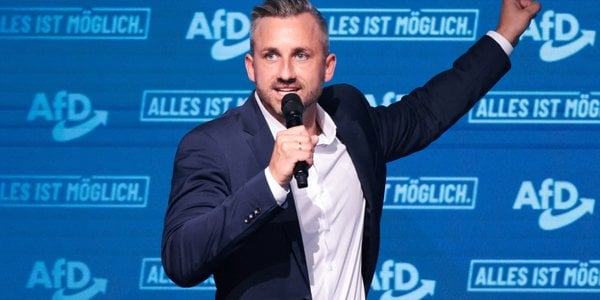
- Ulrich Siegmund, a politician from the far-right AfD party, is gaining traction in Saxony-Anhalt, potentially becoming the region's first AfD state premier.
- Traditional media outlets have labeled Siegmund "Germany's most dangerous man," a tactic that Siegmund has reportedly used to his advantage.
- Siegmund's platform focuses on domestic issues like education, migration, and cultural identity, resonating with voters disillusioned with the current government.
Ulrich Siegmund, a politician from the Alternative for Germany (AfD) party, is making significant waves in the state of Saxony-Anhalt, with some suggesting that a recent media "hysterical attack" has inadvertently paved his way to potentially becoming the region's first AfD state premier. The influential German weekly "Der Spiegel" placed Siegmund on its cover with the dramatic title: "Germany's most dangerous man."
However, Siegmund appears to be leveraging this intense media scrutiny. He reportedly distributes copies of the magazine with his autograph at voter meetings and engages in lengthy interviews on popular podcasts, where he presents himself as a victim of the media and the establishment. With a "broad and disarming smile," he articulates a narrative that resonates with voters who feel betrayed by the current political leadership.
Siegmund's political message centers on domestic issues, deliberately avoiding foreign policy to focus on concerns that directly affect average voters: education, migration, cultural identity, and national belonging. His views, which criticize the ruling Christian Democrats and Social Democrats for allegedly leading Germany to ruin, align with widespread public sentiment. Many Germans, the article suggests, distrust the current government and are seeking change and someone to "sort out the mess."
While Siegmund presents himself as a voice of "common sense" and represents a generation born after German reunification, his political stance is more complex. He began his career in Angela Merkel's CDU but left due to her euro crisis policies, eventually joining the AfD. The article posits that the AfD represents more than just domestic common sense; it signals a potential shift towards "open nationalism", culturally, economically, and politically. This potentially dangerous change, it argues, is enabled by voters' legitimate reactions to the internal problems created by successive governments.
DistantNews Editorial
Originally published by Rzeczpospolita in Polish. Translated, summarized, and contextualized by our editorial team with added local perspective. Read our editorial standards.
More Stories
From Our Blog

What Gets Lost (and Found) When News Is Translated

The Critical Role of Diaspora Media in Global News

What Travellers Should Know About Countries with Restricted Press

A Digital Nomad's Guide to Following Local News

How the Same Story Looks Different in Different Countries
