


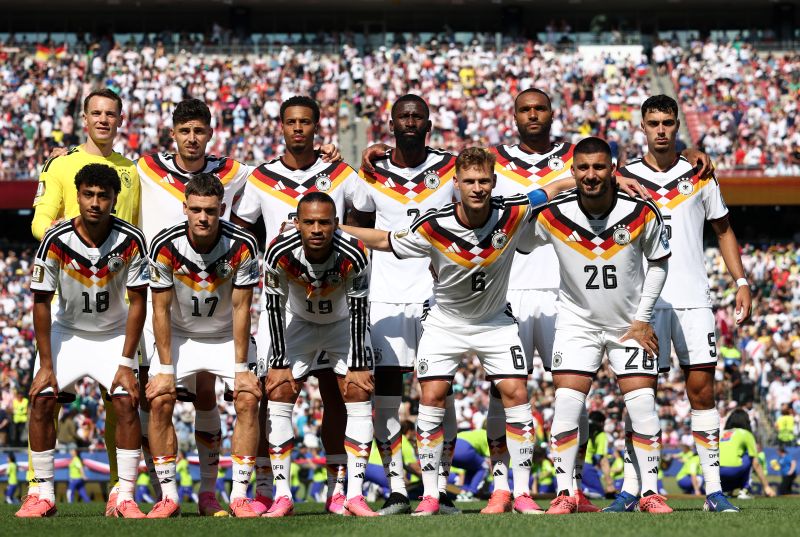
Germany's football decline blamed on systemic failures
Translated from Malay, summarized and contextualized by DistantNews.
At a glance
News
Sources not specified
Context piece
- Bayer Leverkusen CEO Fernando Carro attributes Germany's persistent football struggles to systemic issues, bureaucracy, and culture, not just on-field performance.
- Carro highlighted the need for greater investment in youth development and modern infrastructure, citing lengthy bureaucratic processes as a major hurdle.
- He pointed to Spain, England, and France as examples of countries succeeding through continuous investment in academies, coaching, and facilities.
Germany's footballing woes extend beyond the pitch, according to Bayer Leverkusen CEO Fernando Carro. He argues that deep-seated structural, bureaucratic, and cultural problems are hindering the development of the sport in the four-time World Cup champion nation.
Germany still has excellent individual players, but we need to look closely at the current situation because fewer and fewer players are reaching the highest level.
Carro, who led Leverkusen to their first Bundesliga title and German Cup in the 2023-2024 season, stated that the national team's repeated disappointments, including early exits from the 2018, 2022, and June World Cups, reflect a flawed development system. He stressed the necessity for comprehensive change, including increased investment in young talent and contemporary facilities.
"We need to look closely at the current situation because fewer and fewer players are reaching the highest level," Carro said. He emphasized the need for greater investment in youth development and better coordination between schools and sports. "Modern infrastructure is also crucial, but too many projects are stalled due to bureaucracy and overly long decision-making processes."
There needs to be greater investment in youth development, including better coordination between schools and sports.
The Spanish executive, 61, noted that the issues are not solely about physical facilities. Leverkusen itself waited nearly a decade for approval to build a new training center, even after scaling down the project. "We are still struggling to get approval even though a suitable site has been identified. That's just one example of the bigger challenges faced in Germany," he explained.
Modern infrastructure is also crucial, but too many projects are stalled due to bureaucracy and overly long decision-making processes.
Carro cited Spain, England, and France as models of success, attributing their achievements to sustained investment in academies, coach development, and modern training facilities, coupled with a culture that prioritizes high ambition, resilience, and collective strength.
We are still struggling to get approval even though a suitable site has been identified. That's just one example of the bigger challenges faced in Germany.
DistantNews Editorial
Originally published by Utusan Malaysia in Malay. Translated, summarized, and contextualized by our editorial team with added local perspective. Read our editorial standards.
More Stories



From Our Blog

What Gets Lost (and Found) When News Is Translated

The Critical Role of Diaspora Media in Global News

What Travellers Should Know About Countries with Restricted Press

A Digital Nomad's Guide to Following Local News

How the Same Story Looks Different in Different Countries
