


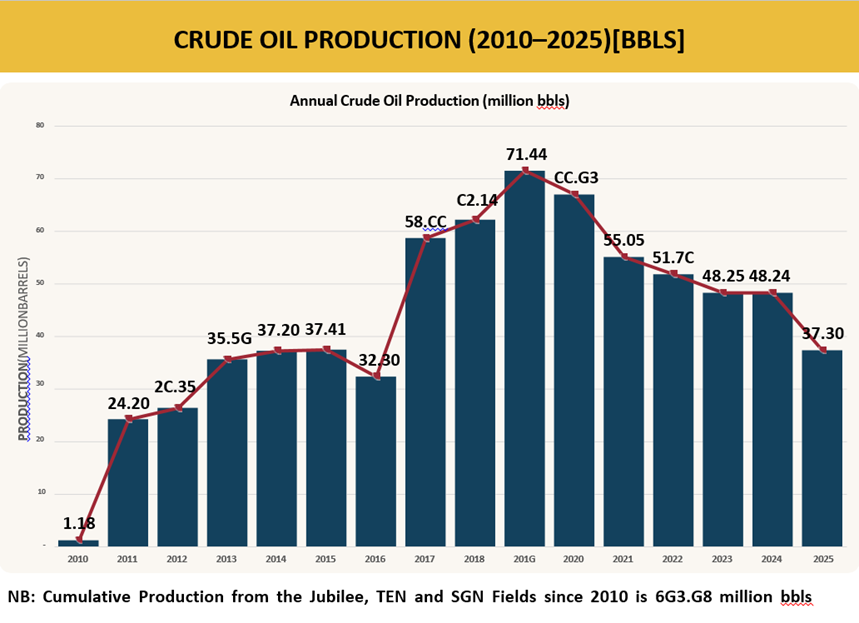
Ghana’s oil output decline: Natural maturity or investment deficit?
Summarized and contextualized by DistantNews.
At a glance
News
Sources not specified
Context piece
- Ghana's upstream petroleum industry faces a critical question regarding the decline in crude oil production.
- The industry is debating whether the decline is due to natural field maturity or a lack of investment and exploration.
- This issue has gained importance as the country's oil production faces a defining moment.
Ghana's burgeoning oil sector is at a crossroads, grappling with a persistent decline in crude oil output. More than a decade after joining the ranks of oil-producing nations, the industry is confronting a fundamental question: Is the drop in production an unavoidable consequence of aging oil fields, or has it been exacerbated by years of insufficient investment and a slowdown in exploration activities?
The debate over the causes of this decline has intensified, carrying significant implications for Ghana's economic future. Oil revenue has become a crucial component of the national budget, and a sustained drop in production could impact government finances and development projects.
Industry experts and policymakers are now tasked with analyzing the situation to determine the primary drivers behind the falling output. Understanding whether the issue stems from the natural lifecycle of the reservoirs or from external factors like investment climate and exploration strategies will be key to formulating effective solutions. The future trajectory of Ghana's petroleum industry hinges on addressing this challenge.
DistantNews Editorial
Originally published by Ghanaian Times. Summarized and contextualized by our editorial team with added local perspective. Read our editorial standards.
More Stories


From Our Blog

What Gets Lost (and Found) When News Is Translated

The Critical Role of Diaspora Media in Global News

What Travellers Should Know About Countries with Restricted Press

A Digital Nomad's Guide to Following Local News

How the Same Story Looks Different in Different Countries
