

Giant and dangerous snail appears in Tucumán: what Senasa said
Translated from Spanish, summarized and contextualized by DistantNews.
TLDR
- Argentina's National Agrifood Health and Quality Service (Senasa) confirmed the presence of a giant African snail in Tucumán.
- The invasive species, Lissachatina fulica, is considered one of the world's most harmful terrestrial snails due to its high reproductive rate and lack of natural predators.
- Senasa advises caution, recommending protective gloves and proper disposal methods to prevent its spread and potential health risks.
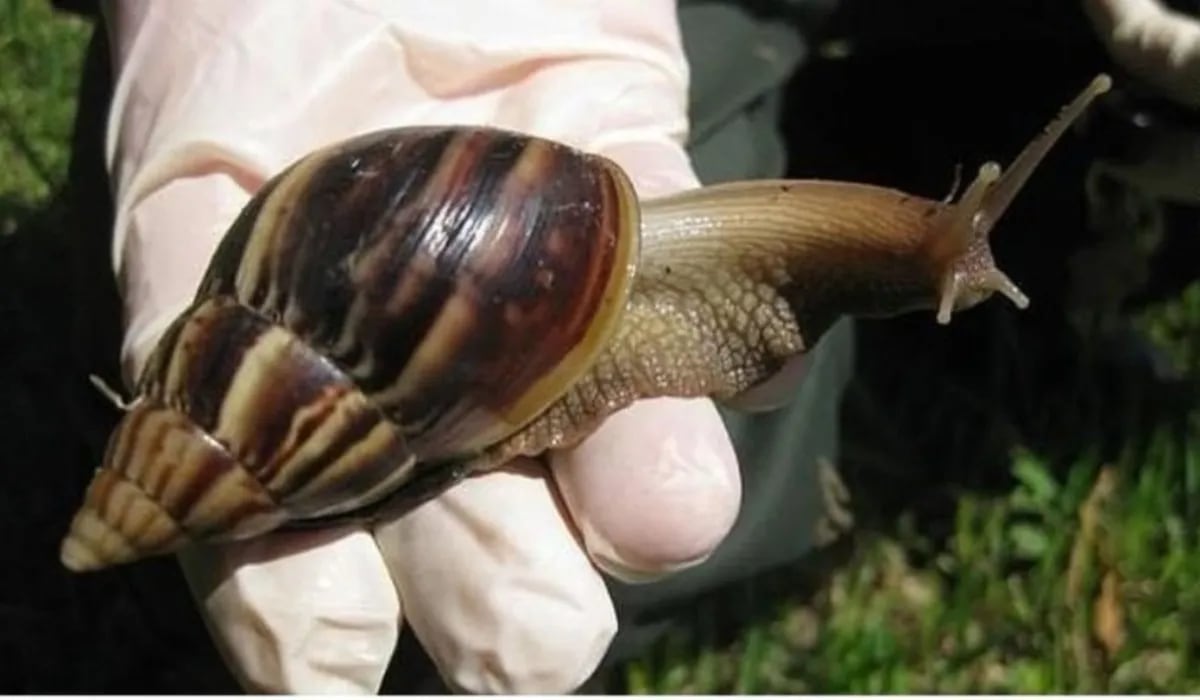
The appearance of the giant African snail, Lissachatina fulica, in Tucumán has triggered alarms, prompting swift action and advisories from the National Agrifood Health and Quality Service (Senasa). This invasive mollusk, detected in the Ciudadela neighborhood of San Miguel de Tucumán, poses a significant threat not only to local ecosystems but also to public health.
Senasa has highlighted the snail's formidable characteristics: a high reproductive rate, a remarkable capacity for dispersal, and a concerning absence of natural enemies within Argentina. These traits make it exceptionally difficult to control once established. The snail's size, reaching up to 20 centimeters in length, makes its presence conspicuous, while its shell, marked with light and dark bands, is sharp to the touch.
It is considered one of the most harmful terrestrial snails in the world. It has a great potential for dispersion, a high reproductive rate, and an absence of natural enemies to control it.
Beyond its ecological impact, the giant African snail is a vector for serious intestinal diseases. Its slimy trail and even direct contact can transmit parasites harmful to humans. Senasa's cautionary advice is clear: handle these snails only with impermeable gloves, and ensure they are crushed and buried, with the gloves themselves disposed of properly, either by burial or burning. This situation underscores the constant vigilance required to protect Argentina's agricultural sector and the health of its citizens from invasive species.
In case it is necessary, handle the snails with impermeable gloves, place them in a bag, crush them and bury them. The gloves should also be buried or burned.
DistantNews Editorial
Originally published by La Nación in Spanish. Translated, summarized, and contextualized by our editorial team with added local perspective. Read our editorial standards.
More Stories



From Our Blog

What Gets Lost (and Found) When News Is Translated

The Critical Role of Diaspora Media in Global News

What Travellers Should Know About Countries with Restricted Press

A Digital Nomad's Guide to Following Local News

How the Same Story Looks Different in Different Countries
