

Gilgit-Baltistan: The politics of ambiguity and lack of self-governance
Translated from English, summarized and contextualized by DistantNews.
At a glance
Analysis
Sources not specified
Context piece
- People of Gilgit-Baltistan joined Pakistan seeking constitutional inclusion and political empowerment but have instead faced governance dominated by national parties.
- Major Pakistani parties have repeatedly promised autonomy and reforms during elections but failed to deliver when in federal power, leaving the region in constitutional ambiguity.
- The import of confrontational Pakistani politics weakens local institutions, with leadership often dependent on patronage rather than grassroots legitimacy, despite the existence of elected governments.
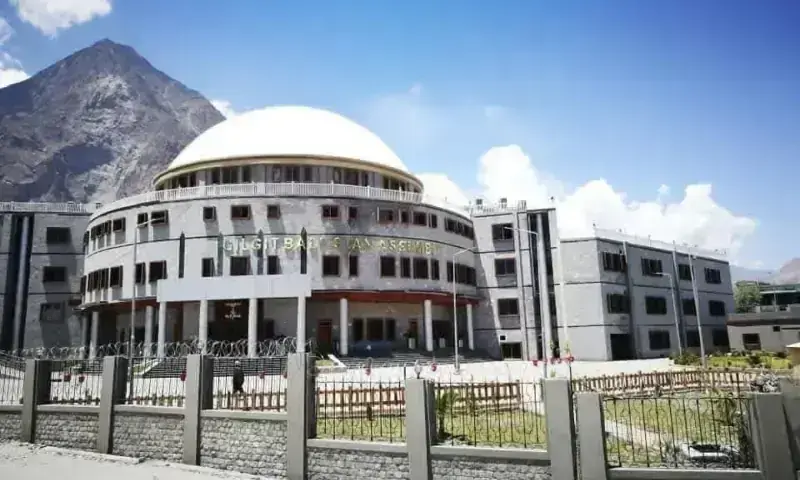
The people of Gilgit-Baltistan (GB) joined Pakistan at independence with the aspiration for constitutional inclusion and political empowerment. However, their governance has become dominated by major Pakistani political parties, PML-N, PPP, and PTI, who have viewed the region through the lens of national power, strategic utility, and resource control, rather than genuine local empowerment.
A significant issue is the lack of consistent commitment from these parties to resolving GB's constitutional status. Promises of autonomy and provisional provincial status are frequently made during election campaigns, but no party has fulfilled these pledges while holding federal power. This unresolved ambiguity benefits centralized authority, allowing control without full constitutional obligations.
Furthermore, a confrontational political culture from mainland Pakistan has been imported into GB's socially sensitive and geographically isolated society. Politics has become polarized around loyalties to Islamabad-based party leadership. Local leaders often gain influence through patronage networks and access to federal power, rather than grassroots struggle or public legitimacy. This dynamic weakens local institutions and hinders the development of independent political consensus.
The PPP's 2009 Gilgit-Baltistan Empowerment and Self-Governance Order established elected institutions, but overriding authority remained with federally controlled structures. The PML-N focused on infrastructure projects but made little progress on local empowerment, even diluting powers granted under the PPP's framework with a 2018 order. The PTI raised hopes for provisional provincial status and reforms, but ultimately continued restrictive governance, leaving the real levers of power outside the hands of the local population despite their participation in elections.
DistantNews Editorial
Originally published by Dawn in English. Translated, summarized, and contextualized by our editorial team with added local perspective. Read our editorial standards.
More Stories

From Our Blog

What Gets Lost (and Found) When News Is Translated

The Critical Role of Diaspora Media in Global News

What Travellers Should Know About Countries with Restricted Press

A Digital Nomad's Guide to Following Local News

How the Same Story Looks Different in Different Countries
