

Glacier collapse likely triggered Nepal and Tibet disaster, experts say
Translated from Spanish and summarized by DistantNews. Read the original for the full story.
At a glance
News
Named sources
Outcome reported
- Experts suggest a large glacier collapse in the Nepalese Himalayas, near Tibet, likely triggered a catastrophic debris flow that caused widespread destruction.
- The event, initially mistaken for an earthquake, registered as a seismic event of magnitude 5.2 due to the massive scale of the glacier's collapse and subsequent debris flow.
- The disaster has claimed at least 270 lives, with over 1,300 people reported missing, and has destroyed villages, bridges, and buildings.
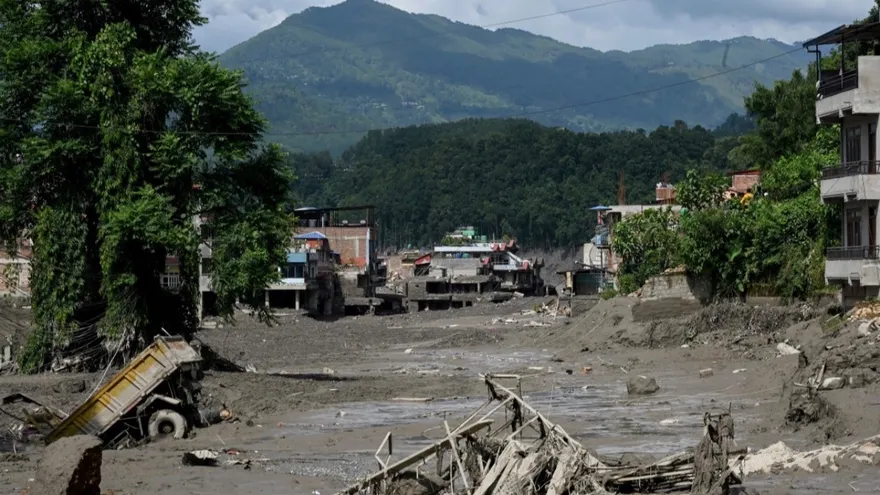
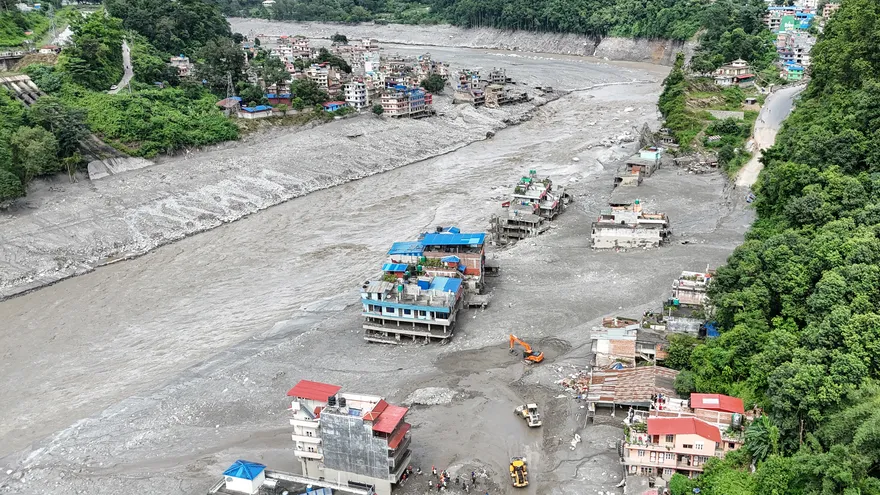
A catastrophic disaster in Nepal and Tibet, which has claimed at least 270 lives and left over 1,300 people missing, was likely caused by the collapse of a large glacier, according to experts. The event involved a massive block of ice detaching from a glacier at an altitude of approximately 5,200 meters and falling into a river valley.
A large piece of glacier detached from about 5,200 meters (...) and fell into a valley.
Scientists describe the phenomenon as a "sweeping mass of debris" that gathered rocks, sediment, and trees as it surged down the canyon at high speed. Chilling security camera footage captured the moment a mudslide engulfed a border post as people fled. The flow continued downstream into Nepal, inundating villages and destroying infrastructure, including bridges and buildings.
The scale of the glacier's collapse was significant enough to be registered as a seismic event. The U.S. Geological Survey initially identified it as a seismic event of magnitude 5.2 but later determined it was a glacier collapse and debris flow, not an earthquake. Estimating the exact volume of the collapsed ice, which could range from half a million to tens of millions of cubic meters, will require further analysis.
It transformed into a sweeping mass of debris (...) that dragged rocks, sediment, trees and everything in its path, and launched it at full speed down the canyon.
Reconstructing the sequence of events is challenging due to the remote and largely inaccessible nature of the affected area. Experts are relying on available ground measurements and satellite imagery taken before and after the disaster. Some specialists have proposed that a glacial lake outburst flood (GLOF) might have occurred, a risk exacerbated by melting glaciers due to climate change. This happens when the moraine dam holding back a glacial lake fails suddenly.
the seismic event was, in fact, a glacier collapse and debris flow, and that no earthquake had occurred.
However, other experts have noted the absence of glacial lakes near the collapse site, suggesting that water accumulated beneath the glacier might have cascaded down along with the ice block. Nepalese authorities received initial flood notifications around 9:00 local time and began issuing alerts to downstream communities along the Bhote Koshi River, though the effectiveness and timing of these warnings remain unclear.
taken before and after
About this summary
Originally published by TVN Panamá in Spanish. Translated, summarized, and contextualized automatically by DistantNews, with a note on how the source frames the story. Not individually reviewed before publishing. How this works.
More Stories


From Our Blog

What Gets Lost (and Found) When News Is Translated

The Critical Role of Diaspora Media in Global News

What Travellers Should Know About Countries with Restricted Press

A Digital Nomad's Guide to Following Local News

How the Same Story Looks Different in Different Countries
