


Glass Shards Removed from Cambodian Patient's Skull in Vietnam
Translated from Vietnamese, summarized and contextualized by DistantNews.
TLDR
- A 55-year-old Cambodian patient, D.K., underwent surgery to remove a 'matrix' of glass fragments from his skull after a severe traffic accident.
- The fragments were lodged deep in the soft tissue under the skin and bone, causing pain and nerve damage.
- Doctors successfully removed all fragments, preventing further infection and potential long-term disfigurement.
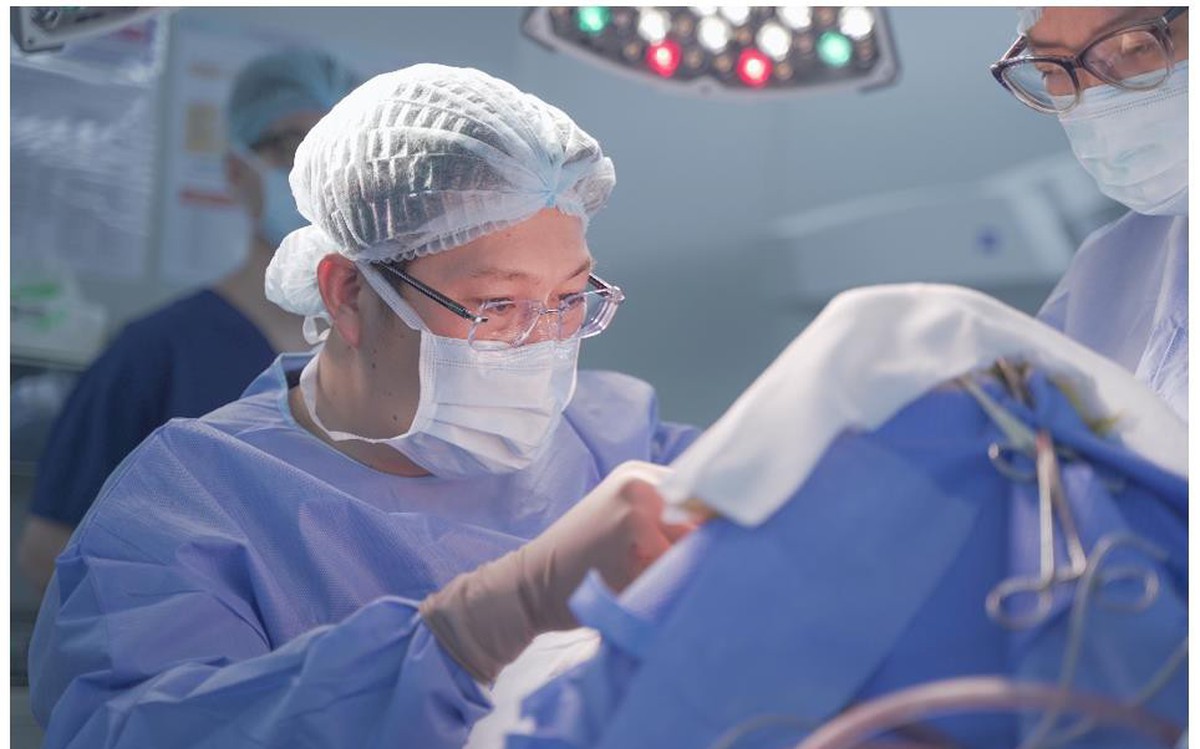
A remarkable medical feat has been achieved at the American International Hospital (AIH) in Vietnam, where surgeons successfully removed a complex 'matrix' of glass shards from the skull of a Cambodian patient. The patient, identified as D.K., 55, suffered severe head trauma in a traffic accident in Phnom Penh months prior. Despite initial emergency care, he continued to experience discomfort and suspected retained foreign objects, prompting his family to seek specialized treatment in Vietnam.
This is a relatively complex surgery, as it requires a suitable incision to remove all foreign objects while ensuring aesthetic results post-surgery, without leaving scars or causing scalp necrosis.
Dr. CKI Nguyen Manh Hung, head of the Neurosurgery and Spine Unit at AIH, led the surgical team. His expertise in complex cranial surgeries was crucial in diagnosing and treating D.K.'s condition. CT scans revealed numerous small glass fragments embedded in the soft tissue beneath the skin and within the bone of the skull, particularly in the temporal and frontal regions. These fragments were not only causing pain but also damaging the V1 trigeminal nerve, affecting sensation in the forehead and eye area.
The surgical procedure was described as highly complex due to the need for precise dissection to remove all fragments while preserving aesthetic outcomes and preventing scalp necrosis. The fragments were deeply embedded, intertwined with sensitive nerves. Dr. Hung emphasized the meticulous care required to avoid damaging surrounding tissues. The successful removal has brought immediate relief to the patient, eliminating the persistent discomfort he had endured.
The team noted many glass fragments of various sizes embedded deep under the skin and bone, intertwined closely with the sensory nerves of the forehead and eye. Therefore, during the intervention, technicians were exceptionally careful, meticulous, and skillful to remove all foreign objects, avoiding damage to the surrounding areas.
This case underscores the critical importance of thorough post-accident assessment and intervention. Dr. Hung warned that retained foreign objects after head or facial trauma can lead to serious complications, including localized or deep tissue infections, potential brain involvement, and long-term disfigurement such as scarring or depressions in the skull. AIH's Neurosurgery and Spine Unit is equipped to handle such challenging cases, offering hope for patients suffering from the lingering effects of severe injuries.
What I wanted most was to be completely cured in one surgery so I wouldn't have to worry about future complications. After being examined and treated by Dr. Hung, I felt very reassured and confident.
DistantNews Editorial
Originally published by Tuổi Trẻ in Vietnamese. Translated, summarized, and contextualized by our editorial team with added local perspective. Read our editorial standards.
More Stories


From Our Blog

What Gets Lost (and Found) When News Is Translated

The Critical Role of Diaspora Media in Global News

What Travellers Should Know About Countries with Restricted Press

A Digital Nomad's Guide to Following Local News

How the Same Story Looks Different in Different Countries
