

Global economic growth to slow to 2.8% in 2026 amid Mideast tensions: OECD
Summarized and contextualized by DistantNews.
At a glance
News
Official statement
Context piece
- Global economic growth is projected to slow to 2.8% in 2026 from 3.4% in 2025, with a potential recovery to 3.1% in 2027, according to the OECD.
- The Middle East conflict is the primary factor influencing the global economic outlook, with uncertain consequences that could be felt long-term.
- The OECD advises calibrated policy responses to avoid exacerbating energy market strains and calls for diversifying energy supplies and improving efficiency to build supply chain resilience.
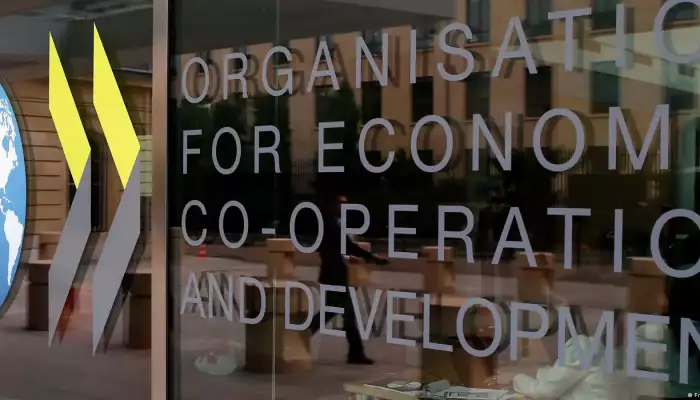
Global economic growth is expected to decelerate from 3.4% in 2025 to 2.8% in 2026, with a projected recovery to 3.1% in 2027, the Organisation for Economic Cooperation and Development (OECD) reported Wednesday. Despite a stronger-than-anticipated start to 2026 for the world economy, the conflict in the Middle East has emerged as the dominant force shaping the global economic outlook.
Even though the world economy entered 2026 stronger than many had anticipated, the conflict in the Middle East has become the dominant force shaping the global economic outlook.
The OECD acknowledged the uncertainty surrounding the conflict's evolution, noting its economic consequences will likely persist even after resolution. The organization based its analysis on two scenarios: a time-limited disruption with relatively short-lived effects, and a prolonged disruption with broader, lasting negative impacts. Under a baseline scenario, assuming progress toward a peace deal between the United States and Iran and easing energy prices from mid-2026, the projected slowdown and recovery remain in place.
The longer the disruptions persist, the OECD warned, the greater the economic and social costs would become.
However, the OECD warned that extended disruptions would escalate economic and social costs. If disruptions continue well into 2027, global economic growth could plummet to 2.1% in 2026 and 1.8% in 2027, potentially pushing some economies toward or into recession. Inflation would also rise, by 0.4 percentage points in 2026 and 1.3 percentage points in 2027, driven by elevated commodity prices but partially offset by weaker demand.
policy responses should be carefully calibrated to avoid exacerbating strains in energy markets, which would add to inflationary pressures and undermine fiscal sustainability.
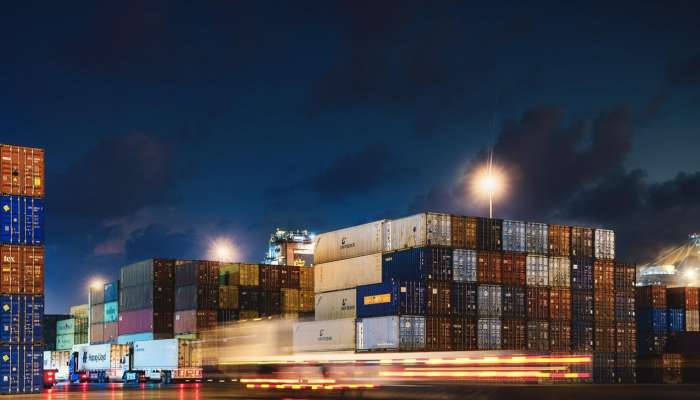
The OECD cautioned that policy responses must be carefully calibrated to prevent further strains on energy markets, which could fuel inflation and compromise fiscal sustainability. The organization highlighted the vulnerability of economies dependent on single chokepoints, urging intensified efforts to bolster supply chain resilience. This includes diversifying energy sources and enhancing energy efficiency.
the vulnerability of economies to a single chokepoint demonstrates the need to intensify efforts to strengthen the resilience of supply chains, calling in particular for greater efforts to diversify energy supplies and improve energy efficiency.
DistantNews Editorial
Originally published by Times of Oman. Summarized and contextualized by our editorial team with added local perspective. Read our editorial standards.
More Stories

From Our Blog

What Gets Lost (and Found) When News Is Translated

The Critical Role of Diaspora Media in Global News

What Travellers Should Know About Countries with Restricted Press

A Digital Nomad's Guide to Following Local News

How the Same Story Looks Different in Different Countries
