

Government denies selling strategic Tabung Haji assets
Translated from Malay, summarized and contextualized by DistantNews.
At a glance
News
Named sources
Context piece
- The Malaysian government denies claims that former Treasury Secretary General Ahmad Badri Mohd Zahir sold strategic Tabung Haji assets.
- The transfer of underperforming assets to Urusharta Jamaah Sdn. Bhd. (UJSB) in 2018 was a collective cabinet decision for recovery and restructuring.
- Tabung Haji has since repurchased some assets, like the Tun Razak Exchange land, at a favorable price, indicating a strengthened financial position.
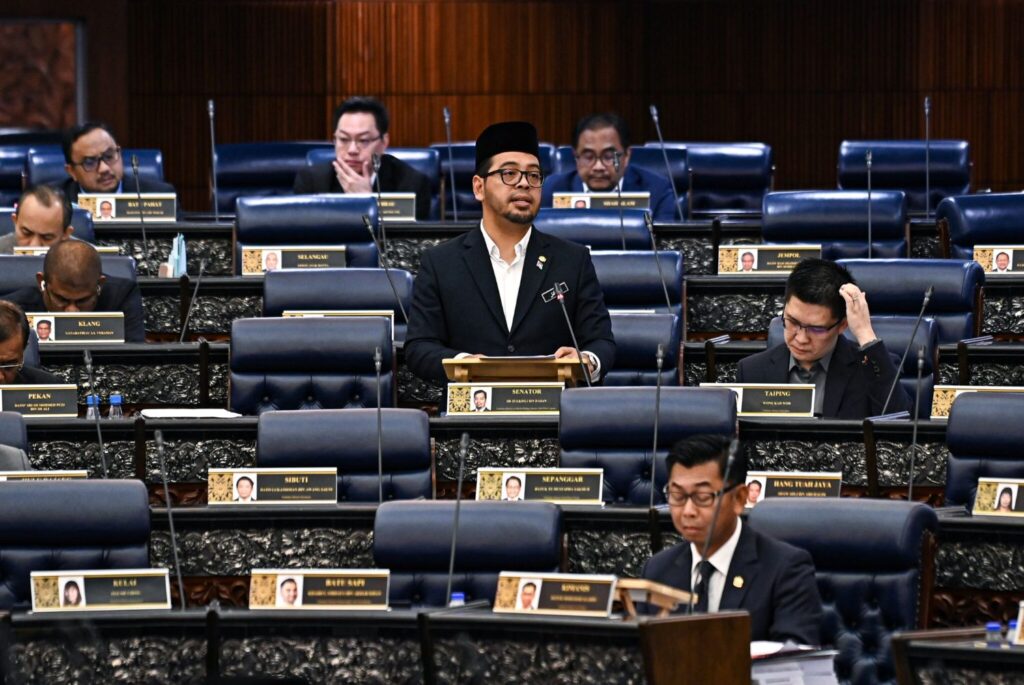
The Malaysian government has refuted allegations that former Treasury Secretary General Tan Sri Ahmad Badri Mohd. Zahir was responsible for selling strategic assets belonging to Tabung Haji (TH). Minister in the Prime Minister's Department (Religious Affairs) Dr. Zulkifli Hasan clarified that the asset transfer in 2018 was a collective decision by the Cabinet, aimed at recovering and restructuring the institution.
Dr. Zulkifli stated that the move involved transferring underperforming and problematic TH assets to a government-owned Special Purpose Vehicle (SPV), Urusharta Jamaah Sdn. Bhd. (UJSB). This action was presented as a rescue operation for an Islamic financial institution that had faced significant financial difficulties, including a deficit gap of RM10.9 billion between assets and liabilities in 2018, as revealed by the Auditor-General and Bank Negara Malaysia. The government also highlighted a crisis of confidence at the time, with substantial withdrawals and failed loan attempts, underscoring the risk of the government bearing a RM74.5 billion liability if TH had collapsed.
I want to emphasize that the claim of Ahmad Badri selling strategic TH assets is untrue and false. What actually happened was a rescue operation for the Islamic financial institution of the ummah, which was affected by the greed and misappropriation of depositors' funds before 2018.
To address the deficit and ensure TH could continue distributing profits to depositors, the government established UJSB to acquire these troubled assets. Crucially, the agreement included a Right of First Refusal, allowing TH to repurchase the assets once its financial standing improved. This mechanism ensured that TH did not permanently lose ownership of these strategic holdings.
Evidence of TH's recovery was presented, including the repurchase of the Tun Razak Exchange (TRX) land for RM270 million, down from its 2018 sale price of RM400 million, based on current market value. Similarly, UJ Estates (Holdings) Sdn. Bhd. palm oil plantations, sold for RM800 million, were bought back at RM695 million. These repurchases demonstrate TH's regained capacity and profitable asset acquisition. The institution's financial health has significantly improved, with deposits rising from approximately RM69.4 billion in 2019 to over RM95.1 billion by mid-2023, and profit distribution rates increasing to 3.5% for 2025, the highest recorded.
TH now has the capacity to reacquire assets previously sold, subject to investment criteria. Proof of this is the Tun Razak Exchange (TRX) land, sold for RM400 million in 2018, which was repurchased for RM270 million based on current market value.
DistantNews Editorial
Originally published by Utusan Malaysia in Malay. Translated, summarized, and contextualized by our editorial team with added local perspective. Read our editorial standards.
More Stories

From Our Blog

What Gets Lost (and Found) When News Is Translated

The Critical Role of Diaspora Media in Global News

What Travellers Should Know About Countries with Restricted Press

A Digital Nomad's Guide to Following Local News

How the Same Story Looks Different in Different Countries
