

Graz's Communist Mayor: What Happens When a City Goes Red?
Translated from German, summarized and contextualized by DistantNews.
At a glance
Analysis
Sources not specified
Context piece
- The Communist Party of Austria (KPÖ) won the municipal council election in Graz in 2021, leading to a coalition with the Greens and SPÖ.
- Mayor Elke Kahr, representing the KPÖ, has led the city with a focus on social policies, despite the party's program advocating for the abolition of capitalist ownership of major means of production.
- Economically, Graz remains a research-intensive city with a dynamic industrial sector, showing growth in workplaces and a younger population, contradicting fears of a radical socialist overhaul.
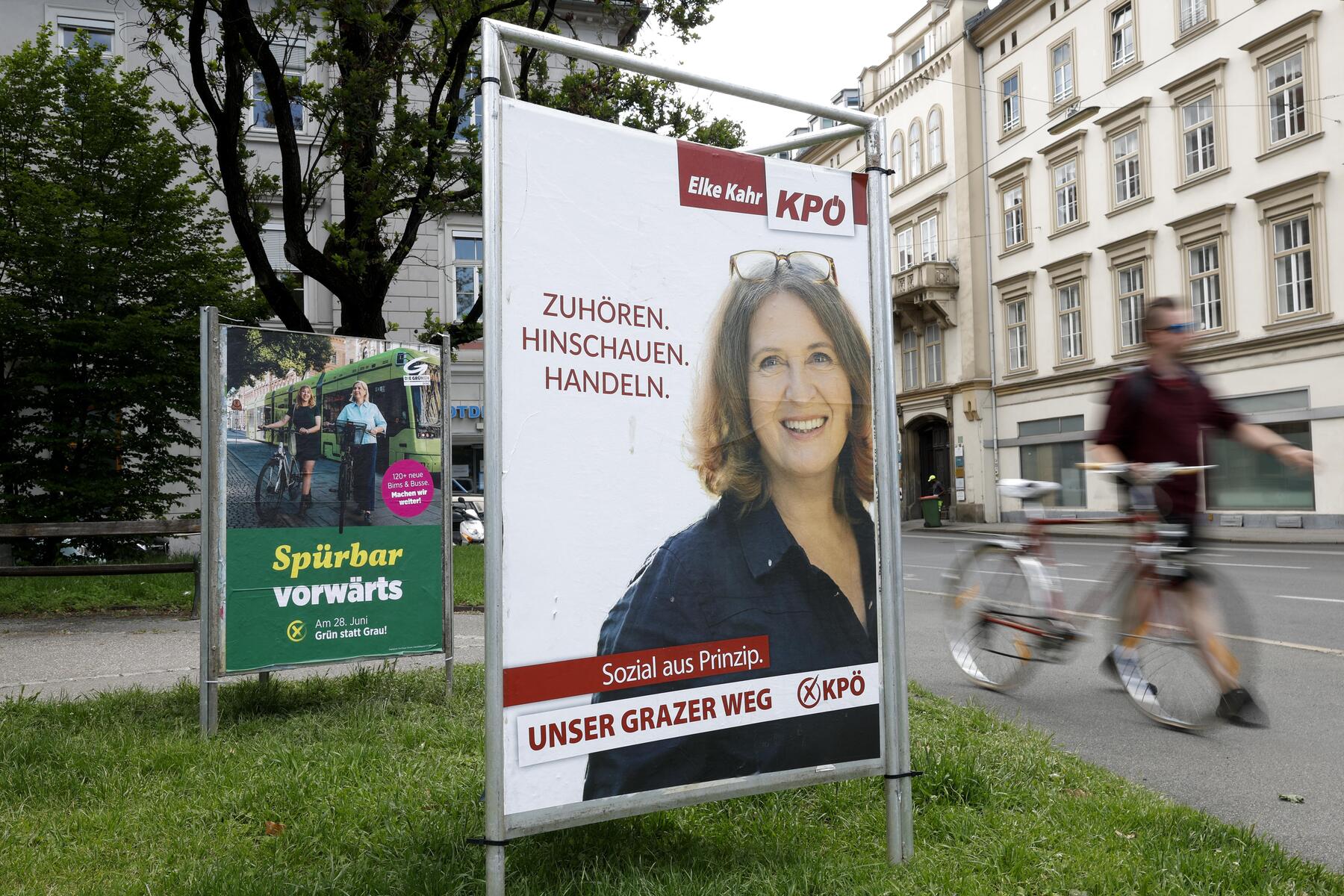
Five years after the 2021 municipal election, Graz, Austria's second-largest city, continues to defy expectations following a dramatic political shift. The traditionally center-right city, previously governed by the ÖVP for two decades, saw the Communist Party of Austria (KPÖ) win the election, forming a coalition with the Greens and the SPÖ. Elke Kahr, the KPÖ's candidate, became mayor, presenting what some describe as the most amiable face of communism in a Western metropolis.
The KPÖ's program outlines ambitious goals, including the "abolition of capitalist ownership of the major means of production" and the "political disempowerment of the capitalist class." The party also advocates for leaving the European Union, deeming EU membership incompatible with "real social progress." Critics have pointed to Kahr's perceived sympathies for figures like Tito and the KPÖ's current program, which states, "Privatization is theft of public property!" The party also demands that private construction companies participate in public infrastructure projects.
However, economic data from Statistik Austria suggests that fears of a radical socialist upheaval have not materialized. The number of workplaces in Graz has increased, surpassing growth in the rest of Styria. Over 80 percent of buildings remain privately owned, and tourism is performing well compared to other provincial capitals. Oliver Fritz, an expert in regional economics, described Graz as an "interesting" city, highlighting its strong research intensity and innovation, particularly in patents. It remains a "dynamic industrial ecosystem with development potential."
Despite these economic indicators, Graz faces challenges, notably the weakness in its industrial sector, especially the automotive industry, an area where the KPÖ has remained largely silent. The city is experiencing significant growth, attracting many young people and seeing a decrease in its elderly population. The employment rate has also risen. The question remains whether these economic trends can be attributed to communist policies or are simply a continuation of Graz's existing strengths as a research and industrial hub.
DistantNews Editorial
Originally published by Die Presse in German. Translated, summarized, and contextualized by our editorial team with added local perspective. Read our editorial standards.
More Stories
From Our Blog

What Gets Lost (and Found) When News Is Translated

The Critical Role of Diaspora Media in Global News

What Travellers Should Know About Countries with Restricted Press

A Digital Nomad's Guide to Following Local News

How the Same Story Looks Different in Different Countries
