


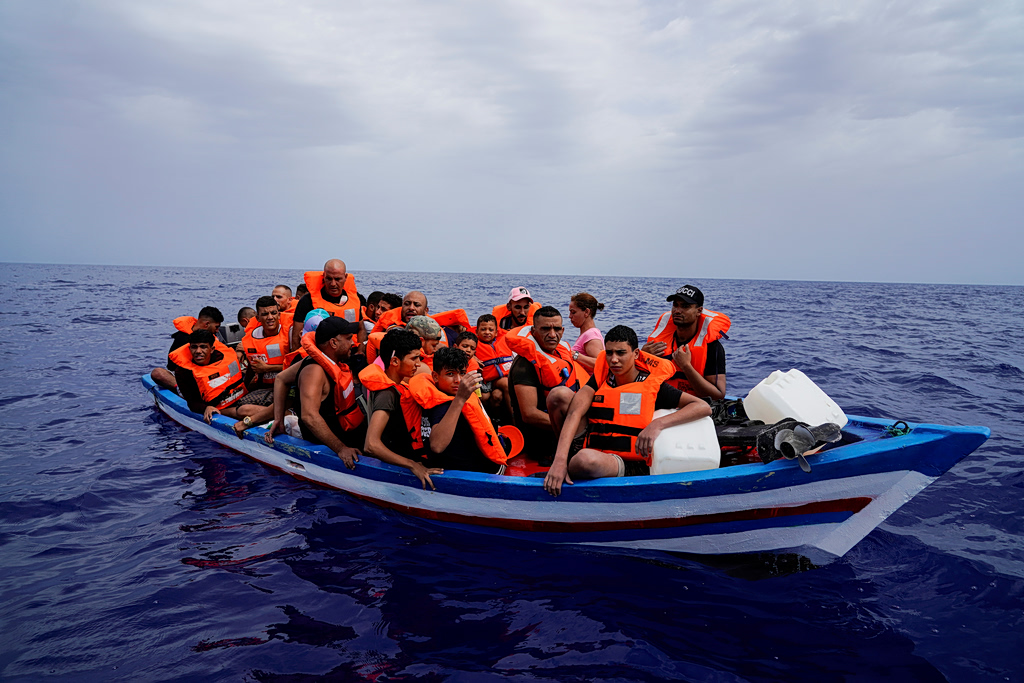
Greece Monitors Migrant Arrivals from Libya, Suspects Turkish Role Amid EEZ Talks
Translated from Greek, summarized and contextualized by DistantNews.
At a glance
News
Sources not specified
Ongoing story
- Greece is closely monitoring hundreds of migrant arrivals from Libya, particularly from Tobruk, amid concerns about summer influxes.
- Athens is seeking cooperation from the EU and Libya to manage the situation, focusing on return policies and potential camps in Africa by 2027.
- Greece suspects Turkish involvement in exacerbating the migrant flows, especially with Turkey's upcoming "Blue Homeland" bill potentially including the Turkish-Libyan maritime deal.
Athens is carefully observing the daily influx of hundreds of migrants arriving in southern Greece from Libya, primarily from the eastern city of Tobruk controlled by Marshal Khalifa Haftar. The Greek government has stated it will not tolerate a large-scale entry of migrants during the summer months, with the islands of Gavdos and Crete expected to bear the initial burden.
Greek authorities have requested assistance from both the European Union and Libya, which has recently begun cooperating by training its coast guard in partnership with Greece. Athens is sending a firm message regarding this issue and is implementing measures that include return policies and detention until asylum claims are processed. The long-term plan involves hosting migrants in camps on African soil by 2027.
However, some observers suspect Turkish involvement behind the renewed pressure on Greece from these migrant arrivals. They believe Turkey might be orchestrating these flows as it prepares to introduce its "Blue Homeland" bill, which is rumored to incorporate the disputed Turkish-Libyan maritime agreement. This agreement, which Greece contests, defines maritime boundaries in a way that infringes upon Greek territorial claims.
While the Turkish bill's submission is delayed until at least July due to procedural complexities, Greece anticipates the next round of technical discussions with Tripoli on delimiting maritime zones and exclusive economic zones (EEZs) within the coming weeks. In this critical geopolitical juncture, Athens is determined to resolve outstanding issues with neighboring countries through dialogue and diplomatic engagement, rather than allowing them to escalate or be addressed by others.
Greece, particularly through its Foreign Minister Giorgos Gerapetritis, maintains open channels with both factions in Libya, having conducted two missions to Tripoli and Benghazi in the past year. The U.S., through its energy companies involved in regional projects, and other regional players like Israel and Egypt, also play significant roles in the complex triangle involving Greece, Libya, and Turkey.
DistantNews Editorial
Originally published by Ta Nea in Greek. Translated, summarized, and contextualized by our editorial team with added local perspective. Read our editorial standards.
More Stories


From Our Blog

What Gets Lost (and Found) When News Is Translated

The Critical Role of Diaspora Media in Global News

What Travellers Should Know About Countries with Restricted Press

A Digital Nomad's Guide to Following Local News

How the Same Story Looks Different in Different Countries
