


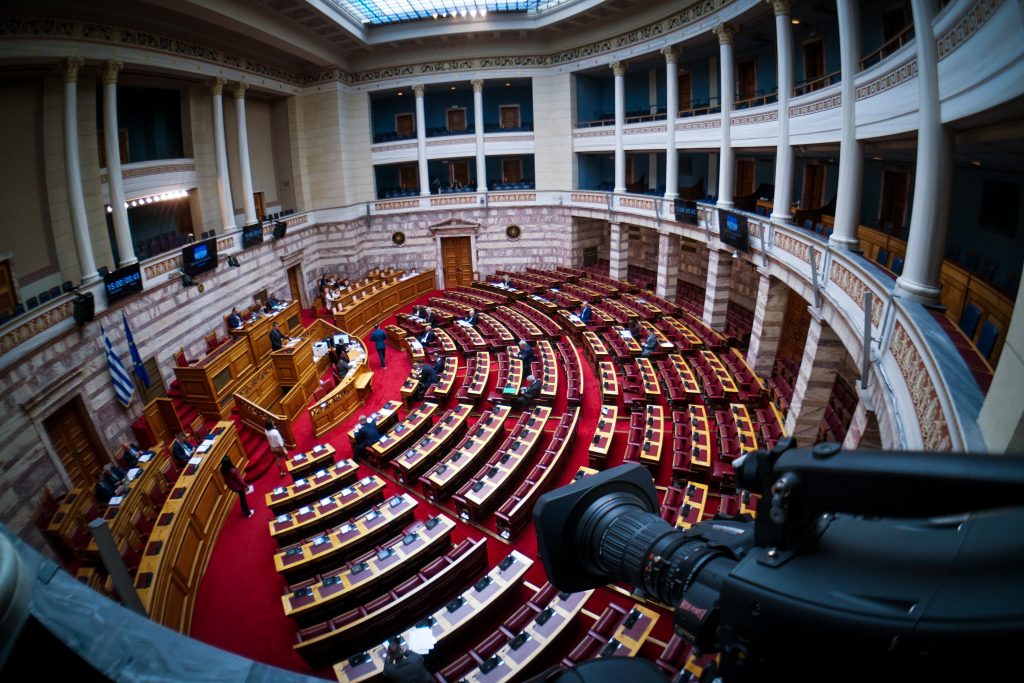
Greece readies for constitutional revision process
Translated from Greek, summarized and contextualized by DistantNews.
At a glance
News
Named sources
New plan
- Greece's parliament is set to review constitutional revision proposals submitted by the New Democracy party, requiring at least 50 parliamentary signatures.
- A special committee will be formed to examine the proposals, with parties appointing representatives proportionally to their strength in parliament.
- The last constitutional revision in 2019 introduced changes related to the election of the President, diaspora voting, and parliamentary inquiries.
The Greek Parliament is preparing to initiate a constitutional revision process, with the ruling New Democracy party submitting its proposals for amendment. The process requires a minimum of 50 parliamentary signatures to be formally introduced.
Following submission, the proposed revisions will be announced, printed, and distributed to lawmakers. A dedicated Constitutional Revision Committee will then be established by the Parliament's president, who will invite political parties to nominate representatives based on their parliamentary representation. The plenary session will decide the committee's deadline, which can be extended.
The need for revision must be established by a vote in Parliament, requiring a three-fifths majority of all members, confirmed across two separate votes held at least one month apart. This initial vote also specifies which articles are subject to revision.
If a revision proposal secures a simple majority but not the three-fifths threshold, the next Parliament, upon its first session, can decide on the revised articles with the required three-fifths majority. Opposition parties have indicated they may seek to ensure the higher 180-vote threshold remains for the subsequent Parliament, which would then draft the final legal text.
The most recent constitutional overhaul occurred in 2019, introducing significant changes such as decoupling the election of the President from parliamentary dissolution, facilitating diaspora voting, and easing the formation of inquiry committees. It also altered the statute of limitations for ministerial offenses and mandated the lifting of parliamentary immunity for offenses unrelated to a deputy's duties or political activity, while also introducing provisions for popular legislative initiatives.
DistantNews Editorial
Originally published by Ta Nea in Greek. Translated, summarized, and contextualized by our editorial team with added local perspective. Read our editorial standards.
More Stories


From Our Blog

What Gets Lost (and Found) When News Is Translated

The Critical Role of Diaspora Media in Global News

What Travellers Should Know About Countries with Restricted Press

A Digital Nomad's Guide to Following Local News

How the Same Story Looks Different in Different Countries
