


Greek Minister: Boosting Industry Key to Growth, Jobs, and National Security
Translated from Greek, summarized and contextualized by DistantNews.
At a glance
Interview
Named sources
Context piece
- Greece's government is prioritizing the support of modern Greek industry as a key driver for economic growth and job creation.
- The strategy aims to create better-paying jobs, retain young people, and strengthen regional development and national security.
- Investments supported through the development law have already created 60,000 new industrial jobs with average annual gross wages of 25,000 euros.
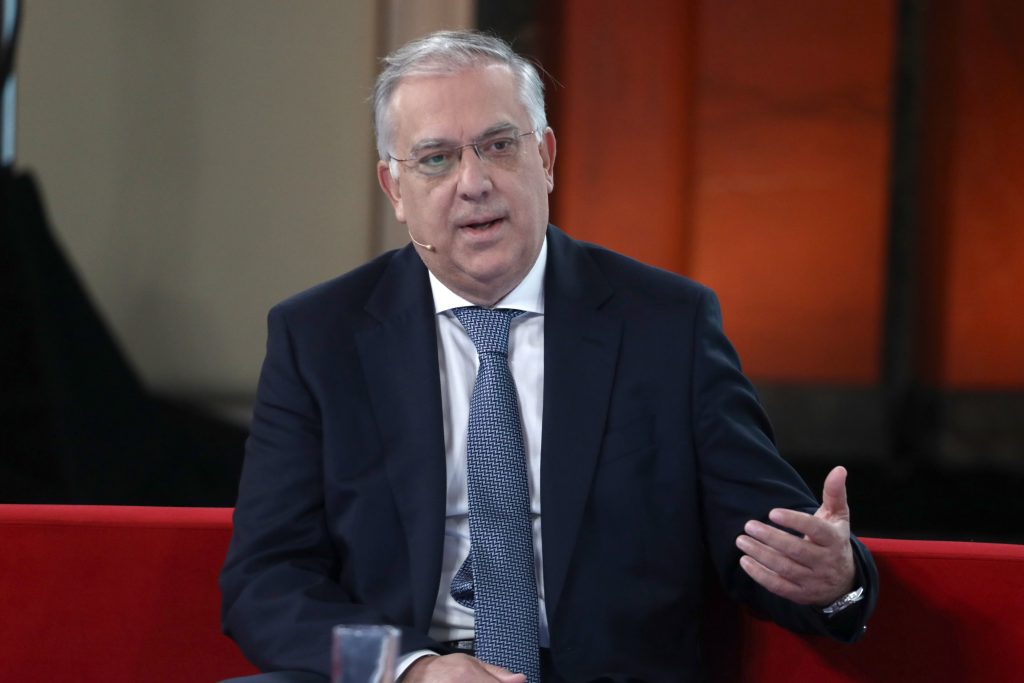
Greece is strategically focusing on bolstering its modern industrial sector, viewing it as a crucial engine for sustained economic growth, the creation of well-compensated employment, and the enhancement of regional vitality and national security. This initiative is central to the government's strategic plan, according to Development Minister Takis Theodorikakos.
The support for industry and manufacturing are strategic priorities for the government, and this effort knows no seasons or holidays. It is continuous.
"It gives our young people the opportunity to shape their own life plans to build their families in their homeland," Theodorikakos stated in an interview. Through the development law, productive investments are being supported, which have already led to the creation of 60,000 new jobs in the industrial sector. These positions offer significantly better pay, with average gross annual wages reaching 25,000 euros, compared to approximately 18,000 euros across the broader economy. These jobs also come with improved working conditions, serving as a strong incentive for young individuals to remain and build careers in Greece.
For the last five years, 60,000 new jobs have been added in industry, which are much better paid. The average gross wages amount to 25,000 euros annually, compared to about 18,000 euros in the economy as a whole.
The government's strategy addresses the national challenge of demographic decline and population decrease, particularly in certain regions. Strengthening industry is presented as a key part of the solution. The plan involves several key actions: promoting reforms such as a new strategy for Business Parks and industrial ports, improving access to transport networks, simplifying procedures through a new Digital Business Activity Certificate, and facilitating entrepreneurship. Additionally, the government is supporting productive investments exceeding 3.7 billion euros via the development law and mobilizing over 700 million euros by 2030 for energy cost reduction and upgrades in the manufacturing sector.
These positions are accompanied by better working conditions, constituting a substantial incentive for young people to stay and create in Greece.
Further initiatives include upgrading technical professions through a National Agenda developed with the Ministries of Labor and Education to align skills with production needs, investing in cutting-edge technologies like semiconductors, and strengthening Greece's position in critical European decisions regarding competitiveness and funding. The government is also enhancing coordination through a permanent Governmental Committee with mixed working groups from ministries and productive stakeholders. Significant progress is noted in sectors like pharmaceuticals, food, metal, and paper industries.
Strengthening industry is part of the solution.
DistantNews Editorial
Originally published by Ta Nea in Greek. Translated, summarized, and contextualized by our editorial team with added local perspective. Read our editorial standards.
More Stories



From Our Blog

What Gets Lost (and Found) When News Is Translated

The Critical Role of Diaspora Media in Global News

What Travellers Should Know About Countries with Restricted Press

A Digital Nomad's Guide to Following Local News

How the Same Story Looks Different in Different Countries
