


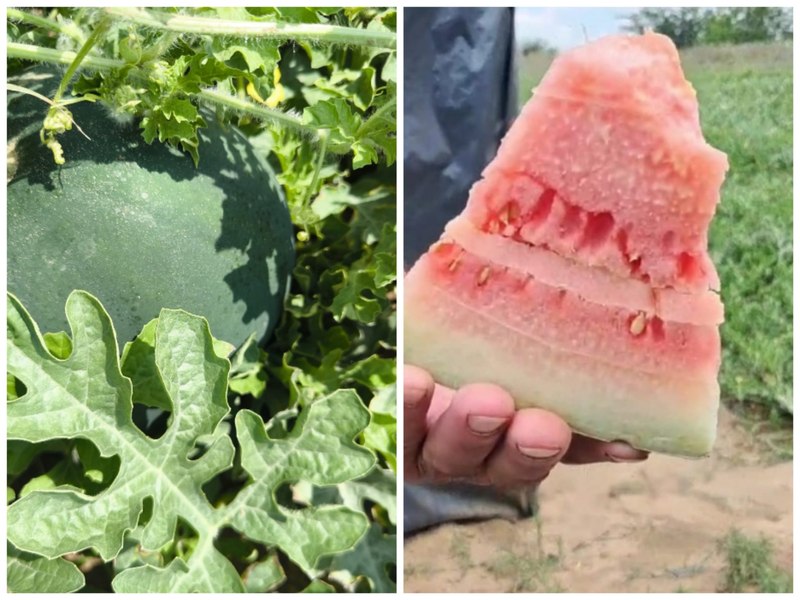
Greek Watermelons Threaten Romanian Farmers' Profits as Local Harvest Delays
Translated from Romanian, summarized and contextualized by DistantNews.
At a glance
News
Sources not specified
Context piece
- Romanian farmers face a two to three-week delay in harvesting their watermelons due to a cold spring, impacting their expected profits.
- Supermarkets and markets are already selling watermelons imported from Greece, with prices dropping significantly.
- Farmers are concerned about lower selling prices compared to last year, despite increased production costs for fuel and treatments.
Romanian watermelon farmers in the Dăbuleni region are facing a delayed harvest, with the first fruits expected in late June or early July, at least two to three weeks later than usual.
It needs another two weeks, even three. It ripens towards the end of the month. Of course, some might be a bit earlier. They planted in March, I planted in April.
A cold spring has significantly slowed the ripening process, forcing farmers to wait longer to bring their sought-after watermelons to market. This delay comes as Greek watermelons have already flooded local markets and supermarkets, driving down prices. Farmers who typically rely on early June sales are now seeing prices fall below 5 lei per kilogram, a stark contrast to the 2 to 2.5 lei per kilogram they hoped for.
Producers have also contended with higher costs for fuel and phytosanitary treatments this year. While ample rainfall has reduced irrigation expenses, the overall financial outlook is uncertain. "We had high expenses, tens of millions (of old lei). And when you take them to market, they seem expensive. You go to the market - there's one price, you estimate another price from home," one farmer from Călărași, Dolj county, explained.
We had high expenses, tens of millions (of old lei). And when you take them to market, they seem expensive. You go to the market - there's one price, you estimate another price from home.
Despite the challenges, farmers anticipate a good yield if the weather cooperates. However, the primary concern remains the market price, which is expected to continue its downward trend. The situation highlights the vulnerability of local agriculture to climate variations and the competitive pressure from imported goods.
Climatically, spring was unusual, temperatures were somewhat lower, especially at night, and the rainfall regime was richer.
DistantNews Editorial
Originally published by Adevărul in Romanian. Translated, summarized, and contextualized by our editorial team with added local perspective. Read our editorial standards.
More Stories



From Our Blog

What Gets Lost (and Found) When News Is Translated

The Critical Role of Diaspora Media in Global News

What Travellers Should Know About Countries with Restricted Press

A Digital Nomad's Guide to Following Local News

How the Same Story Looks Different in Different Countries
