

Group Forms to Protect Pufferfish in Greek Waters
Translated from Greek, summarized and contextualized by DistantNews.
At a glance
News
Sources not specified
Context piece
- A new initiative has been formed to protect the pufferfish in Greek waters.
- The group argues that the fish, which is not native to the Mediterranean, deserves protection and respect, not mass extermination.
- They highlight ethical concerns and the potential for unforeseen ecological consequences from drastic population control measures.
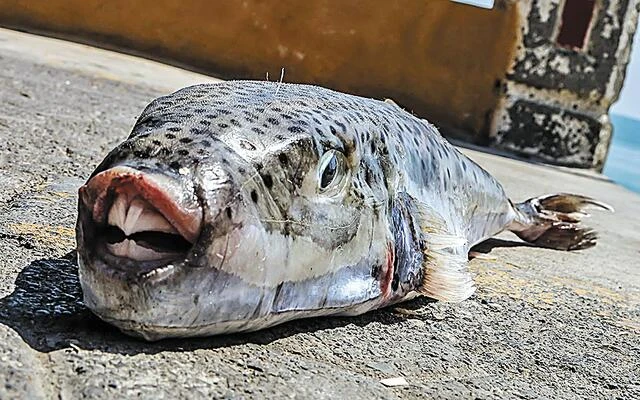
A group has launched an initiative to protect the pufferfish, a species that has become increasingly controversial in Greek seas. The "Initiative for the Rescue of the Pufferfish" stated on social media that the mass killing of this species raises ethical questions. The fish did not choose to be in Greek waters, the group emphasized.
The pufferfish deserves protection: why fishing pressure on the species must stop.
The pufferfish deserves protection, and fishing pressure on the species must cease. In recent years, the pufferfish has become a contentious inhabitant of Greek waters. Its rapid spread has led many to call for intensive fishing, even complete extermination. However, a closer look reveals this approach is flawed. The pufferfish should not be treated as an enemy but as a living species deserving protection and respect.
Firstly, the pufferfish is not responsible for its presence in the Mediterranean. Its spread is a result of human interventions and significant environmental changes that allowed it to move into new areas. It is unfair to punish a species for following natural survival and reproduction mechanisms it has used for thousands of years. Furthermore, the mass killing of any species raises serious ethical issues. Modern societies have moved beyond the logic that any organism deemed undesirable must be eradicated. Biodiversity is a fundamental value, and its protection cannot be selectively applied only to "likable" or economically useful species. If we truly believe in protecting nature, we must recognize the value of all life.
The pufferfish is not responsible for its presence in the Mediterranean. Its spread is a result of human interventions and significant environmental changes that allowed it to move into new areas.
Another argument concerns scientific uncertainty. Marine ecosystems are extremely complex, and the consequences of mass intervention are often unpredictable. Drastically reducing a population could trigger chain reactions affecting other species and create new, potentially more severe problems. The history of wildlife management is full of examples where human certainty proved wrong. Additionally, the pufferfish can be a subject of significant scientific research. Its adaptability, resilience, and unique biological properties offer valuable study opportunities. Instead of investing resources in its extermination, we could invest in understanding the species and the mechanisms that allow it to survive in changing environments.
Modern societies have moved beyond the logic that any organism deemed undesirable must be eradicated. Biodiversity is a fundamental value, and its protection cannot be selectively applied only to 'likable' or economically useful species.
Finally, protecting the pufferfish tests our principles. True environmental ethics are not applied only to cute mammals or rare birds. They are demonstrated when we defend the right to exist even for species considered undesirable or problematic. The value of a life should not be determined by its perceived usefulness or appeal.
Marine ecosystems are extremely complex, and the consequences of mass intervention are often unpredictable. Drastically reducing a population could trigger chain reactions affecting other species and create new, potentially more severe problems.
DistantNews Editorial
Originally published by Ta Nea in Greek. Translated, summarized, and contextualized by our editorial team with added local perspective. Read our editorial standards.
More Stories

From Our Blog

What Gets Lost (and Found) When News Is Translated

The Critical Role of Diaspora Media in Global News

What Travellers Should Know About Countries with Restricted Press

A Digital Nomad's Guide to Following Local News

How the Same Story Looks Different in Different Countries
