

Guatemalan Lawyers Accuse Constitutional Court of Overreach in University Election Dispute
Translated from Spanish, summarized and contextualized by DistantNews.
At a glance
News
Named sources
In the courts
- Lawyers from Usac-Dire criticize the Constitutional Court's decisions regarding the election of Walter Mazariegos as rector.
- They argue the court is overstepping its bounds and using politically motivated reasoning.
- Despite unfavorable rulings, Usac-Dire continues to pursue other legal actions related to the university's electoral process.
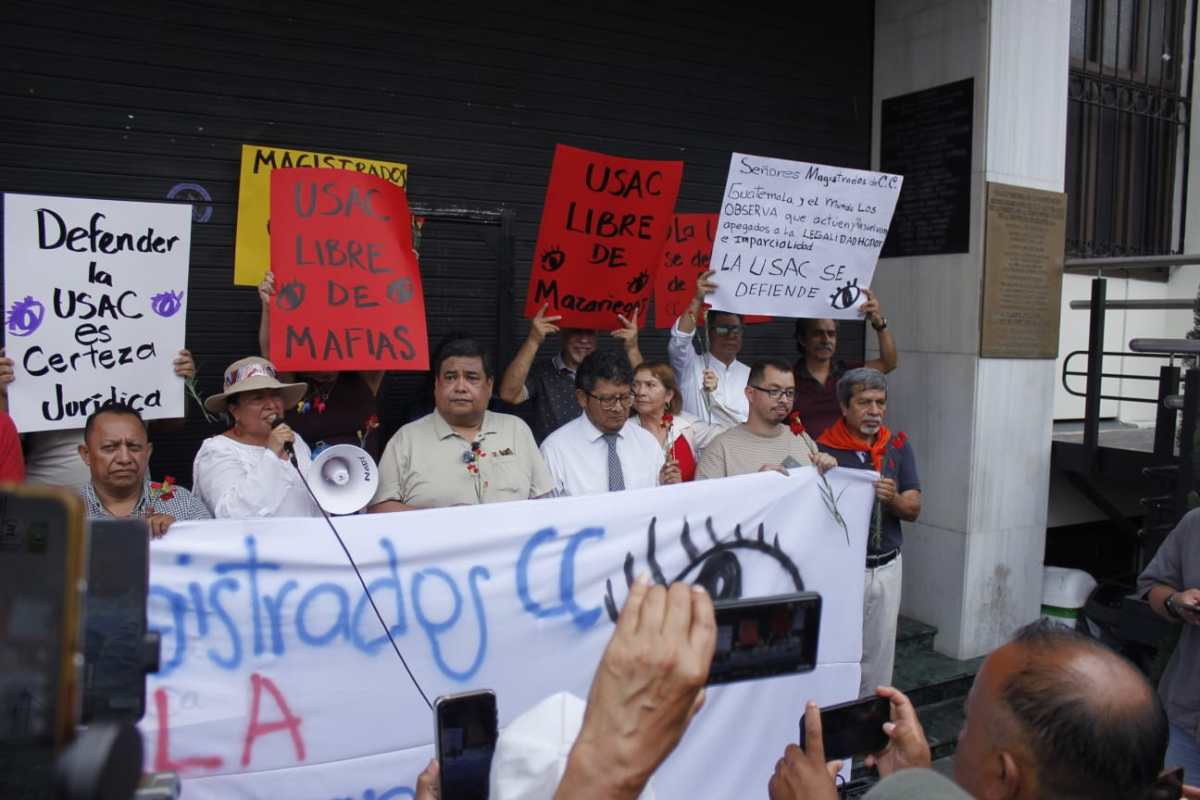
Attorneys representing Dignity and Resistance (Usac-Dire) have voiced strong criticism against the Constitutional Court (CC) of Guatemala, alleging it is exceeding its authority in decisions concerning the election of Walter Mazariegos as rector of the University of San Carlos of Guatemala (Usac).
It seems to us that the Constitutional Court is overstepping, and the arguments by which these amparos are rejected and suspended are totally unacceptable.
Recent rulings, including the suspension of six amparo lawsuits by the Sixth Chamber of Administrative Litigation and the rejection of other legal actions, have been deemed unacceptable by Usac-Dire. Lawyer Aníbal García stated that the court's justifications for these decisions lack legal basis and appear driven by political interests rather than strict legal analysis.
We believe the resolution has a political charge and is not necessarily a legal resolution.
"We believe the resolution has a political charge and is not necessarily a legal resolution," García commented, adding that the CC seems to be acting under undue influence. He expressed that while the court's decisions are binding, the reasoning behind them is questionable.
Unfortunately, facing the court's resolutions, whether we like it or not, we cannot file anything [...] it seems that the Constitutional Court itself is kneeling before those sectors linked to corruption.
Despite a series of unfavorable outcomes, Usac-Dire maintains that the irregularities in the rectorial election are evident. Lawyer Edwin Orozco asserted that "even the worst justice system could not validate these arbitrary actions that occurred in broad daylight." The group continues to pursue other pending legal challenges, including amparos against decisions by the University's Superior Council (CSU) concerning the formation of electoral bodies.
The irregularities in the rector's election have been so clear that not even the worst justice system could validate these arbitrary actions that occurred in broad daylight.
DistantNews Editorial
Originally published by Prensa Libre in Spanish. Translated, summarized, and contextualized by our editorial team with added local perspective. Read our editorial standards.
More Stories
From Our Blog

What Gets Lost (and Found) When News Is Translated

The Critical Role of Diaspora Media in Global News

What Travellers Should Know About Countries with Restricted Press

A Digital Nomad's Guide to Following Local News

How the Same Story Looks Different in Different Countries
