

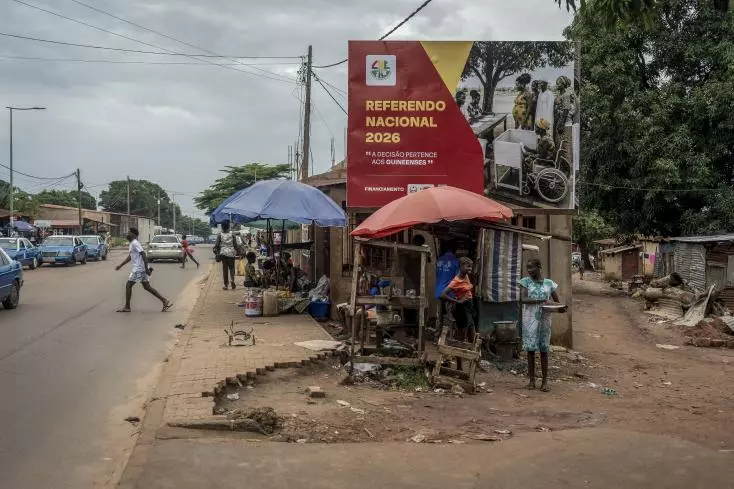
Guinea-Bissau’s constitutional reform: Is a presidential system a cure-all?
Translated from French and summarized by DistantNews. Read the original for the full story.
At a glance
Analysis
Sources not specified
Ongoing story
- Guinea-Bissau voters were asked to approve a constitutional reform replacing the semi-parliamentary system with a strong presidential model.
- Supporters present the change as a solution to repeated institutional crises, while the opposition called for a boycott and described it as an attempt to legitimize power gained through force.
- The commentary argues that constitutional change alone cannot address weak checks and balances, political rivalries and contested elections.
Guinea-Bissau has put a sweeping constitutional proposal before voters, promising to replace its semi-parliamentary system with a strong presidential regime. Supporters present the change as an answer to the country’s repeated institutional crises. The opposition, or what remains of it, called for a boycott.
The central question surrounding the referendum was participation. Opponents argued that the reform would not cure the country’s institutional illness. Instead, they described it as an attempt to legitimize a government that came to power through force.
The existing system has often appeared to function like a car with two steering wheels, driven by a president and a prime minister whose ambitions can collide. Advocates of the reform say a stronger executive would end that friction. But changing the constitutional structure does not necessarily resolve the deeper problems identified in the debate: personalized power, the manipulation of institutions, disputed election results and rivalries between political clans.
A presidential system can bring clarity and stability in a democracy anchored in the rule of law. Where checks and balances are weak, however, it can also leave the president with almost exclusive control of the national government. The argument advanced here is that Guinea-Bissau needs more than constitutional reform. Political, electoral and judicial reforms would also be required, along with a shift in political culture.
A constitution can separate powers and prevent a president and prime minister from fighting over control of the palace. It cannot by itself stop leaders from clinging to power or create democratic habits. The challenge is to build institutions strong enough to withstand political failure, so that the republic does not fall when its leaders overreach.
About this summary
Originally published by Le Pays in French. Translated, summarized, and contextualized automatically by DistantNews, with a note on how the source frames the story. Not individually reviewed before publishing. How this works.
More Stories
From Our Blog

What Gets Lost (and Found) When News Is Translated

The Critical Role of Diaspora Media in Global News

What Travellers Should Know About Countries with Restricted Press

A Digital Nomad's Guide to Following Local News

How the Same Story Looks Different in Different Countries
