

Gulf Monarchies Cautiously Welcome US-Iran Accord Amid Regional Tensions
Translated from French, summarized and contextualized by DistantNews.
At a glance
News
Sources not specified
Context piece
- Gulf monarchies expressed cautious optimism following a preliminary agreement between the United States and Iran on June 15, 2026.
- The region experienced significant economic and security disruptions due to a conflict initiated on February 28, 2026, including attacks on Gulf states and the closure of the Strait of Hormuz.
- Saudi Arabia and Qatar emphasized the importance of regional security, freedom of navigation, and non-interference in internal affairs in their reactions to the accord.
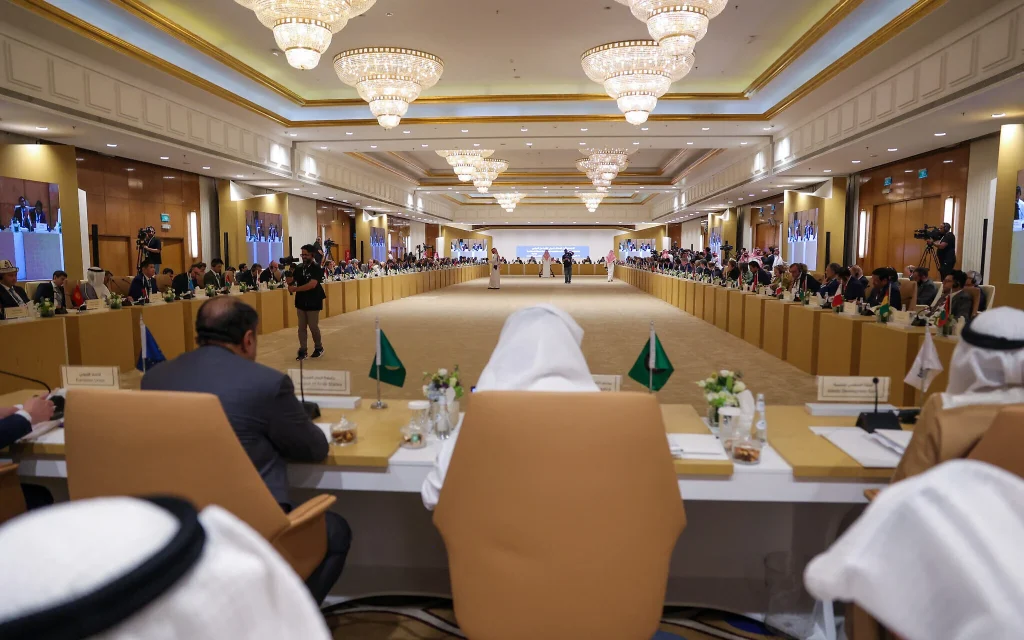
Gulf monarchies have reacted with a mixture of relief and caution to a preliminary agreement reached between the United States and Iran on June 15, 2026. The accord offers a potential de-escalation after months of severe regional tensions and conflict. A war, initiated by an American-Israeli coalition against Iran on February 28, 2026, had directly impacted the Gulf states.
Iran's retaliatory strategy involved targeting Arab neighbors allied with the U.S., citing the presence of American bases used for strikes against Iran. This led to missile and drone attacks by the Iranian army against the United Arab Emirates, Kuwait, Bahrain, Qatar, and Saudi Arabia. The economic consequences were disastrous, exacerbated by the closure of the Strait of Hormuz. These events shattered the image of Gulf capitals as impregnable citadels, exposing their vulnerability.
We are prudently optimistic that the signing of the memorandum of understanding opens a new phase for regional security, through the discussions that will be held on the nuclear program and other issues.
Qatar's Ministry of Foreign Affairs spokesperson, Majed al-Ansari, stated on Tuesday that the region is "prudently optimistic" that the memorandum of understanding "opens a new phase for regional security." Saudi Arabia's Ministry of Foreign Affairs expressed "satisfaction" with the agreement, stressing the need to restore security and freedom of navigation in the Strait of Hormuz to pre-conflict levels. The kingdom also hoped for a lasting peace that respects the security interests of regional countries and the principle of non-interference.
An analysis from "Les Clés du Moyen-Orient" noted that while the announcement was generally welcomed, reactions remained marked by prudence. The article highlighted that since the conflict began, the Gulf monarchies have been grappling with the fallout, underscoring the delicate balance between strategic de-escalation and diplomatic uncertainty in the region.
The kingdom expresses its satisfaction with the agreement concluded between the United States of America and the Islamic Republic of Iran. The kingdom stresses the importance of restoring security and freedom of navigation in the Strait of Hormuz to their level prior to February 28. It also expresses its hope to achieve peace in a way that strengthens the security of the region and the world through a lasting agreement that takes into account the security interests of the countries of the region and respects the principle of non-interference in the internal affairs of states.
DistantNews Editorial
Originally published by El Watan in French. Translated, summarized, and contextualized by our editorial team with added local perspective. Read our editorial standards.
More Stories

From Our Blog

What Gets Lost (and Found) When News Is Translated

The Critical Role of Diaspora Media in Global News

What Travellers Should Know About Countries with Restricted Press

A Digital Nomad's Guide to Following Local News

How the Same Story Looks Different in Different Countries
