

Trump Proposes 'Guarding' Middle East for 20% of Revenue
Translated from French, summarized and contextualized by DistantNews.
At a glance
News
Named sources
Ongoing story
- Donald Trump proposed the U.S. act as the official protector of the Middle East for 20% of the region's revenue.
- This proposal marks a significant departure from traditional U.S. regional security doctrine.
- The plan comes amid fragile cease-fire negotiations and ongoing tensions with Iran.
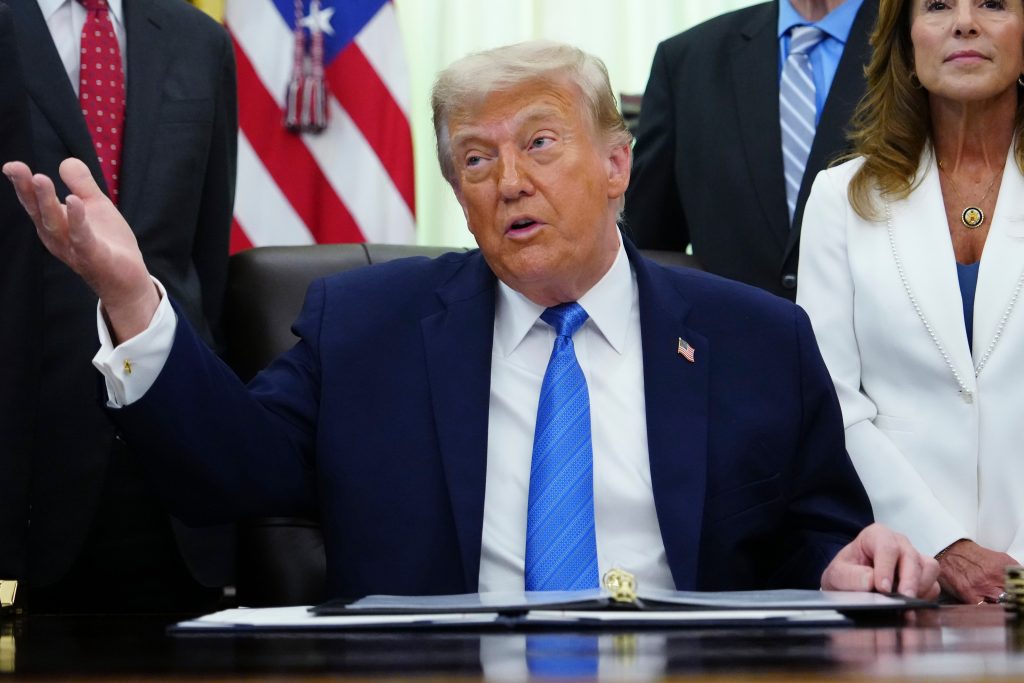
Former President Donald Trump has put forth a bold proposal suggesting the United States could serve as the official security guarantor for the entire Middle East region in exchange for 20% of its revenue. This unprecedented offer, detailed in an interview with The New York Times, represents a stark shift from decades of U.S. diplomatic and security policy in the region.
This transactional approach has drawn sharp criticism. Ryan Crocker, former U.S. Ambassador to Iraq, described the logic as "transactional to the extreme, to the point of blurring the line between diplomacy and protection rackets." Aaron David Miller of the Carnegie Endowment for International Peace noted that U.S. presence in the Gulf has historically been framed around shared stability, not direct payment from sovereign states.
transactional to the extreme, to the point of blurring the line between diplomacy and protection rackets
The financial implications are staggering. Given that hydrocarbons account for 60-70% of Gulf countries' revenue, 20% would amount to hundreds of billions of dollars annually for Washington. Middle Eastern economists consulted by Reuters deemed such a figure "politically unquantifiable and legally inapplicable."
The proposal emerged during a period of heightened tension, following a joint U.S.-Israeli military offensive against Iran. While Trump announced a cease-fire on June 14, 2026, which was later confirmed by Iran's deputy foreign minister, the official signing of a memorandum of understanding is pending. Trump, however, tempered expectations, stating that Iran would not receive sanctions relief or asset freezes until obligations are met. The agreement also aims to ensure the Strait of Hormuz remains open, though the memorandum reportedly only suspends potential tolls for 60 days, followed by further dialogue.
the American presence in the Gulf has always been based on a rhetoric of shared stability, never on a bill sent to sovereign states
DistantNews Editorial
Originally published by El Watan in French. Translated, summarized, and contextualized by our editorial team with added local perspective. Read our editorial standards.
More Stories
From Our Blog

What Gets Lost (and Found) When News Is Translated

The Critical Role of Diaspora Media in Global News

What Travellers Should Know About Countries with Restricted Press

A Digital Nomad's Guide to Following Local News

How the Same Story Looks Different in Different Countries
